Australia Sees Surge in Battery Storage Investment Amid Renewable Slowdown
Australia’s Q1 2025 saw AUD 2.4 billion in battery storage investment, but renewable project delays threaten the 82% renewable target by 2030.Explore Australia’s surge in battery storage investment in Q1 2025, reaching AUD 2.4 billion, and the challenges slowing renewable energy projects toward 2030 goals.
Australia’s renewable energy sector saw a significant boost in battery energy storage system (BESS) investments in Q1 2025, reaching AUD 2.4 billion, the second-highest quarterly figure on record. However, overall renewable energy project development slowed due to grid and policy challenges. This article explores the drivers, impacts, and implications of this trend for Australia’s energy transition.
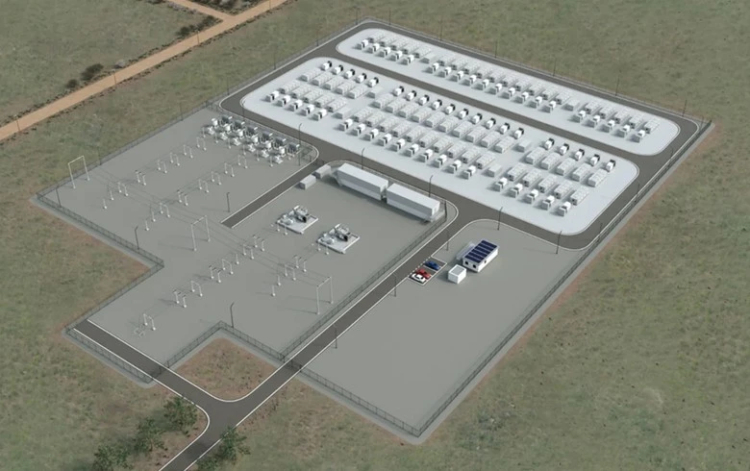
In the first quarter of 2025, Australia’s investment in large-scale battery storage systems reached AUD 2.4 billion, driven by the need to stabilize the grid as renewable energy penetration increases. The Clean Energy Council highlights this as the second-best quarter for BESS investment, following Q4 2023. Projects like those in New South Wales and Victoria, including long-duration storage systems, are key contributors.
Battery storage is critical for addressing the intermittency of solar and wind power, which accounted for 40% of Australia’s electricity in 2024, up from 39.4% in 2023. BESS enables excess energy to be stored during peak production and released during high demand, reducing reliance on coal and gas. The surge in investment reflects growing confidence in storage as a cornerstone of the energy transition.
However, renewable energy project development, particularly wind and solar farms, has slowed. Grid connection delays, driven by outdated infrastructure, have hindered new projects. State-level policy inconsistencies, such as Queensland’s cancellation of the Moonlight Range Wind Farm, have also reduced investor confidence. Australia is projected to achieve only 58% renewable energy by 2030, far short of the 82% target, according to Wood Mackenzie.
Economic impacts are mixed. BESS projects create jobs in manufacturing, construction, and maintenance, supporting regional economies. The Illawarra Renewable Energy Zone (REZ), proposed as Australia’s first urban REZ, could deliver 12 GW of renewable generation and 2 GW of storage by 2030, boosting local industry. However, the slowdown in wind and solar projects threatens long-term economic benefits, as coal plant retirements loom.
Environmental benefits of BESS are significant. By enabling higher renewable penetration, batteries reduce CO2 emissions, with each gigawatt-hour of storage potentially displacing 700 tonnes of emissions. However, concerns about battery production, including resource extraction and recycling, require sustainable supply chains to minimize environmental harm.
Challenges include high transmission costs and social license issues. Community opposition, such as in Victoria where farmers resist renewable projects, complicates development. Cybersecurity risks, linked to foreign-made grid components, also threaten reliability as Australia’s grid transitions. The 2023–2030 Cyber Security Strategy emphasizes secure-by-design technologies to address this.
Government responses include the $1 billion Solar Sunshot Program, which funded 5B’s solar manufacturing expansion, and state initiatives like Victoria’s 100% renewable energy supply for government operations. Policy certainty is critical to sustain private investment, which reached record levels in 2024 but needs to double to meet 2030 goals.
Community engagement is essential. Public consultations for REZs and BESS projects aim to address concerns about land use and fire risks, as raised by volunteer firefighters in Victoria. Training programs are upskilling workers for the storage sector, while community-led projects, like Denmark’s co-op wind farm, show growing public support for renewables.
Globally, Australia’s BESS boom aligns with trends in the US and EU, where storage capacity is expanding rapidly. International collaboration on battery technology and recycling could enhance sustainability. Long-term success requires streamlined approvals, upgraded grids, and public trust to maintain momentum.
Conclusion
Australia’s Q1 2025 battery investment surge highlights the critical role of storage in the energy transition, despite a slowdown in renewable projects. Addressing grid, policy, and community challenges is essential to meet the 82% renewable target by 2030. Sustained investment and collaboration will drive a resilient, low-carbon energy future.
What's Your Reaction?