India’s coal industry plays a crucial role in supporting millions of jobs, powering major industries, and sustaining the country’s energy demand while India gradually expands its renewable energy capacity.
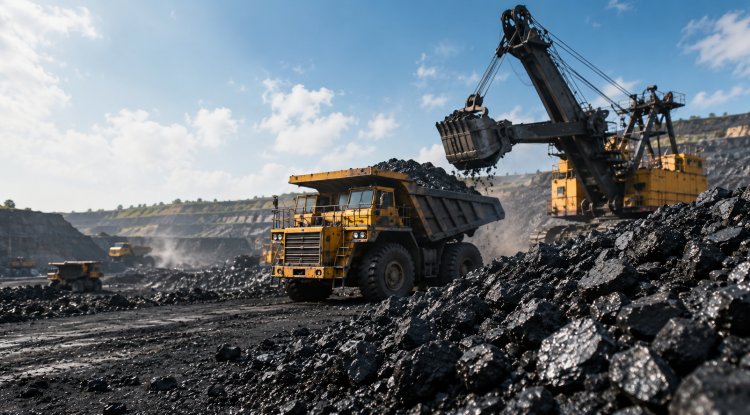
While discussions around India's energy future increasingly focus on renewable sources, the coal sector continues to support millions of livelihoods and remains deeply connected to the country's industrial economy.
Recent data from the Ministry of Coal indicate that approximately 30 lakh jobs are connected with the coal industry. This comprises both direct employment opportunities in mines as well as indirect employment in transportation, logistics, and other equipment-related businesses. Out of these, about 5 lakh people are considered to be directly employed in the mining industry.
Union Minister G Kishan Reddy said, “Today, nearly 5 lakh people are directly employed in the coal sector, while around 25 lakh people are indirectly employed.”
The economic importance of this sector is not only restricted to coal extraction but includes other economic activities related to mining that help boost the economy of the state. Many states such as Jharkhand, Odisha, Chhattisgarh, Madhya Pradesh, and West Bengal still contribute substantially to the Indian coal ecosystem.
India currently ranks as the second-biggest producer as well as consumer of coal, owing to its importance as an energy resource in terms of meeting India’s increasing energy needs. Growth in demand for electricity, industrialization, and infrastructural development has led to increased demand for coal.
Coal is still one of the major fuels used in thermal power stations, which generate a good amount of the total electricity produced in the country. In addition, the sector is linked to the industrial sector as well, including industries of steel, cement, aluminium and manufacturing, all of which use coal for their activities.
On the other hand, the focus of the government has been on boosting local production of coal in order to ensure that the country becomes self-reliant in terms of its energy requirements, as well as improve the supply chain for coal in the country.
Despite the fast-growing adoption of renewable energy projects, the energy sector analysts argue that coal would be a critical part of India's energy future in the years to come. Thus, the task of policymakers will be in striking a balance between energy security, cost-effectiveness, and economic growth with the gradual increase in the share of cleaner energy resources.
With the dual roles played by the energy sector as a supplier and a provider of employment options, it forms the focal point of discussions on India’s economic and energy transitions. The future prospects for India’s coal-rich regions and the workers in the coal industry remain to be matters of national discussion as the nation strives towards meeting its energy transition and climate change goals.
A larger viewpoint brings out the importance of the coal industry not just as an energy provider but also as a job provider.
What's Your Reaction?