India's push to reduce coal use is facing resistance in the brick kiln sector, where economic and operational challenges continue to slow the transition to cleaner fuels.
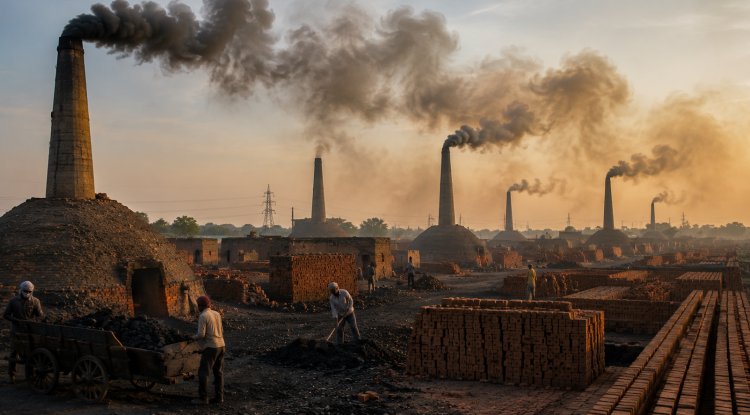
India's efforts to reduce industrial pollution and accelerate the transition toward cleaner energy are facing a major challenge in the brick manufacturing sector. Despite restrictions on coal use in several regions and growing pressure to adopt cleaner technologies, a large number of brick kilns continue to depend on coal as their primary source of energy, highlighting the gap between environmental policy and on-ground industrial realities.
Brick production continues to be among the most energy-intensive sectors in the nation. Brick production has an integral part to play in the rapid growth of the construction and infrastructure sector in the country since it produces millions of bricks each year. Nonetheless, brick production is characterized by a need for constant high temperatures.
However, coal still predominates due to its affordability and availability, as well as the ability to produce sufficient heat for brick making. Despite efforts to encourage the use of alternative fuels like biofuels, crop waste, natural gas, and efficient kiln designs, it remains hard for many companies to adopt the alternatives due to economic constraints. In particular, investments into more advanced equipment can become too costly for small kilns.
The emission levels from traditional brick kilns have become a major concern for environmental agencies due to the fact that such regions witness poor air quality especially during winters. Such brick kilns run on coal energy and are thus responsible for generating particulate matter emissions, emissions of sulphur, and greenhouse gases. State-level policies have been devised to help bring down such emissions and use cleaner production techniques.
One of the most widely promoted solutions has been the transition to advanced kiln technologies such as zig-zag kilns, which improve fuel efficiency and reduce pollution levels. While many operators have adopted these systems, experts note that technological upgrades alone do not completely eliminate coal dependence. In many cases, coal remains the dominant fuel even when newer kiln designs are used.
The industry players have raised concerns about the fact that the switch will not be possible solely by means of implementation. The main factors preventing that include the variation in prices of substitute fuels, poor logistics, and lack of finance. Another concern is that high fuel prices may cause an increase in brick prices and thus negatively impact construction projects.
Environmental experts counter that delaying the transition could undermine India's broader climate and air-quality goals. The brick sector represents a significant opportunity for emissions reduction because of its large scale and widespread presence across the country. Cleaner fuel adoption, combined with energy-efficient technologies, could substantially reduce pollution while improving long-term operational efficiency.
This issue underscores the more general problem that India faces while transforming its industries. The government officials need to reconcile environmental goals with economic concerns, especially since these sectors comprise largely small-scale and medium-size businesses. According to specialists, both fiscal measures such as financial support and low-interest credits, as well as technological programs and fuel access can prove instrumental in the transformation process.
India’s journey towards its green goals has turned this industry into one of those interesting case studies to watch. This industry’s potential to cut down its reliance on coal while ensuring production and employment may offer some great insights to other such traditional industries that face the same challenges in the coming years.
What's Your Reaction?