Delhi’s Air Turns Toxic: AQI Climbs Beyond 300
Delhi’s average AQI reached 318 on Monday, falling in the “very poor” category. Several areas crossed 350 with dense smog and low visibility.
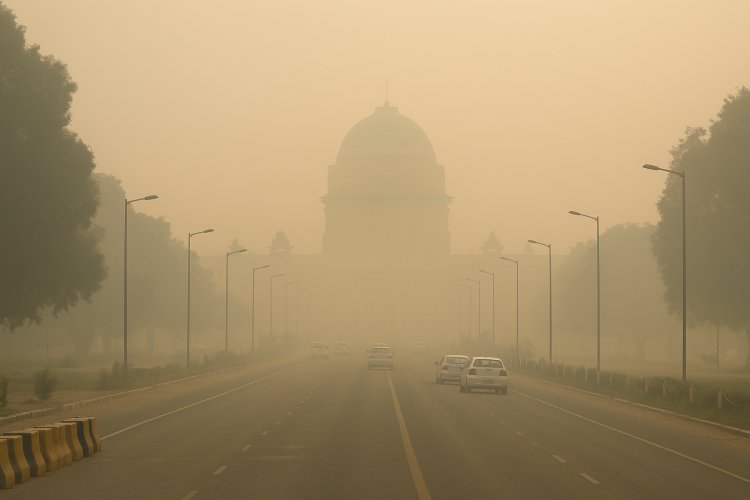
Winter in Delhi has brought back the issue of hazardous air. Even in December, there doesn't appear to be any relief after fighting it all through November. Today morning Delhi’s average air quality index (AQI) was 318, which falls under the "very poor" category. Today until 6 am, the statistics showed that the situation was almost unchanged. The toxin dissolved in Delhi's air is steadily rising beneath the blue sky, which has a direct impact on people's health. Long-term exposure to "very poor" air can cause respiratory disorders, cardiac issues, and irritation of the eyes and throat, according to medical professionals.
Areas with High AQI Level
In large parts of Delhi, AQI was recorded at 350, which is almost close to the "severe" category. Areas like Bawana (367), Mundka (355), Vivek Vihar (355), Anand Vihar (354), Jahangirpuri (347), Rohini (349), Wazirpur (349), DTU (343), Nehru Nagar (346), and Narela (345) showed the most polluted areas. Thick fog further reduced visibility in these places during the morning.
While pollution was lesser in some areas, it still came out to be quite far from the safe limit. These included relief areas such as NSIT Dwarka (AQI 232), IGI Airport T3 (229), Shadipur (268) and Aya Nagar (269). While there is a little improvement, air quality remained below the severe category at these places, and its effects could be seen.
Pollution Doubled in November
According to the latest research by the Centre for Energy and Clean Air Research, or CREA, the average AQI in Delhi was nearly twice as high this November compared with October. The paper also notes that although stubble burning incidents have contributed little this year, Delhi's climate is being negatively impacted by local variables like dust, industrial pollution, vehicle emissions, and air stagnation from chilly winds.
According to the Central Air Quality Early Warning System EWS, there is less possibility of any significant improvement in Delhi's air quality this week. From November 11 to 13, Delhi had witnessed "severe" AQI continuously for three days, and the air seems to have begun its travel towards the same bad level. Thick pollution covered ITO, India Gate, Anand Vihar, Dwarka, and many more areas on Monday morning. People were seen sprinting on the road while driving their cars. The combination of fog and pollution has significantly decreased visibility.
What's Your Reaction?