A Hyderabad man who once slept hungry on railway platforms is now leading a movement against food waste and hunger in India
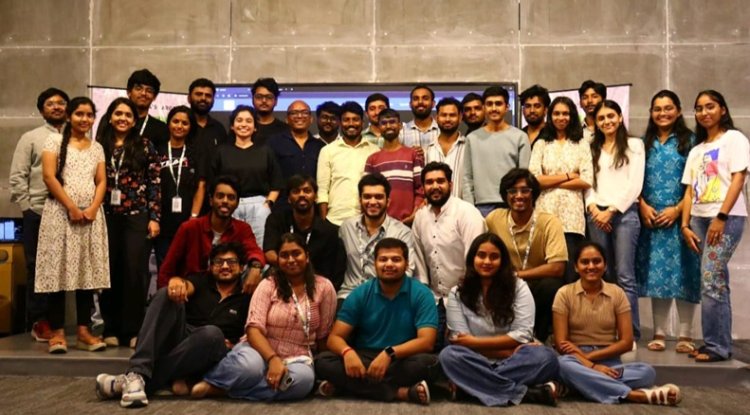
Long before global climate conversations began talking about methane emissions and sustainable consumption, Malleshwar Rao, a Hyderabad techie and founder of Don’t Waste Food, was asking a far simpler question: why were people sleeping hungry while trays of untouched food were being thrown away?
That question would eventually grow into a food recovery movement feeding nearly 2,000 people a day. But for the man behind Don’t Waste Food, the journey still does not feel distant from where it began. “To be honest, even today I still feel like that same boy from Nizamabad,” Rao says quietly.
The recognition around him has become difficult to ignore. Prime Minister Narendra Modi mentioned his work twice on Mann Ki Baat. Anand Mahindra appreciated the initiative publicly. Former UN Environment chief Erik Solheim amplified it globally.
 But inside, he says, not much has changed.
“When I first came to Hyderabad, life was very difficult. There were days when I slept on railway platforms because I did not know where else to go. I know what hunger feels like,” he says. “Recognition ends after one day. But the next morning, there is still food being wasted, and there are still hungry people waiting.”
The story of Don’t Waste Food did not begin with funding, policy backing or a startup pitch deck. It began at a Hyderabad bus stop with 800 food packets and one uncomfortable observation from his days as a catering worker: large quantities of perfectly edible food were routinely being discarded after weddings and events.
At the time, his concern was simple survival. Climate change was nowhere in the picture. “I only knew the pain in a person’s stomach,” he says. “The environmental understanding came much later.”
That understanding changed the scale of the problem in his mind.
India wastes nearly 68 million tonnes of food every year. Much of it ends up in landfills, where decomposing food releases methane, one of the most harmful greenhouse gases linked to climate change. But for him, the issue became bigger than emissions data.
“A single plate of biryani is not just rice and chicken,” Rao says. “Behind it are farmers, transport workers, water, fuel, cooking gas and human effort.”
Over time, his work evolved from food distribution into something broader: changing behaviour.
That is where content creation entered the picture.
Alongside running food recovery operations, he worked at Josh Talks and built his own digital outreach through social media. He realised quickly that people no longer respond to guilt-heavy messaging.
“If I only show sadness, people feel bad for two seconds and move on,” he says.
Instead, he began focusing on participation rather than pity. Videos of students volunteering at midnight, restaurant workers donating surplus food responsibly, or ordinary residents joining distribution drives started becoming central to his messaging.
“One reel can make someone think twice before throwing food away at a wedding,” he says.
The organisation now runs volunteer groups across platforms such as WhatsApp and Facebook. Calls about surplus food come in daily. Teams verify food quality, arrange transportation and carry out late-night distribution drives across the city.
But the work has also exposed the limits of charity alone.
He believes India’s food waste problem can no longer be treated only as a social issue. It is also a climate issue, a systems issue and increasingly, a policy issue.
“People think sustainability means solar panels or electric cars,” he says. “But a person may not buy an electric car tomorrow. They can stop wasting food today.”
That message has slowly started resonating beyond local communities. When Erik Solheim acknowledged the initiative internationally, it pushed him to think differently about scale. “Earlier I used to think mainly about feeding people,” Rao says. “Now I think about systems, sustainability, technology and how this model can be replicated across cities.”
Still, expansion comes with difficult realities. India’s food redistribution ecosystem remains fragmented. Restaurants and event organisers are often unsure about food safety regulations or fear liability issues around cooked food donation. He insists the problem is not legality but the lack of standard systems.
“What we need is a stronger bridge between food safety authorities, NGOs, restaurants, caterers and volunteers,” he says.
His team now follows strict checks before redistributing any surplus food. If quality appears compromised, the food is rejected immediately. “Human life is always more important than saving food,” he says.
He also believes governments need to move beyond appreciation and towards structural collaboration. While some officials have interacted with the initiative over the years, he says long-term practical partnerships are still limited.
India already runs some of the world’s largest food welfare programmes, from mid-day meals to PM Garib Kalyan schemes. Yet food wastage within supply chains remains a persistent issue.
“Even reducing waste by a small percentage inside these systems can impact millions of people,” he says.
 But he does not believe laws alone will solve the problem. He points to countries like France, which passed legislation preventing supermarkets from discarding unsold food, while also stressing that cultural behaviour matters just as much in India. “I dream that food donation becomes a normal culture across the country,” he says.
For someone who once calculated whether he could afford a single plate of food outside a hotel, the mission remains deeply personal.
He still thinks first about the hungry face waiting at the end of the chain. But now he also sees the invisible network behind every wasted meal: the water used to grow it, the diesel used to transport it, the labour behind preparing it.
Sometimes, he says, he watches trays of untouched food being discarded outside luxury weddings while workers nearby eat less to save money. “That contrast stays in my mind,” he says.
And despite the growing recognition around him, he does not describe himself as a social activist or public figure. “I see myself as someone who experienced hunger once,” he says, “and does not want others to experience it.”
What's Your Reaction?