Melting Glaciers May First Curb, Then Increase Greenhouse Gas Emissions: Study
Freshly exposed soil from melting glaciers may reduce greenhouse gases at first but later increases emissions as microbial activity grows, influencing long-term climate change.
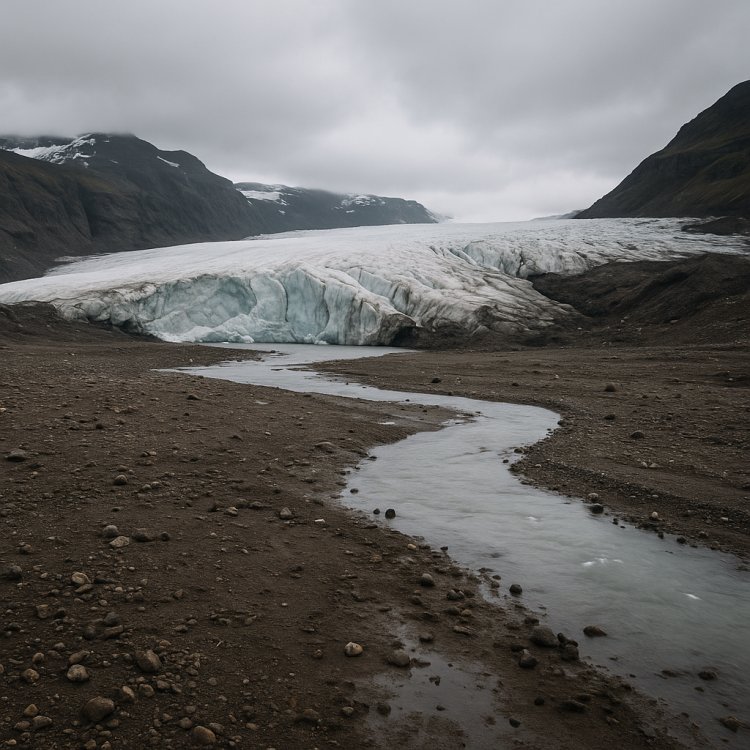
A new study by University of Florida and University of Maryland geologists has found that when glaciers melt and expose new land, recently exposed soil can first reduce greenhouse gas emissions. But over time, as the soil itself evolves and microbes increase in frequency, it emits more of the greenhouse gases carbon dioxide and methane into the air.
This finding is significant because it allows scientists to learn more about the way melting glaciers currently, and also in the past, influence climate change in the long term.
The research done by Professor Ellen Martin and Professor Jonathan Martin of the University of Florida with with help from Dr. Andrea Pain from the University of Maryland. They carried out their research in Kobbefjord, Greenland, where they took samples of water from glaciers and soil uncovered since thousands of years after the glaciers melted. These samples helped them study how greenhouse gases react in newly exposed land after glaciers melt.
Scientists measured these water samples to quantify the levels of carbon dioxide (CO₂) and methane (CH₄), the most prevalent greenhouse gases. They determined that shortly after glaciers melt, the melting water interacting with ground-up rock sediment decreases gas emissions. But with the passage of time and the development of soil, it begins to emit higher levels of methane.
Professor Jonathan Martin defined this change in the behaviour of greenhouse gases and how it could have been a critical factor thousands of years ago, when the world was warming up after the last ice age. Lower CO₂ levels might have initially slowed global warming. But as more methane was released, the warming effect probably accelerated again.
The research group is now set to examine a third greenhouse gas: nitrous oxide (N₂O). While it accounts for a smaller percentage of emissions (around 6%), it is very potent, more than 200 times as effective as carbon dioxide at trapping heat. Earlier research shows that nitrous oxide may react differently than carbon dioxide and methane at the time of glacier melts. While carbon dioxide and methane may decrease at first and then increase over time, nitrous oxide might follow different patter when released from melting ice. This research is being supported by the National Science Foundation and the International Network for Terrestrial Research and Monitoring in the Arctic.
According to Professor Martin, future scientists will be concerned with how carbon dioxide, methane, and nitrous oxide interact when glaciers melt. By examining how these three gases are emitted or taken up during glacier loss, scientists will learn more about how their actions affect global warming. As we have better models, we will be able to plan better solutions and measures to combat climate change.
What's Your Reaction?