The minister’s remarks come as global green investment crossed $1.8 trillion in 2023
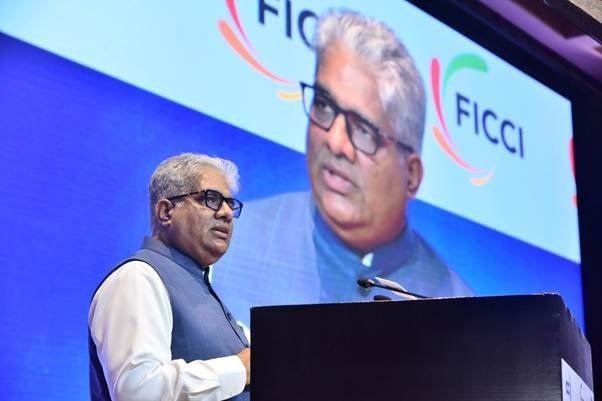
Green finance represents “the backbone of resilient competitive economies” rather than a niche sector, whilst acknowledging the enormous scale of funding required for India’s climate transition, said Union Minister for Environment, Forest and Climate Change, Bhupender Yadav, at FICCI’s LEADS 2025 conference.
The minister’s remarks come as global green investment crossed $1.8 trillion in 2023. Yet, emerging economies like India received less than a quarter of this funding, according to FICCI President Harsha Vardhan Agarwal. This financing gap threatens to undermine the climate commitments of developing nations at a critical juncture for global emissions reduction.
“Green finance is about restructuring the flow of capital so that every investment in infrastructure, industry, transport, or agriculture contributes to sustainability rather than undermines it,” said the minister. “It is about creating economic systems where profitability and progress are aligned with the health of our ecosystems and the well-being of our people.”
India has already demonstrated strong investor confidence through its sovereign green bonds programme, which attracted substantial international investment. However, Minister Yadav stressed that public funding alone cannot meet the challenge. “Fiscal space is tight,” he said. “The role of public budgets and concessional finance is to de-risk, crowd in and set rules that unlock private capital.”
The minister outlined India’s three-pronged approach under Prime Minister Narendra Modi’s leadership: treating climate finance as development finance, positioning early green investors to own tomorrow’s value chains, and acknowledging that developed countries must substantially increase their financial commitments to developing nations.
Central to India’s strategy is the recently revised Green Credit Programme, launched in October 2023. The updated methodology, notified on 29 August 2025, introduces direct participation by private entities and minimum restoration commitments, aimed at mobilising private capital for climate action.
The programme represents part of India’s broader push beyond the implementation of Article 6 of the Paris Agreement, which enables international cooperation on carbon markets. “High integrity carbon markets governed by transparent baselines, conservative crediting and clear corresponding adjustments can channel billions into mitigation that would otherwise not be financed,” Yadav explained. The minister averred that finance is the make-or-break issue for climate action. Without it, the 2030 Agenda and the UNFCCC's Paris Agreement will be pointless. "Article 6 of the Paris Agreement is not just about carbon credits, it is about fairness, innovation, and enabling the Global South to access finance & technology for a just transition."
FICCI President Mr Agarwal noted that Indian companies are already “tapping green bonds to fund solar parks in Rajasthan and building advanced recycling ecosystems in automotive supply chains”, proving that “profitability and sustainability can thrive together.”
However, significant challenges remain in democratising access to green finance. The need to include micro, small and medium enterprises, farmers and vulnerable communities in sustainable investment flows represents a critical gap in current financing models.
Ms Naina Kidwai, Chairman of Rothschild & Co. India and former FICCI President, highlighted the business imperative driving the adoption of green finance. “Rising temperatures, erratic monsoons, floods and heat waves damage infrastructure, and for businesses, this translates to higher costs, volatility and exposure,” she said.
Kidwai outlined four key regulatory frameworks that countries like India are adopting to scale green finance. These include sustainability disclosure requirements for both financial and non-financial companies to report ESG-related risks, directed concessional lending for green technology projects, prudential regulations requiring companies to outline environmental risk assessments in annual reports, and the establishment of specialised green financial institutions to provide credit guarantees and partner with banks.
The panel discussion that followed the ministerial address highlighted diverse perspectives on implementing green finance frameworks. Pradeep Ramakrishnan, Executive Director, Department of Capital Markets, International Financial Services Centres Authority (IFSCA), outlined how India’s IFSC has emerged as a climate finance hub by adopting internationally accepted taxonomies rather than creating domestic frameworks. The centre has facilitated $16 billion in sustainable bond issuances across green, social and sustainability-linked instruments.
Ashwini Kumar Tewari, Managing Director of State Bank of India, emphasised the need for adaptation finance beyond the $10 trillion mitigation figure, noting that India’s renewable energy sector had successfully transitioned from requiring concessional finance to attracting mainstream commercial investment. He advocated for partial credit enhancement mechanisms and inclusion of renewable activities in priority sector lending guidelines.
Bongi Kunene, Managing Director, Banking Association of South Africa, shared her country’s 25-year journey in renewable finance, emphasising the importance of government leadership and central bank frameworks in developing risk management protocols for banks. She emphasised the crucial role of collaboration between the state and the private sector in creating sustainable financial taxonomies.
Mika Sulkinoja, Coordinator of World Circular Economy Forum, The Finnish Innovation Fund Sitra, pointed to policy gaps in facilitating circular business models, noting that whilst energy transition frameworks exist, regulations for circular economy transformations lag. He advocated for price signals that would make secondary raw materials more affordable than virgin materials, thereby addressing the current 8% global circularity rate.
Susan Potgieter, Whitespace Incubation Director, APAC India Regional Growth Office, Hitachi Australia, warned that “green is not enough anymore” and emphasised the need for financially sustainable projects that build resilience. She stressed the importance of supporting small and medium-sized enterprises in their decarbonisation efforts and involving financial institutions earlier in innovation processes.
What's Your Reaction?