India Calls for Fair Climate Action at COP30
CoP30 must be the CoP of Adaptation; Climate Finance remains the Critical Enabler of Ambition; Technology Access is a Right, not a Bargaining Tool: India
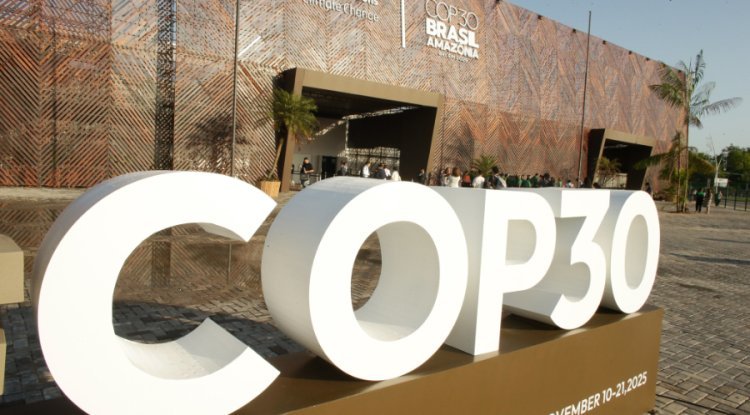
India delivered statements on behalf of the BASIC group (Brazil, South Africa, India and China) and the Like-Minded Developing Countries (LMDC) at the Opening Plenary of UNFCCC COP30 in Belém, Brazil. In its statement, India repeated that fairness, shared but different responsibilities, and fully following the rules of the UN climate agreements, the Convention, the Kyoto Protocol and the Paris Agreement are essential.
India expressed its support working together with multilateralism and international cooperation on climate action, especially given the current global situation. The statement also noted the preparations done by the Brazilian Presidency for COP30.
As the Paris Agreement completes 10 years, India highlighted that climate finance is still one of the major barriers to increase global climate action. India called for a clear and universally agreed definition of climate finance, scaled-up public finance for adaptation, and implementation of Article 9.1 of the Paris Agreement, which makes it a legal duty for developed countries to provide financial support to developing countries.
India noted that the money needed for adaptation is nearly fifteen times higher than current flows and that progress toward doubling international public adaptation finance by 2025 is still far behind. It stressed that adaptation is a critical priority for vulnerable people in developing countries who have contributed the least to cause climate change but face the most severe impacts.
India called for a strong outcome on the Global Goal on Adaptation (GGA), including agreement on a minimum package of indicators, though without any additional reporting between and with flexibility with countries as per their national circumstances. It supported taking forward the UAE–Belém Work Programme and the launch of the Baku Adaptation Roadmap to ensure that no one is left behind.
India underlined the need for reliable, affordable and equitable access to Climate Technologies. It called for a strong outcome on the Technology Implementation Programme, emphasizing that intellectual property and market barriers must not hinder technology transfer to developing nations.
India said that the Just Transitions Work Programme should create practical systems that make sure the shift to a low-carbon economy is fair for everyone. It should be based on equality, help reduce the development gap between richer and poorer countries, and make sure no community or group is left out.
India warned that climate-related trade rules made by single countries could become a form of protectionism, go against Article 3.5 of the Convention, and weaken cooperation among nations. BASIC and LMDC repeated that the structure of the Paris Agreement should not be changed, and that CBDR-RC must remain at the centre of global climate efforts.
Speaking for BASIC and LMDC, India recalled the historical and ongoing responsibility of developed nations. It was stressed that Developed countries must not only reach net-zero earlier to preserve equitable carbon space but invest more in negative emissions technologies and most importantly fulfil their obligations on finance, technology transfer and capacity-building to developing countries.
Both statements reiterated that India, while affirming its support along with those of BASIC and LMDC partners for a successful COP-30, stated that it remains committed to a constructive and collaborative engagement to ensure a successful and balanced outcome at Conference, in the overall interest of humanity and protection, preservation and conservation of Mother Earth.
What's Your Reaction?

















