India Hits 50% Clean Energy Early, But Is Storage Ready?
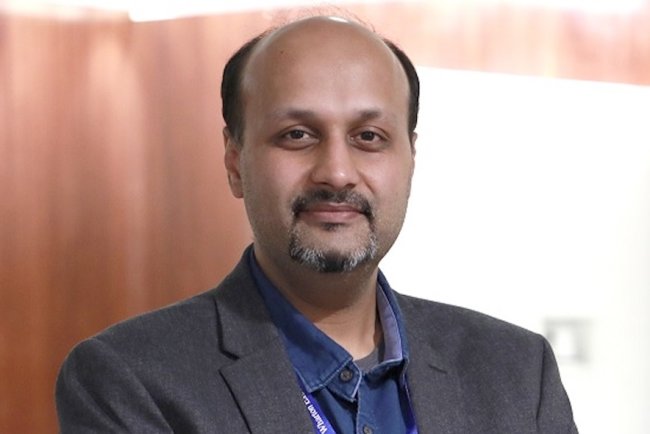
Manoj Kumar Singh, Director General of the Digital Infrastructure Providers Association (DIPA), explained why India is now in a strong position to build a battery manufacturing ecosystem

In an interview with ResponsibleUs, Manoj Kumar Singh, Director General of the Digital Infrastructure Providers Association (DIPA), explained why India is now in a strong position to build a battery manufacturing ecosystem—and why it’s important to look at the progress without any rose-coloured filters.
Can India build a fully self-reliant battery manufacturing ecosystem instead of depending on imports?
Our experience with modules under the PLI scheme shows what’s possible. We built a 100-GW manufacturing base through policy stability, clear demand, and incentives. The ₹24,000-crore PLI programme didn’t just expand capacity — it attracted over ₹50,000 crore in investment and positioned India as a serious player.
The same approach can help us move from being battery consumers to becoming a global production hub, especially for next-generation chemistries like sodium-ion and solid-state. The real issue is timing. If we don’t back new technologies now, we’ll repeat the lithium-ion dependency cycle. Real self-reliance means fewer imports, stronger exports, and the ability to supply to the world.
How does India move from adding renewable capacity to using it at the grid scale?
The Power Ministry’s rule mandating on-site storage equal to 10% of solar capacity is a strong start, but it will work only if three things move together.
We need a solid transmission network to move power from high-resource states to high-demand states. The grid needs better management tools — IoT, analytics, predictive controls — so it can handle fluctuations. And our PPAs must recognise that renewable power paired with storage is a higher-value product. DIPA members are already working on solutions that reduce deployment cost per MW. Hybrid projects combining solar, wind and storage are showing that renewables can meet firm schedules. Once storage is recognised as essential infrastructure, adoption will rise sharply.
What regulatory framework do we need to standardise BESS deployment across states?
India needs a national storage framework that sets basic standards for technology, safety, and grid connectivity while giving states room to adapt. The challenge is aligning this with the patchwork of existing state rules on banking, RPOs and grid codes.
A national policy should include uniform connectivity norms, standardised PPAs that treat storage as an asset, clear rules for land allocation and faster approvals for hybrid projects. Storage developers also need multiple revenue streams — energy trading, ancillary services, and capacity payments. States like Gujarat, Rajasthan and Karnataka, which already have matured renewable ecosystems, can serve as pilot grounds for these national standards.
With BESS limited to 4–8 hours of discharge, how do we handle long spells of poor solar generation?
Lithium-ion systems work well for daily balancing, but long cloudy spells need other tools. Pumped hydro works for multi-day storage. Green hydrogen lets us convert renewable power into a storable fuel. Flexible gas plants will remain part of the backup mix. Long-duration technologies — thermal storage, compressed air, gravity-based systems — are also moving ahead. Instead of relying just on one technology, India has the capacity to implement several at once. By 2030, the grid will function as a hybrid system that uses data-driven control systems to link solar, wind, fast-response batteries, long-duration storage, and flexible generation.
Should India invest early in new chemistries or continue tried-and-true lithium-ion technology?
Both are necessary, but in the proper sequence. Lithium-ion is essential from now until 2030 — it’s available, proven and stabilises the grid. At the same time, India must invest heavily in R&D and pilots for sodium-ion, solid-state and other chemistries that will mature between 2030 and 2035. India’s scale gives us the ability to test and commercialise multiple technologies. With a ₹3.5-trillion market opportunity, we can’t sit back and wait. Nor can we depend on imported lithium forever. The logical pathway is clear: deploy Li-ion now, scale sodium-ion next, and move to solid-state as it matures.
Can India shift from being a storage importer to a global leader in battery manufacturing?
We can — but only if we move beyond simple assembly and master the deeper technology. Today's leading nations—China, South Korea, and the US—do so because they have control over supply networks, cell chemistry, and large-scale manufacturing.
India has three main advantages: competitive production prices, a sizable domestic market that guarantees demand, and the ability to swiftly adopt new chemistries. Stronger R&D in battery chemistry, a circular chain that encompasses raw material processing and recycling, designated manufacturing zones with dependable power and logistics, and a push for cell-level production over pack assembly are all necessary for us to lead the world. The window is not very long. Whether we lead or follow will depend on what we do over the next two years.
Will reducing GST from 12% to 5% drive real BESS adoption?
A lower GST rate helps, but adoption depends on policy. Storage will scale only if we pair GST cuts with firm mandates in major tenders, clear capacity payments for dispatchable renewables, faster approvals and assured grid connectivity. Think of GST reduction as useful but not game-changing on its own. Treating storage as core infrastructure and updating banking and revenue rules to reflect its value will have a far greater impact.
How will India meet its 2030 targets despite land constraints and right-of-way delays?
The breakthrough will come from shared infrastructure. We’ve stressed this repeatedly at DIPA — common transmission lines, shared storage parks, and joint evacuation corridors cut land use, reduce cost and speed up rollout. For right-of-way, India needs renewable corridors with pre-secured land, rules like highway land acquisition, and compensation models that involve local communities. Approvals must move to a genuine single-window system — one authority, one decision. Investment will be highest in states that streamline these procedures. Reaching the 2030 targets is entirely possible if India approaches infrastructure deployment with the seriousness of a national mission
What's Your Reaction?