India’s Future lies in Turning Waste and Biomass into Clean Energy: Gadkari
Nitin Gadkari emphasized that converting waste and agricultural biomass into clean energy is key to India’s self-reliance, pollution reduction, and sustainable development.
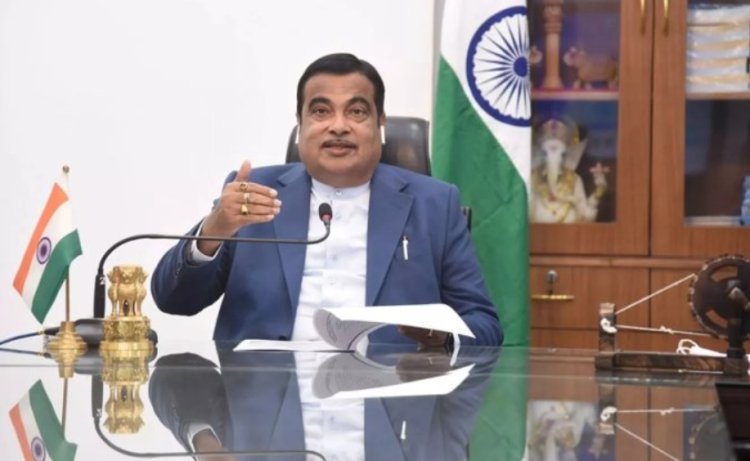
India’s future lies in converting waste and agricultural biomass into clean energy, according to Nitin Gadkari, Minister of Road Transport and Highways, Government of India. Addressing the CII 10th International Conference on Waste to Worth Technologies through a video message, he said, “this mission is not only about waste management, but also about protecting our ecology, improving public health, and strengthening India’s development vision”.
Nitin Gadkari in his video underscored India’s future lies in converting waste and agricultural biomass into clean energy and the solutions are an import-substitute, cost-effective, pollution-free solution to make the country self-reliant. He emphasized that innovation in bioenergy is crucial to curb air pollution caused by crop residue burning and to accelerate the shift toward a circular economy
The third edition of the National Circular Economy Framework (NCEF–3), was also launched to accelerate India’s transition towards a resource-efficient and sustainable circular economy. NCEF–3 expands its focus on actionable implementation, measurable outcomes, and accountability to operationalize circularity at scale.
Speaking at the inaugural session, V K Chaurasia, Advisor in-Charge, CPHEEO, Ministry of Housing and Urban Affairs, said true progress in waste management and circularity will come through collective effort, with industry, innovators, and government working in close coordination to create an enabling framework for sustainable growth.
In his welcome address, Masood Mallick, Chairman, CII National Committee on Waste to Worth Technologies and Managing Director & Group CEO of Re Sustainability, highlighted the need for improved processing and value creation, which shall help accelerate India’s journey towards a sustainable, low-carbon economy. He called for establishment of a transparent circularity measurement systems, the creation of green jobs, and strengthening India’s global collaborations through international missions.
The conference also hosted the 6th edition of the CII 4R Awards 2025, where nearly 50 organizations were recognized for leadership in Reduce, Reuse, Recycle, and Repair (4R) practices. A Compendium of Best Practices highlighting innovative circular economy models and scalable waste-to-worth solutions was also released during the conference.
The conference also witnessed the maiden launch of Young 4R Awards. The award aims to motivate young minds below the age of 35 and promote sustainability and waste management.
Nearly 10 organizations also showcased their waste to worth technologies at the conference. The conference was attended by over 300 delegates.
The deliberations focused on governance frameworks, the transition to a circular economy, technological innovations, intellectual property partnerships for sustainable growth, and emerging opportunities in waste management and circular practices.
What's Your Reaction?