Japan’s 310,000-Ton Methanol-Powered Oil Tanker Redefines Sustainable Energy Transport
Japan’s NYK Line is developing a 310,000-ton methanol-powered oil tanker, set for 2028 delivery, aiming to cut maritime emissions by 40% and redefine sustainable energy transport.Japan’s 310,000-ton methanol-powered oil tanker, launching in 2028, cuts emissions by 40%, blending innovation and sustainability in global energy transport.
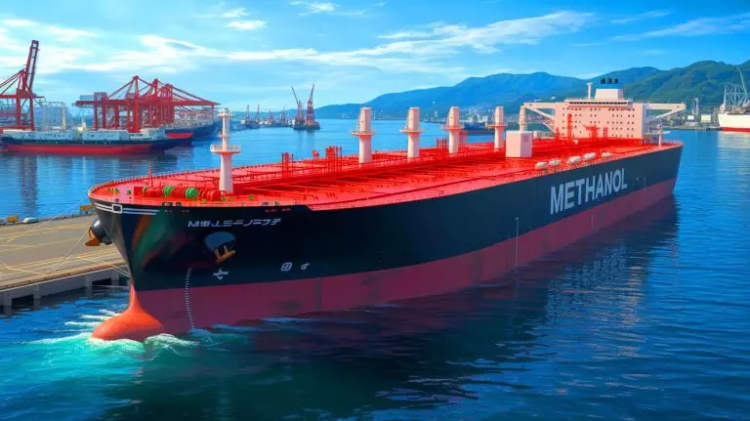
Nippon Yusen Kaisha (NYK Line) announced the development of the world’s largest methanol-powered oil tanker, a 310,000-ton very large crude carrier (VLCC) set to be delivered by 2028. This groundbreaking vessel, a collaboration with Idemitsu Tanker, IINO Kaiun Kaisha, and Nippon Shipyard, aims to reduce maritime emissions by 40% compared to traditional ships, marking a significant step toward sustainable energy transport. Japan’s innovation addresses the maritime sector’s environmental impact while maintaining the efficiency of global oil supply chains.
The global maritime industry, responsible for approximately 1,000 million tons of CO₂ emissions annually—equivalent to Germany’s total emissions—faces increasing pressure to adopt cleaner technologies. NYK Line’s methanol-powered VLCC, with a deadweight tonnage of 310,000 and a length of 1,113 feet, introduces a dual-fuel propulsion system that combines traditional heavy fuel oil with methanol, a cleaner-burning alternative. This system is projected to cut greenhouse gas emissions by 15% using conventional methanol and up to 40% with greener versions produced from biomass or synthesized from captured CO₂ and renewable hydrogen. The vessel’s design incorporates a large shaft generator that captures rotational energy to enhance propulsion efficiency, further reducing its environmental footprint.
The project, unveiled in October 2024, is a collaborative effort involving key Japanese industry players. NYK Line leads the initiative, leveraging its expertise in sustainable shipping, while Idemitsu Tanker will lease the vessel long-term upon completion, ensuring operational viability. IINO Kaiun Kaisha and Nippon Shipyard contribute to the design and construction, integrating advanced energy recovery systems and eco-friendly technologies. The tanker’s dual-fuel capability provides flexibility, allowing it to operate on heavy fuel oil when methanol is unavailable, addressing practical challenges in global fuel supply chains. This balance between innovation and reliability underscores Japan’s pragmatic approach to decarbonizing maritime transport.
The adoption of methanol as a next-generation fuel is a strategic move. Methanol, when produced sustainably, significantly lowers emissions compared to heavy oil, a major pollutant in maritime transport. The vessel’s potential to use bio-methanol or e-methanol (produced from renewable sources) aligns with NYK Line’s goal of achieving net-zero emissions by 2050. This initiative is part of a broader industry shift, as shipping accounts for nearly 3% of global greenhouse gas emissions. By pioneering this technology, Japan aims to set a new standard for sustainable maritime operations, potentially influencing global regulations and practices.
However, challenges remain. The maritime sector’s transition to cleaner fuels like methanol faces hurdles such as limited global availability of sustainable methanol and high production costs. Electrification, while viable for short-haul shipping, is less feasible for long-haul crude oil transport due to energy density and infrastructure constraints. The VLCC’s reliance on dual-fuel systems mitigates this by allowing flexibility, but scaling up green methanol production requires significant investment in renewable energy and carbon capture technologies. Additionally, the ship’s massive size and complexity increase construction costs, estimated to be higher than traditional VLCCs, though long-term fuel savings and regulatory compliance could offset these expenses.
The environmental significance of the methanol-powered tanker is substantial. The maritime industry’s emissions, if unaddressed, could undermine global climate goals, including the International Maritime Organization’s target of halving shipping emissions by 2050. By reducing emissions by up to 40%, this vessel demonstrates that incremental improvements in fossil fuel transport can contribute to sustainability while renewable energy solutions mature. Critics argue that a “greener” oil tanker is paradoxical in a world transitioning to renewables, but supporters emphasize its role as a transitional technology, ensuring energy security while reducing environmental harm.
Japan’s innovation extends beyond this project. The country is also advancing other sustainable technologies, such as ammonia production through artificial photosynthesis and contributions to the ITER fusion reactor, reflecting its leadership in green innovation. The VLCC project aligns with Japan’s broader commitment to climate action, including its pledge to achieve carbon neutrality by 2050. By integrating advanced engineering with environmental goals, Japan is positioning itself as a leader in sustainable maritime transport, potentially influencing global competitors like China, which is also investing heavily in green technologies.
Economically, the project strengthens Japan’s maritime industry, a critical sector for a nation reliant on energy imports. The collaboration with Idemitsu ensures the tanker’s integration into global oil supply chains, maintaining Japan’s role in energy transport while addressing environmental concerns. The vessel’s development could also create jobs in shipbuilding, engineering, and sustainable fuel production, supporting Japan’s economy. However, global adoption of methanol-powered ships depends on infrastructure development, including methanol bunkering facilities at major ports, which remains a work in progress.
The tanker’s impact extends to global trade dynamics. As countries like China and the EU push for stricter emissions regulations, Japan’s proactive approach could give it a competitive edge in complying with future standards. The Northern Sea Route, increasingly accessible due to climate change, highlights the strategic importance of sustainable shipping, with Russia also investing in low-emission vessels like nuclear icebreakers. Japan’s VLCC could set a precedent for other nations, encouraging investment in cleaner maritime technologies to meet global demand for sustainable energy transport.
Conclusion
Japan’s 310,000-ton methanol-powered oil tanker, set for delivery by 2028, represents a bold step toward sustainable maritime transport. By achieving up to 40% emissions reductions through dual-fuel propulsion and advanced energy recovery, NYK Line and its partners are redefining the future of energy transport. While challenges like methanol availability and costs persist, this vessel underscores Japan’s commitment to balancing energy security with environmental responsibility, setting a global benchmark for greener shipping in a fossil fuel-dependent world.
Source: Sustainability Times
What's Your Reaction?