MIT Solar Desalinator Revolutionizes Water Access`
MIT’s new solar-powered desalinator produces 5,000 litres of fresh water per hour without electricity, offering a breakthrough solution for global water scarcity and sustainable development. MIT scientists have developed a high-efficiency, solar-powered desalination device delivering 5,000 litres of clean water per hour. Ideal for coastal, water-scarce regions like India, it supports sustainable water access and aligns with net-zero goals.
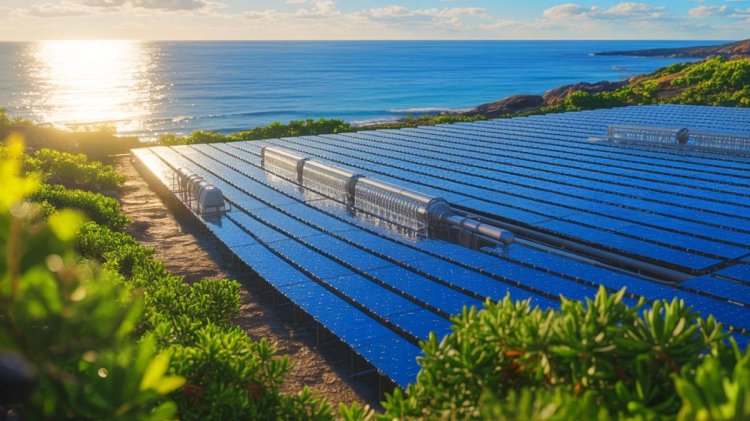
MIT scientists have developed a solar-powered desalination device that produces large volumes of fresh water, offering a sustainable solution to global water scarcity. This innovation could transform water access in arid regions, including parts of India.
The high-flow solar desalinator, tested in 2025, produces 5,000 litres of fresh water per hour using only sunlight, with no need for batteries or grid power. Its passive design leverages solar heat to evaporate seawater, capturing and condensing fresh water through a multistage system. The device achieves 90% efficiency, doubling the output of traditional solar desalinators, and costs 50% less to produce. It can purify water with high salinity, making it viable for coastal areas.
Globally, 2 billion people lack access to clean water, with India facing acute shortages in states like Maharashtra and Tamil Nadu. The MIT device’s scalability suits community-level deployment, potentially supporting 10,000 people per unit. Its low maintenance and lack of moving parts make it ideal for remote regions. In India, where 18% of the population lacks safe drinking water, solar desalination could complement initiatives like the Jal Jeevan Mission.
Challenges include high initial costs and the need for coastal infrastructure. Critics note that brine disposal must be managed to avoid environmental harm. Pilot projects in the Middle East and Africa show promise, with plans to deploy 100 units by 2027. India could adopt this technology in Gujarat and Tamil Nadu, leveraging abundant sunlight and coastal access.
The MIT desalinator offers a lifeline for water-scarce regions. By harnessing solar power, it supports sustainable development and aligns with India’s climate goals.
Source: Sustainability Times
What's Your Reaction?