Northeast India Floods Displace Thousands, Affect 55 Lakh in 2025
Northeast India’s 2025 floods displaced 10,000 and affected 55 lakh, driven by climate change, highlighting the need for resilient infrastructure and relief. Northeast India’s 2025 floods displace thousands, affect 55 lakh, exposing climate vulnerabilities and the need for robust flood management systems.
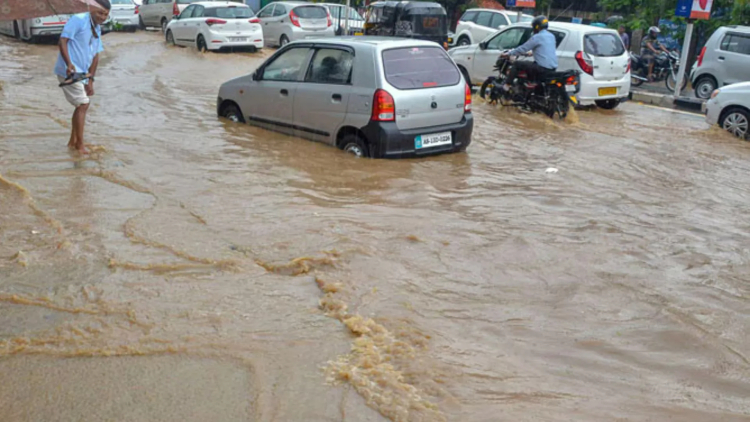
In May 2025, severe floods in Northeast India displaced over 10,000 people and affected 55 lakh across Assam, Arunachal Pradesh, Tripura, and other states, triggered by heavy monsoon rains. The disaster, linked to climate change, has disrupted livelihoods, damaged infrastructure, and raised concerns about India’s preparedness for extreme weather. Relief efforts are underway, but systemic challenges highlight the need for resilient infrastructure.
Northeast India, prone to annual flooding due to its geography and monsoon patterns, faced unprecedented rains in May 2025, with Assam receiving 150% above-average rainfall. The floods affected 55 lakh people, with Assam reporting 30 lakh impacted, Arunachal Pradesh 10 lakh, Tripura 8 lakh, and Manipur, Meghalaya, Mizoram, and Nagaland collectively 7 lakh. Over 10,000 were displaced to 500 relief camps, with 50 deaths reported, primarily in Assam. The Brahmaputra and Barak rivers breached embankments, submerging 2,000 villages and 1 lakh hectares of farmland.
The disaster’s scale reflects climate change impacts, as noted in a 2025 Outlook Planet report, with rising temperatures intensifying weather patterns. A 2024 study in Science Advances linked a 1.5°C warming to increased flood risks, with Northeast India particularly vulnerable due to deforestation and urbanization. Infrastructure losses include 5,000 homes, 200 schools, and 1,000 km of roads, costing ₹10,000 crore. Agriculture, employing 70% of the region’s workforce, faces ₹5,000 crore in crop losses, threatening food security.
Relief efforts involve the National Disaster Response Force (NDRF), deploying 50 teams across affected states, and ₹1,000 crore in central aid. Assam’s government distributed 10,000 tonnes of food and medical supplies, while NGOs provided clean water to prevent disease outbreaks. However, logistical challenges, including flooded roads and limited helicopter access, delayed aid in remote areas. Tripura reported 20% of relief camps understaffed, exacerbating sanitation issues.
Systemic issues include weak flood management infrastructure. Only 30% of Assam’s embankments are reinforced, and early warning systems cover 40% of vulnerable areas. Urban planning failures, with 60% of Guwahati’s drainage systems clogged, worsen flooding. The 2025 Union Budget allocated ₹2,000 crore for Northeast flood mitigation, but implementation lags. India’s broader climate adaptation, supported by the National Bank for Agriculture and Rural Development (NABARD), focuses on rural resilience but overlooks urban flood risks.
Economically, the floods disrupt the region’s ₹3 lakh crore economy, with small businesses and tea plantations losing ₹1,000 crore. Environmentally, soil erosion and river pollution threaten biodiversity, with 10% of Kaziranga National Park’s wildlife affected. The mental health toll, particularly on youth, is significant, with 2025 reports noting increased anxiety due to climate uncertainty, yet only 5% of schools offer counseling.
Globally, the floods align with extreme weather trends, such as Delhi’s record rainfall and Mount Etna’s eruption, highlighting climate-driven disruptions. India’s efforts contrast with the U.S.’s dismissal of climate science under Trump, which risks global cooperation. Local initiatives, like MRFs for plastic waste, could reduce drain clogging, a flood exacerbator, but scaling requires investment. The Uttar Pradesh government’s partnership with iFOREST for climate research could inform Northeast strategies if replicated. next
Conclusion
The 2025 Northeast India floods, affecting 55 lakh and displacing thousands, underscore the region’s vulnerability to climate-driven disasters. While relief efforts provide immediate support, long-term resilience requires robust infrastructure, urban planning, and mental health interventions. India’s climate adaptation policies must prioritize the Northeast to mitigate future impacts.
Source: Outlook Business
What's Your Reaction?