Norway Unveils Full-Scale Carbon Capture Project
Norway launches Longship, the world’s first full CCS chain, marking a major leap in global climate action efforts.
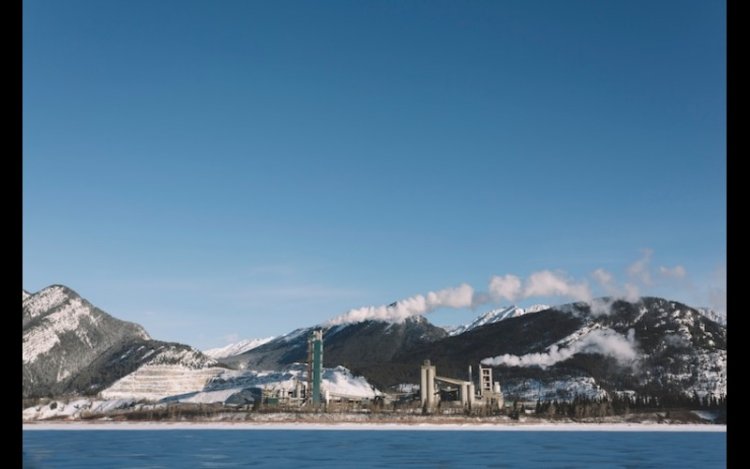
In a landmark move that sets a global precedent for industrial decarbonization, Norway has officially launched Longship—the world’s first full-scale, end-to-end carbon capture and storage (CCS) value chain. This ambitious initiative not only cements Norway’s leadership in climate technology but also signals a new era in emissions reduction for heavy industries across Europe and beyond.
Longship integrates all critical stages of the CCS process, from carbon capture at industrial sites, to transport via specially designed ships, and finally, long-term geological storage under the North Sea. The project’s scale and execution make it a pioneering effort in addressing emissions from sectors traditionally considered hard to decarbonize, such as cement production and waste-to-energy operations.
Backed by NOK 22 billion in state funding, Longship represents the most significant climate tech investment in Europe to date. The project is being hailed as a technological breakthrough, with Norway’s Minister of Energy, Terje Aasland, emphasizing its broader global significance. “Longship demonstrates that it is possible to cut emissions from the industry and waste in a safe and effective way. This is a technological breakthrough and a milestone in Norway’s climate efforts,” said Aasland during the inauguration event.
The project currently features a CO₂ capture facility at Heidelberg Materials’ cement plant in Brevik, with a capacity to capture 400,000 tonnes of CO₂ annually. A second facility is also in the works at Hafslund Celsio’s waste-to-energy plant in Oslo, projected to come online by 2029 with an additional capture capacity of 350,000 tonnes per year. Once captured, the carbon dioxide is liquefied and transported by ship to the Northern Lights terminal in Øygarden, from where it is injected 2.6 kilometers beneath the seabed into secure geological formations.
Northern Lights, operated jointly by Equinor, Shell, and TotalEnergies, is a critical component of the Longship project. It offers open-access CO₂ storage, enabling international emitters to store their captured emissions. The project has already secured cross-border agreements with companies in Denmark, Sweden, and the Netherlands, establishing Longship as not only a national milestone but also a regional decarbonization hub.
In its initial phase, Northern Lights will store up to 1.5 million tonnes of CO₂ per year. The Norwegian Ministry of Energy has approved Phase 2 of the project, which aims to increase the storage capacity to more than 5 million tonnes annually. This expansion has received substantial support from the European Union, which has designated Northern Lights as a “Project of Common Interest.” As a result, it has unlocked €131 million in funding through the EU’s Connecting Europe Facility, reinforcing its strategic importance for the continent’s energy transition.
The official inauguration of the Longship project is being marked by a two-day event in Oslo and Brevik, featuring the naming ceremony of the CO₂ transport ship Northern Pathfinder, the formal opening of Heidelberg’s capture facility, and a high-level climate conference at the Oslo Opera House. These events not only celebrate the project’s milestones but also highlight Norway’s commitment to sustainable industrial development and international climate cooperation.
The total cost of the Longship project is estimated at NOK 34 billion, which includes ten years of operational funding. With the Norwegian government contributing NOK 22 billion in public investment, Longship stands as the largest climate initiative in the nation’s history. The project underscores a broader vision of enabling future green jobs, scaling innovative technologies, and creating a resilient, low-carbon industrial ecosystem.
“This is an investment in future jobs, technology, and industry. Longship will demonstrate that CO₂ management is safe, feasible, and necessary to meet climate goals in Norway and the EU,” said Minister Aasland, reiterating the project’s importance not only for environmental sustainability but also for long-term economic and industrial resilience.
Longship’s open-access model and cross-border collaboration potential offer a replicable blueprint for other nations looking to implement effective CCS strategies. With its scalable infrastructure, strong public-private partnerships, and proven feasibility, Longship positions Norway at the forefront of global climate action and sets a high benchmark for the integration of CCS into national and international climate policies.
What's Your Reaction?