Remora’s Mobile CO₂ Capture Tech Targets Freight Train Decarbonisation
Remora, a Detroit startup, is piloting mobile CO₂ capture tech for diesel freight trains, capturing one tonne of CO₂ per hour with retrofit systems. Backed by $117M, the system compresses and sells captured carbon, offering a practical decarbonisation path for the freight sector.
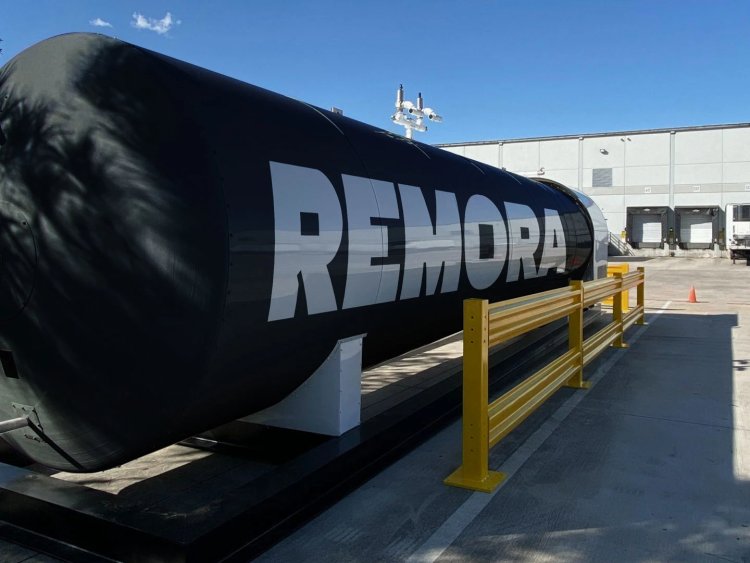
Remora, a Detroit carbon capture technology company, hopes to transform the diesel freight industry with on-the-move carbon capture technology that would purify carbon dioxide (CO₂) exhaust from the train and truck exhaust pipes. By sequestering carbon as vehicles move, the company says it can provide a retrofit, scalable solution that can effectively cut emissions from existing diesel fleets—particularly freight locomotives that continue to stay in use even as the globe looks for cleaner alternatives.
The company purchased a 4,400-horsepower diesel engine locomotive several months ago to test drive its innovative carbon capture technology on trains in an early stage of the technology's path from conception to reality. The technology is designed to recover between one tonne of CO₂ per hour when operating. It will sell compressed, liquified carbon to customers in markets like agriculture, food, and beverages. Returns on such carbon sales will be used to be paid to Remora's transport partners to encourage take-up.
Funded by $117 million in venture capital, Remora has spent more than five years developing and testing the on-board carbon capture hardware. The lengthy development cycle is the opposite of typical product-launching, revenue-generating software startups. Hardware complexity, integration into heavy-duty diesel, and the fact that real-world performance testing has been required are all contributing factors to the extended development cycle.
Remora's first pilot project in 2023 was completely revamped from its system after some technical issues. Backpressure motors and waterlogging were some of the problems that afflicted early diesel truck trials. As a response, the company came up with an improved version that utilizes a sophisticated adsorbent material that boosts up to 90% of the capture performance. With such advancements lined up, the firm is gearing up for large-scale rail testing to be conducted in 2026.
Remora's technology is drawing industry leaders like Union Pacific, Norfolk Southern, DHL, and Ryder, which have contacted the company to try its system on actual freight usage. For the railroads, perhaps the most significant benefit is that Remora's system can be retrofitted onto existing diesel locomotives. It bypasses the expense of new rolling stock purchase but achieves the purpose of reducing emissions, an expense-saving and environmentally friendly solution.
Its carbon capture process itself involved passing exhaust fumes from cars through a chamber that is filled with proprietary pellets to trap CO₂. Once saturated, the gas is pumped out, cooled, and compressed into liquid form for resale and storage. Further particulate impurities such as soot and ash in the exhaust can be filtered out by the system to produce cleaner air conditions within the workplace.
Despite political opposition to ESG programs at the U.S. national level, such as rollbacks during the Trump administration, Remora has received support from a robust set of climate-sensitive investors and carbon-cutting long-term businesses. Carbon sequestered and transport cost remain a concern for the mobile carbon capture process, but its potential to decarbonise the diesel freight segment continues to lure investors.
Remora's onboard capture technology addresses a fundamental emissions issue. Diesel freight, especially rail freight, is a significant source of greenhouse gas emissions worldwide. Electrification of rail is costly and time-consuming, especially in big countries with big freight networks. Until there is mass deployment of zero-emission substitutes for rail, technologies like Remora's that are retrofittable offer a practical bridging solution to reduce emissions without the need to change infrastructure.
A few of the carbon-polluting industries have started to explore or initiate capture-use situations as a part of their broader ESG and net-zero plans. Remora's concept of monetising the captured CO₂ by selling it to recycling industries is making it a circular economic model, limiting waste and bringing in cost effectiveness to emissions management.
While the transport industry remains one of the more difficult industries to decarbonise due to its nature, shifting climate policy, and legacy infrastructure, the efforts of businesses like Remora are evidence of the accelerating pace in the manner in which the private sector acknowledges and minimises emissions. Pilot transportation by rail in the future can be the catalyst for the transition to low-carbon freight networks.
If successful, Remora's technology might be applied to a global network of diesel transport, providing a scalable but not excessively expensive solution to making old freight infrastructure green. Investors and onlookers are optimistic but guarded, keeping their fingers crossed for the outcome of 2026 trials to determine whether the technology can operate reliably sustainably in commercial freight applications.
The development of custom-built technological innovations like Remora's carbon capture units illustrates how frontier technological developments can meet worldwide decarbonisation goals without requiring humongous revamps of current installations. Highlighting retrofitting, the technology offers a realistic solution path for sectors where electrification is impossible.
Source and Credits:
Source: WSJ | Author: Jithin Joshey Kulatharayil | Publisher: KnowESG | Photo Credit: Remora
What's Your Reaction?