Singapore Faces Setback as Domestic Recycling Rate Falls to New Low
Singapore’s domestic recycling rate has fallen to a record low of 11%, raising concerns over its 2030 target of 30%. Misuse of blue bins, public confusion, and lack of trust in the system are key challenges. Experts call for better education, infrastructure, and realistic planning to meet national waste goals.
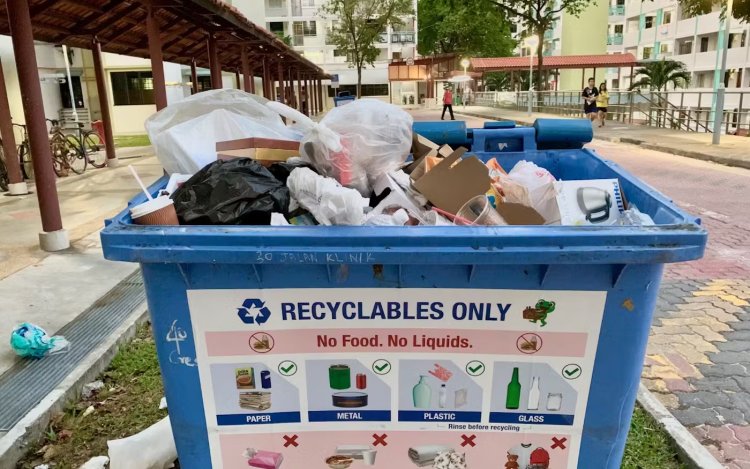
Singapore is under growing pressure about its waste management objectives as the domestic recycling rate fell to a record low, therefore questioning the nation's ability to reach its 2030 goal. A big jump from the present 11 per cent, the city-state has pledged to recycle 30 per cent of its domestic trash by the end of the decade. Still, improvement is sluggish and the distance between goals and reality seems to be growing.
Particularly for household garbage, the efficacy of the national recycling system is under investigation. A major pillar of Singapores plan is the blue bin system, which was launched in 2011 to promote home recycling. Many locals, though, have frequently treated these containers as standard trash cans over time, therefore misapplying them. Consequently, trash that is tainted or unrecyclable finds its way into recycling processes, therefore making correct recycling difficult.
Public trust in the recycling system is one of the main problems. Many Singaporeans are still unclear about what may and cannot be recycled, which results in extensive misapplication of the blue bins. Wrong disposal pollutes recyclable materials, therefore whole batches might be sent to incineration rather than being processed for reuse. Not just does this issue influence the recycling rate, but also it helps to raise the country's total trash production.
Despite several awareness efforts and educational initiatives started over the years, household recycling behaviour and understanding have not changed much. Although recycling rates in the commercial and industrial sectors are greater, household involvement is still rather little. Although authorities have sought to improve recycling accessibility by installing blue bins in residential areas and public locations, these attempts have not resulted in statistically significant changes in recycling results.
Reducing waste sent to the Semakau Landfill, the only landfill site in Singapore predicted to be full by 2035, is the goal of Singapore's general waste management plan. The government has promoted programs like the Zero Waste Masterplan and the Resource Sustainability Act to help to achieve this. Experts contend, nevertheless, that actual effects will only be achieved with stricter enforcement, improved bin designs, obvious labelling, and continuous public awareness campaigns.
The difficulty is altering society behavior and establishing faith in the system. People must be persuaded that their actions make a difference. Moreover important to guarantee correct processing and reuse of recyclable waste are changes in sorting infrastructure and collecting systems.
Local recycling sectors need more funding as well so as to lessen dependence on foreign export of waste for treatment. Developing a robust domestic recycling capability helps to create a circular economy and lower environmental effect. This change would call for collaboration among the government, waste management firms, and the general public.
Though the plan to raise recycling rates is admirable, Singapore's objectives are ambitious; present trends point to the necessity for a more pragmatic and workable strategy. With only five years left until 2030, the nation should review its policies and spend in long-term behavioral change, infrastructure, and openness inside the recycling system.
The decline in local recycling rates should act as a wake-up call. Meeting the 2030 target will stay beyond reach if prompt and aggressive action is not taken. Singapore has to concentrate on streamlining recycling for homes, tackling source-specific contamination, and cultivating a culture of ethical trash disposal.
Source: Eco-Business
Image Credit: Robin Hicks, Eco-Business
What's Your Reaction?