India’s cotton sector adopts natural farming to boost sustainability, with government support and climate-resilient practices enhancing farmer livelihoods.India’s cotton culture embraces natural farming for sustainability, with government initiatives supporting climate-resilient practices and farmer incomes.
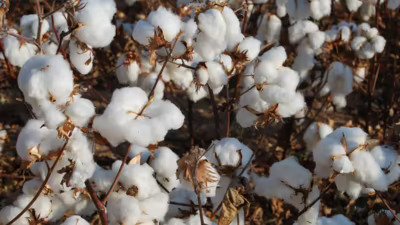
India’s cotton sector is embracing natural farming to promote sustainability, driven by climate risks and consumer demand for eco-friendly products. With cotton covering 12 million hectares, initiatives like the Mission for Cotton Productivity and organic practices aim to reduce environmental impact and enhance farmer livelihoods, aligning with net-zero goals.
Cotton, grown on 12 million hectares, is a key crop in India, supporting 6 million farmers. Climate change, with erratic monsoons and heatwaves, threatens yields, prompting a shift to sustainable practices. The 2025-26 Budget allocated ₹500 crore for the Mission for Cotton Productivity, promoting high-yield, climate-resilient varieties and natural farming on 1 crore farms.
Natural farming, using bio-inputs like cow dung and neem, reduces chemical use, cutting emissions and costs. The government’s plan for 10,000 bio-input resource centers supports this transition, with Gujarat and Maharashtra leading adoption. Organic cotton, at 2% of production, fetches 20% higher prices, driven by global demand for sustainable textiles.
Challenges include low awareness and initial yield drops during the 3-5 year transition to organic farming. The MSP for cotton rose ₹589 per quintal in 2025, incentivizing sustainable practices. The National Mission for Sustainable Agriculture promotes mulching and zero-till sowing, conserving soil and water.
Climate risks, like the 57% rise in drought-prone areas since 1997, demand resilient varieties. The Budget’s focus on climate-resilient seeds and ₹1,000 crore for pulses complements cotton initiatives. However, groundwater depletion and pest resistance remain barriers, requiring precision irrigation and training.
Conclusion
India’s cotton sector is pivoting to natural farming to enhance sustainability and farmer incomes. While initiatives like the Mission for Cotton Productivity show promise, scaling adoption and addressing climate risks are critical to ensuring a resilient, eco-friendly cotton culture.
Source: Times of India
What's Your Reaction?