Toxic Metals In Peatlands Threaten Water And Health
Toxic metals in UK peatlands risk polluting waterways and harming health due to wildfires and climate change.
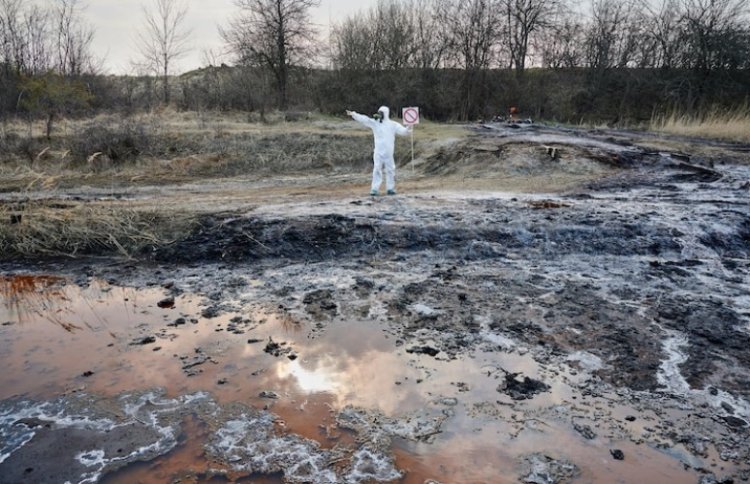
UK peatlands, formerly thought of as precious ecological assets with regard to carbon sequestration and biodiversity role, are also silently sitting on centuries' worth of poisonous heavy metals. Queen's University Belfast (QUB) researchers have published a new study alerting that lead, arsenic, mercury and cadmium, the target metals, are extremely poisonous to humans, animals and crops when excavated, especially in the wake of wildfires and climatic warming.
The research emphasizes the fact that peatlands, so highly lauded as potent sinks for carbon, have also been acting as natural sinks for industrial contamination for more than 200 years. The ecosystems have been taking up contaminants emitted over centuries of production and fossil fuel combustion and have buried them deep within waterlogged soils. This repression is now under attack, however, by escalating climate uncertainty and human influence.
It is the researchers from QUB, under Professor Graeme Swindles, who have been analyzing peat core samples extending over the entire UK, Ireland, and even the Canadian High Arctic. The samples, which were taken from an international study, point to horrific levels of heavy metal pollution-even where people used to assume places to be untouched and pristine.". Even as remote as Ellesmere Island in the Canadian Arctic with little or no adjacent industry, was found to contain pollution in its samples. This finding illustrates the worldwide range of industrial pollution and its permanent effect on the environment.
PhD student Ellie Purdy, who contributed to the project, said the work revealed just how interconnected global ecosystems are. Despite the remote locations, these areas have not been immune to the fallout of industrial activity thousands of miles away. “It’s basically just about how what we’re doing is affecting the environment,” she said. “Even though these contaminants were once stored in these peatlands, they’re now being released under climate warming.”
Most troublesome is that global warming conditions, like rising temperatures, more frequent wildfires, and longer droughts, would release these poisonous metals into nearby water bodies. This would not only lower environmental quality but could potentially contaminate drinking water supplies, ruin aquatic life, and ruin crops. Researchers cited previous incidents, like the detection of cadmium at the site of a former steel works in Corby, Northamptonshire, associated with congenital malformations in animals, as proof of the damage that these toxins would inflict if they were to be released.
Tests conducted in a lab at QUB mimic different climate regimes to gain further knowledge about how peatlands would react. Project scientist Dr. Richard Fewster researched the impact of drying, heating, and burning on the mobility of stored pollution. He observed that fires, especially wildfires, can cause sudden, massive releases of the toxins—a "big pulse" phenomenon not found in natural peat. The observation is in favor of conserving peatlands in wet, stable, intact state.
Nearly 12% of Northern Ireland is peatlands now, but over 80% are in poor or degraded condition following historical drainage, extraction, and burning. Healthy peatlands create new peat at an extremely slow rate of about 1 millimetre annually, but degradation does not just bring this process to an end—it can unravel it and release trapped carbon and pollutants.
In spite of the size of the task, restoration is already underway. At County Antrim's Garry Bog, over 3,000 dams have been erected by an Ulster Wildlife-led project to block off drainage channels and lift the water table, rewetting the ground. The peat here goes down over nine metres, so it's been sequestering and storing carbon—and pollutants—for over 9,000 years.
James Devenney of Ulster Wildlife, who is leading the restoration at Garry Bog, said that the peatlands were the largest terrestrial carbon sinks. He highlighted Northern Ireland's particular chance and duty to combat climate change, as it possesses a unique depth and coverage of peatland within the area. "There's a great deal of work that can be done," he added. "Northern Ireland has a tremendous role to play in combatting climate change."
Its immediacy is heightened by the consideration that Northern Ireland is likewise still to agree its peatlands strategy. The Department of Agriculture, Environment and Rural Affairs has prepared a strategy for Executive endorsement. The draft Climate Action Plan meanwhile proposes that the region needs to substantially increase its peatland restoration efforts—restoring a minimum of 10,000 hectares of peatland by 2027 as recommended by the UK Climate Change Committee.
Professor Swindles gave a dire warning: "It's very clear we need to make sure these peatlands are wet. We must restore them, rehabilitate them, plug the drains. And we must end peatland burning." His report, supported by decades of research and accumulating evidence, leaves much unsure but certain that the fate of environmental and public health rests on how far and how fast peatlands are saved and restored.
The research documents not just a hidden aspect of environmental and climatic hazard but also rings an alarm for policymakers, conservationists, and society. Given well-designed restoration and conservation, peatlands can still remain useful protectors of climate stability and ecological integrity. But left on their own, they can turn into areas of poisonous efflux—putting another dimension to the already urgent global environmental problem.
What's Your Reaction?