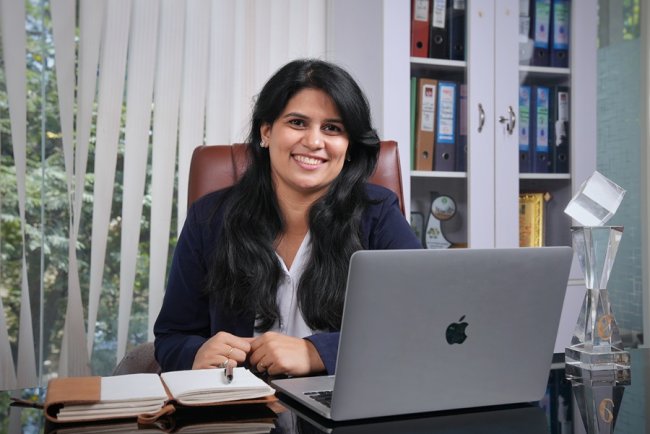
Navkaran Singh Bagga, Founder, Akvo, speaks about the science behind atmospheric water generation, electricity consumption while generating water from air, and more

What if your next glass of water didn’t come from a tap, a bottle, or a tanker—but straight from the air? In Delhi-NCR’s sticky monsoon or on a humid July day, an atmospheric water generator can do just that—extract moisture from the air and turn it into clean drinking water. But how much does it really cost? Can it work all year round? And why do we need it? We need it to prepare for a future where we must fight the growing water crisis. As rivers are struggling to meet daily water demands due to rising consumption, pollution, and mismanagement. Groundwater levels are also rapidly depleting. While several programmes have been launched to revive water sources, the challenge continues. Navkaran Singh Bagga, Founder of Akvo Atmospheric Water Systems, says water stress doesn’t mean water is vanishing from the Earth—it means our consumption is outpacing nature’s ability to replenish it. The water cycle remains unchanged since the age of dinosaurs—it still functions the same way. What has changed is our demand, driven by population growth and industrialisation.
In an interview with ResponsibleUs, Bagga speaks about the science behind atmospheric water generation, electricity consumption while generating water from air, and more.
What made you start Akvo?
Back in late 2016, I was looking around for new opportunities, maybe in sustainability. Studying solar, for instance, I perceived water to be an overlooked, largely unorganised, space. Unlike industries where a few big names dominate, water lacks such identifiable players despite being essential. That gap felt like a business opportunity. My decision wasn’t driven by an emotional moment—it was strategic. What excited me most was the idea of extracting water from air. While most companies focused on treatment or recycling, few explored alternate sources. That’s how the journey into atmospheric water generation began, though entering a new space always comes with challenges.
The biggest challenge? It’s the value perception of water. Most people don’t associate a real cost with it. Ask anyone their electricity or internet bill—they’ll know. Ask them what they pay for water, and they likely won’t. That’s because water, in most cases, is heavily subsidised or free, and people take it for granted.
So, when we present atmospheric water generation, many find it expensive—not because it is, but because they’ve never really paid for water itself. You're mostly paying for packaging and transport when you buy bottled water, or just transmission costs when you get municipal water at home.
Our technology becomes cost-effective when compared to bottled water or RO systems, especially in the long run. But today, we can’t compete with utility water priced at just a few paise per litre. Another major challenge is mindset. People don't question the quality of roadside water cans or RO systems they install, but with new technology like ours, there’s immediate scepticism: ‘Is this safe?’ ‘Is it healthy?’ Despite being in the space for over eight years, we still face resistance and constant questions—much more scrutiny than traditional methods ever receive.
Since we are discussing cost and related factors, and I noticed that your technology ranges from 50 litres per day to over 500 litres per day. Could you elaborate on the pricing or cost dynamics for the different capacities? Also, since these machines use electricity to extract water from air, what is the approximate cost of generating one litre of water?
When we're extracting water from the air, these machines obviously run on electricity. If we calculate the cost of generating one litre of water, it typically comes to around ₹2 to ₹4 per litre. The exact cost depends on several factors, mainly the location, local weather conditions, and electricity prices.
For example, in Chennai, electricity costs are about ₹7 to ₹8 per unit, but the weather is hot and humid, which makes the machines work more efficiently. So, the cost of water generation there is lower. In Bangalore, even though electricity prices are similar, the weather isn’t as humid, which affects efficiency and raises the cost to around ₹3 per litre. In contrast, in a place like Qatar, even with just 50% machine efficiency, the cost of power is only ₹2 per unit, so the water can be generated at about ₹1 per litre. So ultimately, the cost varies depending on weather conditions and the local power tariff.
If someone installs one of these machines in the Delhi/NCR region, how much would they end up paying per litre of water, considering local climate and electricity costs?
The thing with NCR is that you'll get water from the system for about 6 to 7 months a year, because during the colder months, it becomes too cold for the machine to work efficiently. So, for the remaining 5 months, you’ll need to rely on another water source. Let’s assume you run the system only for those 7 months. If your average consumption is around 15 litres per day, your electricity cost would go up by about ₹1,000 to ₹1,400 per month. Since it works based on temperature and humidity, I guess its performance would depend on seasonal changes.
With Delhi-NCR currently at around 71% humidity—still below 80%—how does that impact the machine’s output?
There’s approximately 3100 cubic miles (mi3) or 12,900 cubic kilometers (km3) of water in the atmosphere. Water vapor is an unlimited resource constantly replenished by nature’s hydrologic cycle. Akvo atmospheric water generators can extract water from air indefinitely without impacting the planet. Let’s take Delhi as an example. July is a very humid month, so the system runs at about 90% efficiency. If you have a 50-litre machine running 24x7, you’ll get around 40 to 45 litres of water per day. Now, if we talk about good months—June, July, August, and September—those are humid. But as the year progresses and it gets colder, the water output drops. This is based on historical weather data. For instance, on a day like today (3 July), it’s been raining, and the humidity is about 73%. That’s almost 100% efficiency—perfect conditions.
The challenge, however, is that the remaining 5 to 6 months aren’t ideal. If you want to depend solely on our system for the entire year in Delhi, I wouldn’t recommend it. I'd suggest you run it for 7 months and keep an alternative water source for the other 5 months.
| The Akvo’s 1000 LPD Machine runs on approximately 7 -10 kilowatts per hour. It operates on 50hz or 60hz and either 208 – 240V (single phase) or 380 – 440V (3-phase). This power can be supplied directly or from a generator for portability. |
And how about water purity?
The purity is high—we can take it up to whatever level is required. Effectively, the water we collect is like dew. It's devoid of any minerals, so it’s inherently very pure. But human taste isn't built for drinking completely pure water. So, we have to adjust it for taste and balance. We first pass it through pre-filtration, just in case any dust enters from the air. Then it goes through activated carbon, which removes VOCs—volatile organic compounds. These are basically air pollutants or gases that might get into the water.
After that, we mineralise it—adding calcium and magnesium—to make it taste good and healthy. And finally, we pass it through UV treatment, which ensures that any microbes, bacteria, or viruses are eliminated.
What makes Akvo’s atmospheric water generators stand out in a growing but competitive market?
Our core expertise lies in three areas. First, our systems are exceptionally power-efficient. In terms of energy consumption, our machines use at least 30% less power than any comparable product in the market. Second, our systems are compact. They’re designed like split AC units to be installed outdoors, making them space-efficient, low-noise, and low-maintenance. Third, and most importantly, our systems are 100% software-driven and IoT-controlled. Each unit is embedded with a SIM card and provides real-time data. Through a dashboard, you can monitor everything—from temperature and humidity to how much water the system is producing at any given moment. These features are not standard in most other machines in the market.
Whenever we talk about water scarcity, it’s important to remember that many rivers are drying up, groundwater is depleting, and existing sources are often contaminated. That’s where our Echo system comes in—generating clean, drinkable water directly from the air.
How does this help reduce stress on groundwater and surface water sources?
The point is very clear. The more water we generate from air, the less we rely on groundwater or surface water. There are two main sources of water in the world. The first is snow-capped mountains. When the snow melts in summer, it flows down and fills rivers and ponds. The second source is rain. Heavy rain fills rivers, lakes, and ponds. At the same time, some of that water seeps underground and replenishes aquifers, which becomes groundwater.
Now, here’s the problem: in urban areas, we are consuming water much faster than aquifers can be naturally refilled. That’s the root of water stress—not a lack of water itself. Nature provides a fixed amount of water on Earth. It hasn’t disappeared; it cycles through evaporation, condensation, rain, snow, rivers, humidity—it’s all being reused. As someone once joked, we might even be drinking dinosaur urine, because nature has recycled the same water for millions of years. The stress arises because we’re overusing water before nature can replenish it.
Atmospheric water generation (AWG) becomes an offsetting, augmenting technology. For instance, if 20% of a city like Bangalore or Chennai starts generating water from air every day, the load on the groundwater and rivers goes down. And the effect is multiplied. Why? Because if I were to use groundwater, I’d likely pass it through an RO system. And for every 1 litre of water I get from RO, I waste 2 litres. So, if I generate 10,000 litres of water from air in a day, I have actually saved 30,000 litres—because I didn’t pull 30,000 litres from the ground to get that 10,000.
That’s why AWG matters. As more people adopt this technology, pressure on traditional water sources reduces. This gives nature the breathing room it needs to replenish naturally. We are not here to replace rivers, ponds, lakes, or groundwater. I’ve never claimed that. But as adoption increases, AWG helps reduce stress on those systems—and that alone is a big win.
How do you make this technology affordable and accessible to the underserved or people in rural areas—because that’s where water is needed the most?
A: To be honest, today we cannot—not yet. The problem is that our current systems are still power-hungry. And the basic rule of infrastructure is simple: where there’s no water, there’s usually no electricity either. And if there’s no electricity, there’s no chance of running these machines. That’s why we have focused on urban areas so far. The logic is this: if we can offset more and more water demand in cities through large-scale deployment of atmospheric water generators (AWGs), then the government can redirect funds that would otherwise go toward urban water infrastructure to rural areas.
That has been our strategy until now. But we are now developing a new product specifically designed for rural and remote areas. It’s a 100% renewable, self-sustaining system that doesn’t rely on external electricity. Yes, we are actively working on it. That’s how we plan to expand access and reach those who need water the most.
What kind of impact does on-site atmospheric water generation have beyond just saving groundwater?
Let’s say a large corporate in Chennai is generating 30,000 litres of water per day using our system. That’s equivalent to saving around 90,000 litres of groundwater daily. When you multiply that across the year, the water savings are massive. From a risk management perspective, this also reduces their water dependency and adds long-term sustainability. But the impact goes beyond water. Think about bottled water. It’s not just that RO systems wastewater during filtration—there’s also a huge carbon footprint involved in transporting it. A bottle you buy at a store was probably filled hundreds of kilometres away, then sent to a depot, then a warehouse, and finally to the retailer. All of that happens using fuel-based logistics, not EVs. So, on-site water generation helps reduce that entire transport-related carbon footprint. You cut out the RO-related waste and avoid the emissions from moving water around in plastic containers.
And how long does it take to get a glass of water from one of these machines?
That depends on the size of the machine. A pod can generate about 2 litres per hour. A larger 500-litre machine produces around 20 litres per hour. The rate varies based on capacity.
What's Your Reaction?