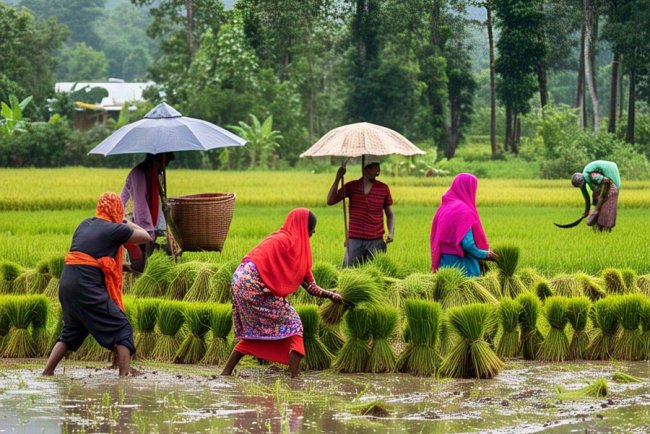
The message from the fields is clear. When communities decide to save water, the future of that water becomes safer
Water shortage is slowly becoming one of the biggest climate worries. Many places are looking for big dams or expensive projects to solve the problem. But in Korea district, the answer started with something much simpler. It is people's support.
The district has shown that a small step by many people can change the future of water. Under the idea of Jal Sanchay Jan Bhagidari, farmers were asked a simple question. What if every farmer gives just five per cent of their land to save water?
That small idea slowly turned into a big movement.
The 5% idea that changed fields
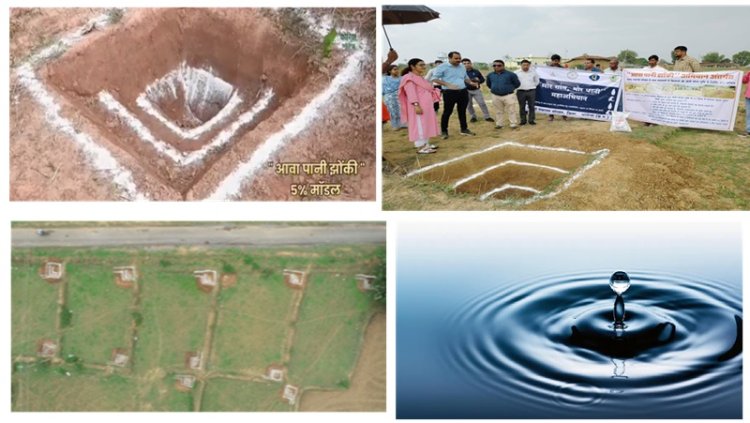
Under a local campaign called Aawa Paani Jhoki, farmers began setting aside a small part of their farms. Only five percent. In that space they dug small recharge ponds and terraced pits. These structures catch rainwater during the monsoon and allow it to slowly sink into the soil.
Earlier, rainwater used to flow away quickly from the fields. Now it stays. The soil absorbs it. Groundwater also gets time to recharge.
Farmers say the change is visible. Soil erosion has reduced. Fields stay moist for longer during dry days. Wells are slowly filling again.
The model is simple. It does not need heavy machines or big money. It only needs people to agree and work together.
When the village joined the work
The effort did not stay limited to farmers. Slowly the entire community joined.
Women took a leading role. Many of them became known as Neer Nayikas. They helped families build soak pits near homes and spoke about water saving in their neighbourhoods. Some even used folk songs to spread the message.
Young people also joined the work. Local youth volunteers became Jal Doots. They helped map trenches, clean old canals and organise street plays to explain why saving water matters.
Villagers also came together for shramdaan, or voluntary labour. Through this effort, more than 440 traditional ponds were cleaned and revived. These ponds had existed for generations but many were forgotten or filled with silt.
Even families building houses under the Pradhan Mantri Awas Yojana joined the effort. More than 500 beneficiaries added soak pits beside their homes to help recharge water.
Slowly, saving water stopped being only a government program. It became a shared responsibility.
From participation to ownership
The turning point came when villages began passing resolutions in the Gram Sabha to adopt the idea. The work was also supported with technical help. Experts studied local water flow, soil and underground water movement before suggesting where to build recharge pits.
But the real strength came from people’s ownership.
More than 1,260 farmers installed recharge systems on their land. Across the district, over 2,000 soak pits were built.
In one striking example of community effort, villagers built 660 soak pits within just three hours. The event became a symbol of what collective action can do.
Clear results on ground
The changes are now measurable.
In many villages, groundwater levels have gone up by three to four metres. Springs that had dried up have started flowing again in 17 tribal hamlets.
Better soil moisture has also improved farm output. Farmers say crops survive dry spells better now.
The impact is not only environmental. It is also social. With better farming conditions, seasonal migration has fallen by about 25 percent. Many families who earlier travelled out for work are now staying back in their villages.
In simple terms, water security has strengthened livelihoods.
Science and people together
District officials helped guide the effort through micro-watershed mapping and hydrogeological studies. This helped place each structure in the right location for maximum recharge.
Still, officials say the movement worked mainly because people believed in it.
The District Collector of Korea said the effort is not just about building structures. It is about securing the future of farmers and ensuring that every village has reliable water.
A model others can learn from
The Korea experiment offers an important lesson for the rest of the country.
Climate change is making water less predictable. Many areas depend only on large infrastructure projects to manage water. But the Korea model shows that small local actions can also create strong results.
The idea is simple. If farmers give just five percent of their land, they can protect the remaining ninety five percent.
In other words, a small sacrifice today can secure water for tomorrow.
Korea district did not wait for a crisis to grow bigger. People stepped in early, worked together and changed the story of water in their villages.
The message from the fields is clear. When communities decide to save water, the future of that water becomes safer.
What's Your Reaction?