34x Growth, 4% Share: What's Holding Back India's Electric Two-Wheelers?
India’s electric two-wheeler sales surged 34-fold to 1.2 million units in 2024, driven by subsidies and models like iQube and Chetak, but limited infrastructure keeps market share at 4%.India’s electric two-wheeler sales hit 1.2 million in 2024, up 34x since 2019, but charging infrastructure limits market share to 4%.
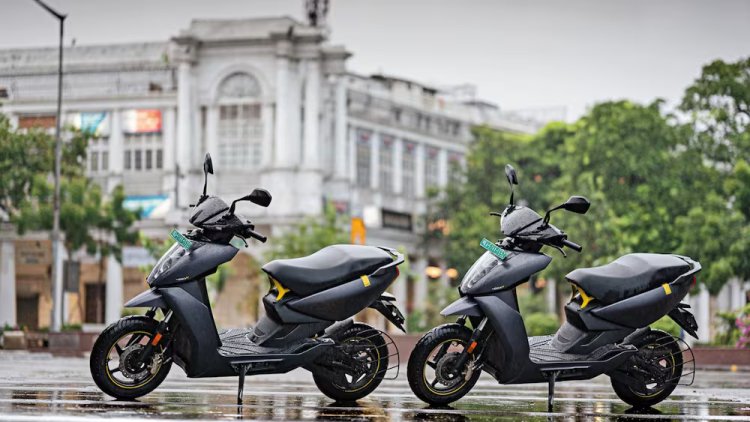
India’s electric two-wheeler market has experienced a remarkable 34-fold sales increase since 2019, reaching 1.2 million units in 2024. Despite this growth, electric models account for only 4% of the total two-wheeler market, reflecting challenges in infrastructure and cost. Government subsidies and rising consumer interest are driving this surge, positioning India as a key player in EV adoption.
In 2019, India sold 35,000 electric two-wheelers, a figure that soared to 1.2 million by 2024, driven by the government’s FAME III scheme, which provides subsidies of up to ₹15,000 per vehicle. Falling battery costs, down 20% since 2022, have made models like TVS Motor’s iQube and Bajaj Auto’s Chetak more affordable, with prices ranging from ₹1.1 lakh to ₹1.5 lakh. These scooters offer ranges of 95–120 km, suitable for urban commuting, which accounts for 70% of sales. The e-commerce and food delivery sectors have significantly boosted demand, with companies like Zomato and Swiggy converting 30% of their fleets to electric, totaling 100,000 units in 2024.
TVS Motor and Bajaj Auto dominate the market, holding a combined 40% share. TVS’s Hosur plant produces 10,000 iQube units monthly, while Bajaj’s Pune facility outputs 12,000 Chetak scooters. Both companies have invested heavily in localization, with TVS sourcing 70% of components domestically and Bajaj aiming for 80% by 2027. This reduces reliance on Chinese imports, which previously accounted for 60% of battery supply. Other players, like Hero Electric and Ather Energy, hold 15% and 10% market shares, respectively, with models like Optima and 450X targeting premium buyers. Ola Electric, once the market leader, slipped to 35% share due to supply chain issues and service delays.
Charging infrastructure remains a significant barrier. India has 12,000 public charging stations, compared to 1.2 million petrol pumps, limiting EV adoption in rural areas, where only 10% of sales occur. The government plans to install 50,000 chargers by 2030, but progress is slow due to regulatory delays and high installation costs, averaging ₹5 lakh per station. Battery swapping, pioneered by companies like Bounce and Yulu, is gaining traction, with 1,000 swap stations operational in cities like Bengaluru and Delhi. This technology reduces charging time to under two minutes, appealing to delivery riders.
The two-wheeler market, India’s largest vehicle segment with 20 million annual sales, remains dominated by ICE vehicles, which hold a 96% share due to their lower cost (₹80,000 on average) and widespread refueling infrastructure. Electric models, despite subsidies, cost 30–50% more upfront, deterring price-sensitive buyers. Battery prices, which constitute 40% of an EV’s cost, must drop another 20% to achieve price parity, according to industry estimates. The government’s 30% EV penetration target by 2030 requires $10 billion in investments for charging and battery production. State policies, such as Tamil Nadu’s 100% road tax exemption for EVs, have driven sales, but inconsistent regulations across states create uncertainty.
Environmental benefits are a key driver, with electric two-wheelers reducing emissions by 60% compared to petrol models. A 2024 survey found that 65% of urban buyers prioritize sustainability, particularly in cities with high air pollution like Delhi. However, battery disposal poses challenges, with only 10% of lithium-ion batteries recycled due to limited facilities. The government is developing a battery recycling policy, aiming for 50% recycling by 2030. International brands like Yamaha and Super Soco are entering the market, attracted by India’s growth potential, projected to reach 5 million annual EV sales by 2030. Collaborative efforts, such as TVS’s partnership with IIT Madras for battery research, are driving innovation in longer-range, cost-effective cells.
Conclusion
India’s electric two-wheeler market is booming, fueled by subsidies, falling battery costs, and urban demand. However, limited charging infrastructure and high upfront costs hinder broader adoption. Scaling up chargers, localizing supply chains, and enhancing recycling will be crucial to achieving the government’s 30% EV target by 2030, solidifying India’s role in sustainable mobility.
What's Your Reaction?