A Greener Way to Celebrate Christmas, New Year in India
Christmas and New Year celebrations in India bring joy and togetherness but also lead to higher energy use, travel emissions, waste generation, and overconsumption, raising important questions about celebrating more sustainably.
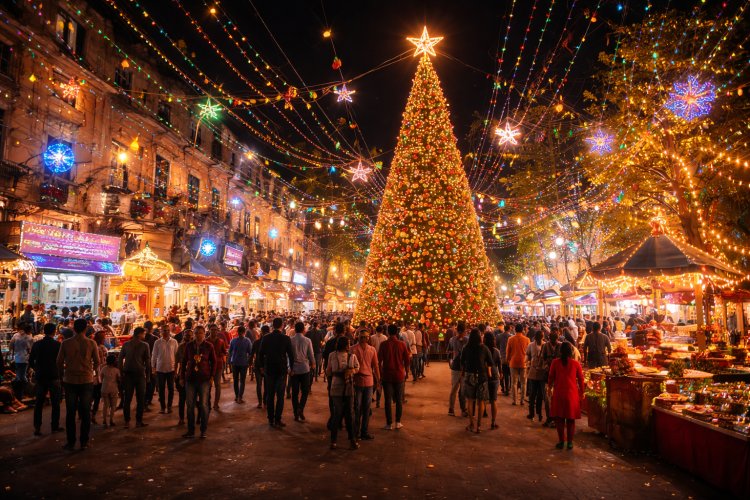
Christmas, the season of joy and togetherness when people come together to celebrate, share and enjoy good food. Streets twinkle with decorative lights; homes are beautifully set up, tables are flooded with food, and many people travel to meet their friends and families. However, behind this warmth and celebration, it also puts a lot of pressure on the environment.
During Christmas, more of energy is consumed, more wastes are generated, eat more food than needed and often buy new clothes and decorative items. All this contributes to pollution and increases the use of resources. The concern for climate change is growing rapidly and many people are now thinking if it is possible to celebrate Christmas in an eco-friendlier way while not ruining the joy and losing the spirit.
The Carbon Cost of Christmas
The environmental impact of Christmas begins even before December 25. Many people commute long distance to meet their family which leads to a sharp rise in carbon emissions. At the same time, homes and streets are decorated with lights which are often left on for many days which, using a lot of electricity especially in cities.
Although these things make Christmas look beautiful and more festive, but do you have any idea how much it affects the planet? It causes a sudden rise in pollution and usage of electricity in short time.
From Celebration to Landfill
Christmas also creates a lot of waste such as wrapping papers, gift boxes, plastic decorations, disposable plates and spoons, and leftover food are often thrown away just a few days after the celebrations. Most of these are non-recyclable because of coatings, glitter, or mixed materials. Due to which municipal authorities see a big rise in garbage during the festive season across cities. This adds extra pressure to the already waste collection and disposable systems.
Trees, Décor, and Decorations: The Plastic Tree Problem
This debate points out a larger issue-natural vs. artificial products by lifecycle impact. Plastic Christmas trees are used by people all over the world due to their affordability, reusability, and storage ease. But their environmental impact goes unnoticed.
Most artificial Christmas trees are made from PVC or polyvinyl chloride and metal parts. These are a form of plastic that is highly non-recyclable plastics and require hundreds of years to break down. When such trees are damaged, look outdated, or just go out of trend, they are discarded and dumped into landfills.
Plastic trees will not biodegrade which means that they do not break down naturally. Rather, plastic trees will start releasing toxic chemicals and microplastics into the earth below. This causes long term pollution and harm the environment.
Environmental Impact Beyond Disposal
The impact related to plastic Christmas trees begins right from before it reaches homes. The generation of plastic trees requires fossil fuels, high energy use, and chemical processing, thereby increasing carbon emissions. Many artificial trees are manufactured in one country and shipped across the world, further increasing their carbon footprint via transport emissions.
Although they are reusable, research indicates that for an artificial tree to cancel out their environmental impact against a natural tree, they need to be reused at least for 10–15 years. If it is used for a shorter period, it considerably increases the environmental cost.
Christmas and New Year festivals bring about changes in travel patterns, energy consumption, generation of trash, food habits, and purchasing patterns in major cities and regions dominated by followers of Christianity such as Kerala, Goa, the Northeast, and some portions of Tamil Nadu and Maharashtra. Additionally, major metropolitan cities such as Delhi, Mumbai, Bangalore, Chennai, and Kolkata also observe similar patterns.
Increase in Travel and Emissions
During the Christmas and New year holiday season, people travel tremendously. According to data provided by the Ministry of Civil Aviation (MoCA), the number of air passengers always peaks during the festive season. On the other hand, Rail and road transport, also experience a boost in the number of passengers as well.
Rise in Use of Electricity
This especially happens during Christmas and new year when more lights are used in homes, churches, markets and public area. Due to which electricity spike. The Central Electricity Authority says that the demand for electricity in urban areas increases during this period. Since most of the India's power is supplied by coal-based power plants, so any increase in demand during festivities directly increases air pollution.
Increase in Municipal Solid Waste
However, India already faces serious waste management issue. As per data from the Central Pollution Control Board (CPCB), India generates more than 62 million tonnes of urban waste every year, only a certain portion of it is processed. The city authorities like Delhi, Bengaluru, Kochi, and Chennai have also reported an increase in mixed waste during the festival seasons, which makes waste collection and recycling even more difficult.
Christmas parties and celebrations result in plastic decoration waste, thermocol Christmas cribs, and dishes and utensils made of non-biodegradable plastic from masses and packed waste from eating out.
Plastic Decorations, PVC Waste, Food Waste After Celebration
Plastic Christmas trees, stars, and other decoration materials made of PVC and thermocol find large usability within homes, schools, churches, and shopping malls across India. Analysis by Centre for Science and Environment shows that recyclable by-products of PVC materials have less scope for recycling within India due to inadequate infrastructure for recycling and lack of economic viability of recycling for waste pickers. After getting damaged, these products generally find their site in dumping stations and remain there for several decades and break down into microplastics.
Food in India plays a big role in Christmas celebration. People feature a mix of regional and traditional dishes such as plum cake, biryani, pork curry, beef fry, bakery items, and sweets. Large meals are often prepared in apartment complexes, churches, and community halls. While there is no exact data how much food is wasted during this period, but India already has a serious food waste problem. According to the Food and Agriculture Organization (FAO) and national studies, India wastes an estimated 68 million tonnes of food every year. Local authorities and resident welfare groups often notice more food waste after community celebrations mainly due to over preparation.
Festive Shopping and Clothing Waste
Christmas and New Year sales drive increased clothing and accessory purchases, particularly in urban India. This is like what happens during Diwali and wedding season. India is already facing a growing problem of textile waste, and garments bought for one-time festive are often not worn again or discarded later. The study by Environmental groups and industry have shown that repeated festive shopping increases cycles to growing fast-fashion waste and water pollution from textile production.
Pressure on Landfills and Informal Systems
Unlike many Western countries, India relies heavily on informal waste workers for recycling. During Christmas and New Year, mixed waste including PVC décor, electronic lights, and food-contaminated packaging, reduces the ability of this system to recover materials. According to CPCB and CSE reports, such waste typically bypasses recycling and ends up in landfills, aggravating already overflowing dump sites around major cities.
Existing Sustainable Practices
Despite these challenges, India also shows resilience. Reuse of decorations, repair of lights, sharing excess food, and community-led charity drives are common. In parts of Kerala and the Northeast, churches and schools increasingly use paper stars, clay lamps, banana stems, hay cribs, and reused décor. These practices demonstrate that low-waste celebration models already exist within the Indian context.
How Much Waste is Generated During Festive Season?
The multiple international studies says that household waste has been increased by around 25–30% during the Christmas season as compared to the rest of the year.
In the United Kingdom, Christmas leads to an estimated 3 million tonnes of additional waste every year, including food waste, packaging, cards, decorations, and Christmas trees. Of this, more than 114,000 tonnes are plastic packaging, much of which is not recyclable, as per the report given by Waste Mission UK. It also says that UK discards around 8 million real Christmas trees every year and generate approximately 12,000 tonnes of waste and millions of plastic decorative items and electronic items are thrown away and end up in landfills after one time use.
In India, a report by Centre for Science and Environment (CSE), notes that due to PVC-based plastic Christmas trees and decorations are rarely decomposes in India, most of them ends up in dumping grounds or landfills which add to long-term plastic pollution.
What's on the Christmas Table Matters
Food is a big part of Christmas celebrations, but the type of food we choose matters a lot. Meat-based diets, using ingredients which are imported and cooking more than enough food which ultimately leads to more carbon emissions and food waste. Because after party much of the extra food isthrown away instead of being used. That is why, households and the community are choosing for local food to counter the serious and large-scale portion of food that is thrown away.
Studies done by European Commission show that in the European Union, food waste alone increases by around 30% during festive season mainly between Christmas and New Year period. In the United States, household wastes get increase by 25% between Christmas and New year and adds millions of tonnes of waste to landfills annually, according to US Environmental Protection Agency (EPA).
Fast Fashion and Festive Wear
Christmas also brings about a significant increase in purchasing garments, most of which are only used once. Fast fashion brings about huge levels of water pollution and top heaps of clothing waste as well as enormous carbon emissions. After Christmas, most garments are either dumped or simply forgotten.
The industry is also seeing a rise in the adoption of thrifting, garment renting, re-wearing clothes, and purchasing more durable garments as current alternatives to sustainability, especially among younger consumers.
Faith, Community, and Care for the Environment
Religious organisations and churches in the world today are gradually relating the spiritual virtues they know to the promotion and care for the environment. Some will be using energy-saving light bulbs, throwing parties for reduced and/or zero waste, and using the occasion for Christmas clean-ups and tree-planting. This shows that people can follow traditions and celebrate festivals while protecting environment.
Can Christmas be more sustainable?
For most people, a completely "zero-waste" Christmas might not be realistic, but there are meaningful reductions that can be realized. Inexpensive decisions with LED lights, restraint in the packaging of gifts, experiences over products, reusing decorations, and watching food and clothing can greatly reduce environmental impact.
Often, buying something new is not the most sustainable option; using what you already have as long as possible is it. Christmas is also a good time to educate children how to care for environment. Schools are encouraging kids to make recycled decorative items, handmade gifts, and stories of mindful consumption are part of how schools and families are making the festival a learning rather than just a consumption-oriented activity.
Some Tips to Enjoy an Environment Friendly Christmas
Small changes can add up to big difference, here are some simple ways to reduce environmental impact while still maintaining the joy:
- Reuse decorative items: Use the same décor items ever year instead of purchasing new decorations and repair what is broken instead of throwing it.
- Use or grow your own Christmas tree: Using original tree let you grow it at your home itself and can be used every year without spending money. Sounds like a good solution.
- Energy-efficient lighting: Start using LED or solar lights and turn them off when not in use.
- Reinvent the Christmas tree: Instead of buying plastic trees, find an alternative to create an eco-friendlier tree. Make tree using recycled materials and decorate it, rent a tree or grow natural Christmas tree that can be used every year.
- Reduce gift wrapping: Avoid using plastic gift wraps. Instead, use cloth, newspaper, and brown paper or reusable gift bags.
- Gift experiences, not things: Gifts can take the form of things like books, event tickets, donations, and crafts which are handmade, rather than a mass-produced commodity.
- Plan meals well in advance: Cook only as much food as needed, make use of locally available ingredients, and share excess food instead of throwing it.
- Wear what you own: Wear outfits you already have, instead of buying one time use dress. Rent a dress as well if required, exchange clothes with friend and families. This reduces waste and help avoid fast fashion.
- Teach sustainability to children: Involve children in decorations and make them use recycled materials and talk to them about the importance of celebrating festive thoughtfully. Teach them that small actions can protect the environment
After all, Christmas is all about being together, spreading hope and sharing with others. As environmental problems are growing, the festival gives us a chance to think about how celebrations align with or depart from concern for the planet. When thinking of sustainability, it doesn’t mean ruining joy and spirit; you still can maintain the festive spirit just by being thoughtful. Celebrate Christmas in a simpler way and mindful way, we can keep festive spirit alive while being kind to the environment together.
What's Your Reaction?