Adani Solar Park And RIL Refinery On High Alert
Adani Solar Park and RIL Refinery on high alert amid heightened security measures near Gujarat’s border.
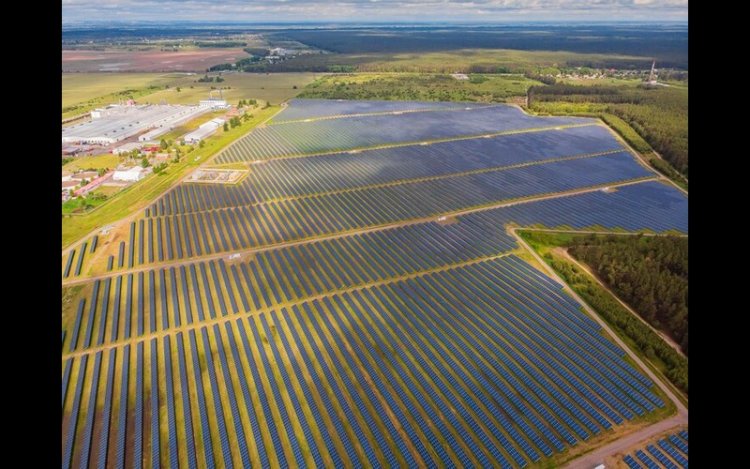
The Government of India has put key energy installations along the Pakistan border in Gujarat on high alert in the face of mounting security concerns. Two of the strategically most important energy assets—the Khavda Renewable Energy Park, the world's largest solar power park, and the Jamnagar oil refinery, the world's largest oil refinery—have seen enhanced surveillance and security measures as precautionary measures to secure national energy assets.
Security has been considerably bolstered at these installations. According to a source who has knowledge of the development but requested anonymity, the Centre is leaving nothing to chance in defending critical assets that energize the country. Enhanced vigilance involves increased ground-level checks, round-the-clock surveillance, and sophisticated systems to ward off all manner of threat. These resources, on account of their location in the border area and national significance, are under the control of the Border Security Force (BSF), which is taking an active part in the security arrangements.
Situated in Gujarat's Kutch district, only 1 km away from the international border, the Khavda Renewable Energy Park is being transformed into a massive clean energy complex with a combined capacity of 45 gigawatts (GW). Of this, 30 GW is led by the Adani Group, a major contribution to India's renewable energy drive. Other players in the park include state-owned power monopolies such as NTPC and Gujarat Industries Power Company (GIPC). The park's size, magnitude, and geographical location make it an anchor of India's drive for sustainability and energy security.
In the meantime, the Jamnagar oil refinery, which is owned and operated by Reliance Industries, continues to be one of the most important assets in the energy landscape of the country. With a capacity to process approximately 1.4 million barrels of crude oil on a daily basis, it is the world's largest single-site refinery. The facility is not only important for India's indigenous energy requirements but also as a large exporter of petroleum products. With its massive processing capacity and pivotal position in India's fuel supply chain, the refinery has always been in the spotlight for increased security.
The refinery is situated in a high-security area which has a no-fly zone for civilian aircraft and an Indian Air Force base nearby. Besides the Jamnagar Air Force Station, the other air bases like Naliya and Bhuj are also within a distance of 50 km, making the region sensitive strategically. The Jamnagar airport itself has been shut for civilian operations, in line with 24 other airports in India under NOTAM (Notice to Airmen) restrictions by the government, which are precautionary military procedures.
In light of these events, Simarpreet Singh, Executive Director and CEO of Hartek Group, a renewable energy firm, underlined the necessity of securing major energy assets. For Singh, securing such resources calls for an extensive and well-coordinated measure involving perimeter fencing, surveillance, staffing, cyber security, and regular safety drills. He further underlined the necessity of shunning delayed response times and fiscally and operationally managing risks through layered strategies such as insurance and recurrent training.
The high alert level comes in the wake of an overall boost in India's internal security readiness, especially following recent coordinated attacks by Indian forces on terrorist-affiliated targets within Pakistan-occupied Kashmir under 'Operation Sindoora'. The operation, which destroyed nine such bases, was in response to terror attacks in Pahalgam in Jammu and Kashmir that left 26 dead, including a Nepali national. These developments have led to a move to boost the security of centrally significant infrastructure.
Even after media contact, requests made to the Union Ministry of Home Affairs, Adani Group, NTPC, and Reliance Industries on the subject remained unanswered during reporting. Still, the security establishment is sparing no effort in making sure these critical energy installations are secured from any possible attack. The current precautions are an example of the government's seriousness about protecting India's economic lifelines in today's uncertain geopolitics.
What's Your Reaction?