Air Quality Hits ‘Severe’ Level at Multiple Stations in Delhi
Delhi’s air quality slipped into the ‘severe’ category at multiple locations as pollution levels rose across NCR.
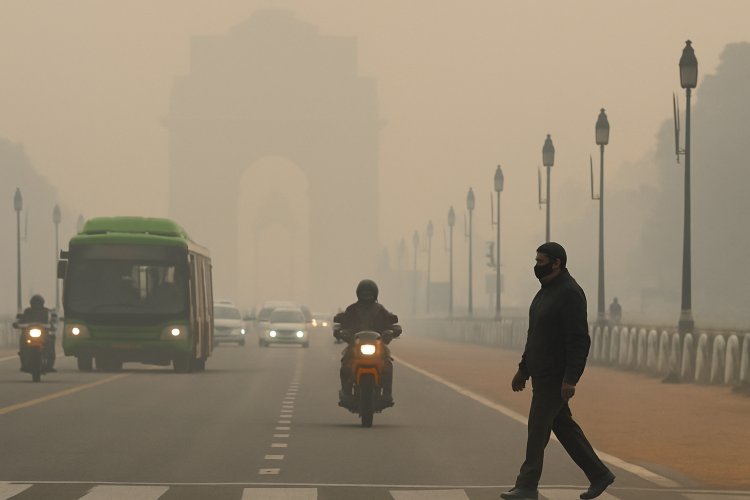
Delhi reported ‘severe’ air quality in many areas on Wednesday morning. According to data from 40 CPCB monitoring stations, 14 of them showed an AQI above 401 at 7:05 am, which falls in the ‘severe’ category. The city’s overall AQI was 376 on 3 December.
In the days before this, Delhi’s air quality had already been getting worse — AQI was 279 (‘poor’) on 30 November, 304 on 1 December, and 372 on 2 December. With a thick layer of smog covering the city, Delhi recorded air quality in the ‘very poor’ range.
Below are the areas that showed the highest pollution levels and fell under the ‘severe’ category. Anand Vihar 405, Ashok Vikar – 403, Bawana – 408, Chandni Chowk – 431, Jahangirpuri – 406, Jawaharlal Nehru Stadium – 405, Nehru Nagar – 436 Okhla – 404, RK Puram – 420, Rohini – 417, Sirifort – 408, Vivek Vihar – 415 and Wazirpur – 406.
According to CPCB’s Sameer app, NSIT Dwarka is the only place in Delhi that showed air quality in the ‘poor’ category today. All the other 25 monitoring stations recorded ‘very poor’ air quality. Nehru Nagar and Chandni Chowk had the worst readings.
The Centre for Science and Environment (CSE) released a report on Delhi’s air quality for October and November. The report shows that the pollution in the city is becoming more toxic. It also explains that harmful gases such as nitrogen dioxide (NO₂) and carbon monoxide (CO) are also increasing along with PM2.5 levels. These gases basically come from vehicles and other burning activities. Together, they create a dangerous mix of pollutants that often goes unnoticed.
The report also says that Delhi’s long-term air quality has not improved in recent years and seems to have reached a plateau. CSE says that urgent change is needed in infrastructure and systems, so that pollution from vehicles, factories, power plants, waste, construction and household fuels can be reduced.
Breathing polluted air for a long time can cause serious health problems. It can make asthma, lung diseases, and heart conditions worse, and it can even cause breathing issues in people who were healthy before.
The report, released on 1 December, also highlights that air quality in smaller towns of the NCR is getting worse. It says that these towns are seeing thicker and longer-lasting smog. Even though pollution peaks are slightly lower this winter because there were fewer farm fires, the overall air in the region is still becoming more polluted and saturated with harmful particles.
IMD issues cold wave alert
The India Meteorological Department (IMD) said that weather conditions show a cyclonic circulation is present over south Himachal Pradesh and nearby areas and the circulation is reaching up to 1.5 km above the ground. Because of change in weather condition, the IMD has issued a yellow alert for a cold wave in Delhi for 5 December. They also said that a weak Western Disturbance is expected to affect the western Himalayan region from 5 December 2025.
What's Your Reaction?