Albania's Adriatic coast faces increasing erosion due to unregulated tourism development and climate change impacts like rising sea levels and stronger storms, threatening ecosystems and tourism-dependent economies.
Albania's picturesque Adriatic coastline is suffering from severe environmental degradation due to a mix of rapidly expanding tourism infrastructure and the increasing impacts of climate change. Along the northern Velipoja to the densely populated tourist resorts of Golem and Durres in the south, coastal erosion is accelerating and threatening ecosystems, livelihoods, and local economies.
Of Albania's 273 kilometers of shoreline, an estimated 154 kilometers are now worn away, say urban planners. Tourist trips to the Balkan country have risen from 5.1 million in 2018 to over 10 million in 2023. But the unregulated construction of hotels, restaurants, and beach bars to support this boom is inflicting tremendous harm on natural habitats.
In protected coastal strip along the border with Montenegro in Velipoja, the sea is advancing by more than five meters each year. More than 30 hectares of coastal forest have been destroyed by the sea in Velipoja Park since the past decade alone. The rich ecosystem in the area, which was once filled with pine and other vegetation along the coast, is now scattered with fallen trunks, the handiwork of increasingly powerful and frequent storms.
Another important example is Franz Jozeph Island, which is located in the mouth of the Buna River. Originally an important ecosystem of around 20 hectares, the island is now completely gone since 2012 because of a combination of sea-level rise and reduced sediment flow due to upstream dams and hydroelectric projects. Its loss is the elimination of a region that had considerable biodiversity, especially of seabirds and coastal vegetation.
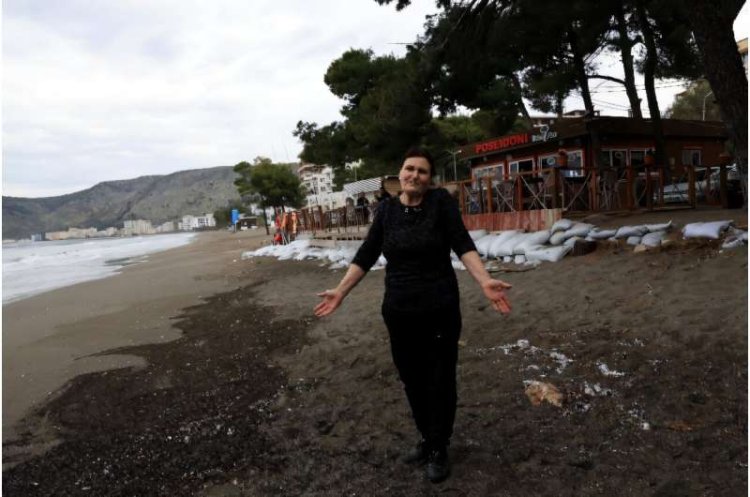
Further south, in Durres and Kune, locals are responsible for storm surges that have advanced the coastline by as much as 20 meters annually. Not only have they bulldozed natural vegetation, but the rising tide has also covered decades-old bunkers and small beach facilities. Sandbag walls, often used by locals and restaurateurs, are not managing to stop the rising power of the sea.
The Golem urban complex, in the area surrounding Durres city, is but one instance of how unchecked expansion is aggravating the crisis. During the past 16 years, about 70 meters of beach have been lost to erosion. Hotel owners and tourist operators are beginning to fear the deteriorating quality of beachland. Because tourism is so dependent on the availability of beachfront, increased erosion can impact tourists' experiences as well as revenues directly.
In addition to this, other coastal protection infrastructure and groynes that have been put up within the region are found wanting. The increasing building rate is, however, continuing to outrun mitigation efforts despite local authorities being accused of lack of implementing proper coastal zone policies.
Climate change is worsening these issues through sea-level rise and other extreme weather conditions. Albania's national civil protection agency indicates that more than one-third of the country's coastal territory will have direct flood impacts by the end of this decade. These conditions could further reduce tourism potential and displace populations residing along coastal regions who rely on coastal resources.
Experts contend that current Albanian policy is not sustainable. Without more drastic measures on limiting coastal development and overall environmental integrated management, both the natural habitats and tourism facilities risk rising threat. There is higher demand for collective government effort to enact zoning laws, support green coastal defence, and cover costs of ecosystems rehabilitation to adopt a robust shoreline development.
While the tourism of Albania keeps growing, so should its commitment to protecting natural resources that receive millions of tourists every year. Disregarding these at present could imply irreversible damage to the environment and economy.
Source/Credits:
© 2025 AFP
What's Your Reaction?