India’s 2025 SOIL Report Highlights Gaps in Livelihood Security
SOIL Report shows growth but warns that uneven India’s livelihood landscape.
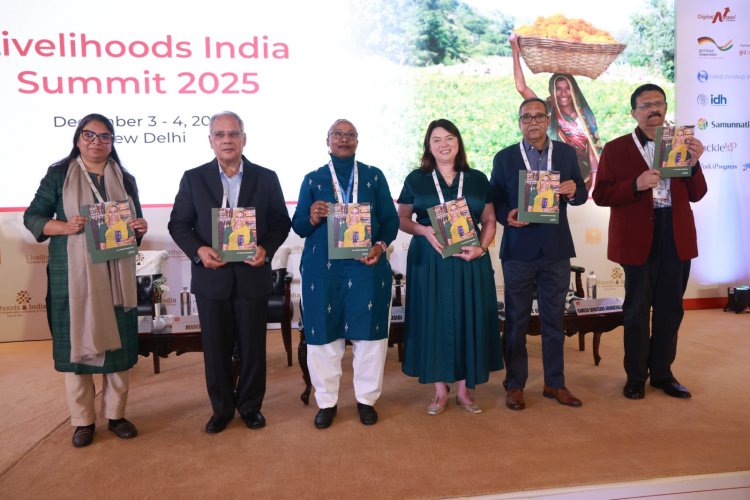
ACCESS Development Services has released the 18th State of India’s Livelihoods (SOIL) Report, which gives and overview of India’s livelihoods landscape. The launch was attended by several key leaders, including Manoj Mittal, Chairman & Managing Director, SIDBI; Angela Lusigi, Resident Representative, UNDP India and Julie Gehrki, President, Walmart Foundation and Senior Vice President, Philanthropy, Walmart Inc., among other sector leaders.
Keynote Address Highlights Need for Stronger Livelihood Security
Manoj Mittal, Chairman & Managing Director of SIDBI, emphasised that livelihood security depends on people having the assets, income and activities required to sustain their lives. He noted that more than 17 crore people moved out of extreme poverty between 2011–12 and 2023, driven by integrated welfare schemes, financial inclusion and direct benefit transfers. He highlighted the role of entrepreneurship and the MSME sector, which provides livelihoods to nearly 30 crore people, and pointed to initiatives such as PM Mudra Yojana and credit guarantee schemes as enablers of enterprise growth. Mittal said the SOIL Report is an important resource in guiding future livelihood strategies.
Report Notes Strong Economic Momentum but Flags Gaps
The 2025 SOIL Report points out India’s economy is growing steadily, with projections from the RBI, World Bank and IMF all expect faster growth, rising household incomes and a decline in extreme poverty. These improvements support the Government of India’s Viksit Bharat 2047 goal of becoming a high-income, a USD 30–40 trillion economy.
However, the Report also warns that many poor families don’t receive benefits of government schemes. Even though systems such as DBT, KYC-linked authentication and digital payment infrastructure have improved, people often face problems with documents, access barriers and authentication failures, which prevents them from getting the support.
Emerging Structural Concerns Identified
The SOIL Report 2025 highlights few major challenges. India’s demographic dividend is getting smaller, so the country needs to create good quality, formal jobs with fair wages quickly. The report also says that women still face big gaps in employment and pay. In addition, agriculture is becoming weaker to heat stress which is caused by climate change, and this makes it important to invest more in climate resilient agriculture.
The report says that self-employment is on the rise and the informal economy is growing which increases the need for stronger livelihood security. While tools like Kisan Credit Cards, microfinance, JAM, UPI and the Unified Lending Interface have improved access to opportunities, many low-income families still depend on informal credit.
Sector Leaders Call for Inclusive and Climate-Resilient Livelihoods
Speaking about the findings, Vipin Sharma, CEO, ACCESS Development Services, said that “The SOIL Report shows that even though India’s economy is growing, the quality of livelihood opportunities is still uneven. Many farmers continue to rely on informal finance, and women form a large share of the agricultural workforce. As India moves toward the Viksit Bharat 2047 vision, the key challenge is to ensure that economic growth leads to secure and climate-resilient livelihoods for all households.”
SOIL Report Continues to Serve as Sector Reference
For almost 20 years, the SOIL Report has been a key resource for policymakers, practitioners, researchers and development organisations. It brings together experiences from across the sector, reviews programmes and policies, and provides useful insights into the opportunities and challenges shaping livelihoods in India.
What's Your Reaction?