Ambuja Foundation’s Rural Mission Delivers 10x Social Returns
Ambuja Foundation’s rural initiatives generated ten times the social value invested, showcasing impactful and sustainable community development.
In the heart of Chhattisgarh’s Baloda Bazar district, life in 10 villages has started to change in a big way. Over the past two years, people here struggled with dusty lanes and water scarcity. Today, those villages are seeing progress with water, better roads and stronger livelihoods. A recent study by CRISIL has quantified that transformation: for every ₹1 invested, Ambuja Foundation’s rural development programmes have generated ₹10.12 worth of social and economic benefits in return.
Supported by Ambuja Cements/ Adani Cement, these initiatives which focus on Water Resource Management (WRM) and Rural Infrastructure Development (RID), have not only changed landscapes but also livelihoods.
Turning Water Scarcity into Water Security
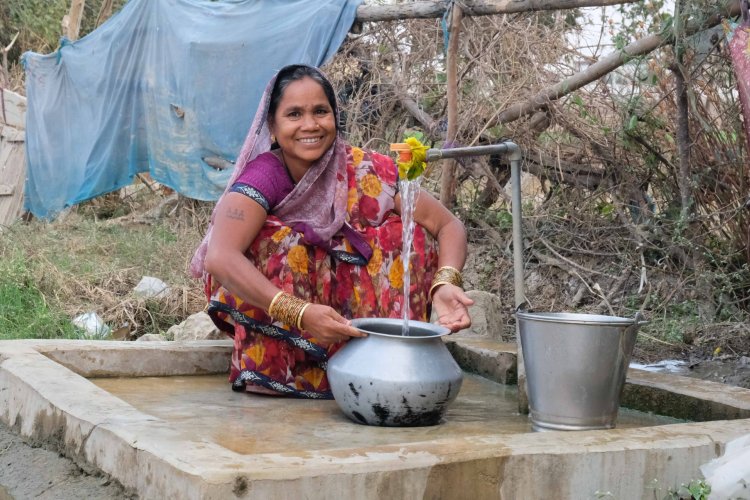
For decades, water scarcity defined the rhythm of life here. Women walked long distances for a few pots of water; farmers waited for the erratic monsoon to decide their fate. Today, that story is changing.
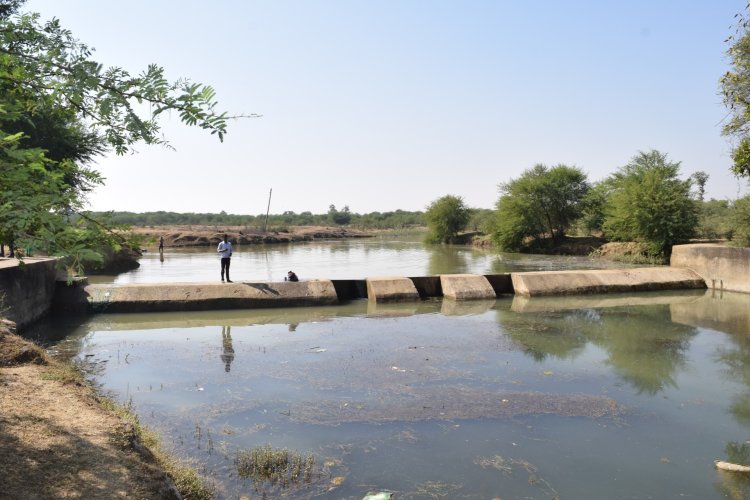
Through scientifically designed harvesting and recharge structures, Ambuja Foundation has created 220,033 cubic metres of additional water storage, directly strengthening water availability for hundreds of households.
Key Findings from the CRISIL Study:
- Household water scarcity fell from 46% to just 4%, a 37% reduction.
- Daily water-fetching time reduced 55 minutes to 12 minutes.
- The daily water consumption of households increased from 193 litres to 258 litres. Average increase of 9.32 litres per member in the family, benefiting families of 7 on average.
- Access to private taps increased from 38% to 69%, own borewells increased from 23% to 47%
Now villages have enough water, agriculture has improved a lot. The proportion of farmers are using sprinkler irrigation increased from 6% to 22%. Similarly, farmers are also getting water through canals rose up from 16% to 64%. Because of better irrigation, the amount of land that can be farmed with water has increased from 2.7 to 3.34 acres. This enables farmers to grow more crops annually, improving both yields and incomes.
Building Roads, Strengthening Communities
Beyond water, Ambuja Foundation’s focus on rural infrastructure has transformed connectivity and community life. Newly built cement concrete roads now connect remote households to markets, schools, and healthcare centres, improving access for 96% of respondents.
In villages the community halls and Rangmanchs have been renovated, bringing back places where people can gather for festivals, meetings and cultural events. This has helped villagers feel more united. Also, the District Divyang Centre has improved. People with disabilities can now easily get physiotherapy, speech therapy, and education services that were not available earlier.
Education and Health Benefits
When roads and water systems improve, so do schools and health outcomes. The study found that upgraded school facilities have led to higher attendance, students now attend at least two extra days per month.
Meanwhile, 60% of the people have reported better health because they now have cleaner water and reduced waterborne diseases like diarrhoea. Since, families are getting sick less, they are also spending less money on medicines and hospital visits and saved an average of ₹1,180 annually. For families with small income, even this small saving makes big differences in managing daily expenses.
Community Voices and Shared Ownership
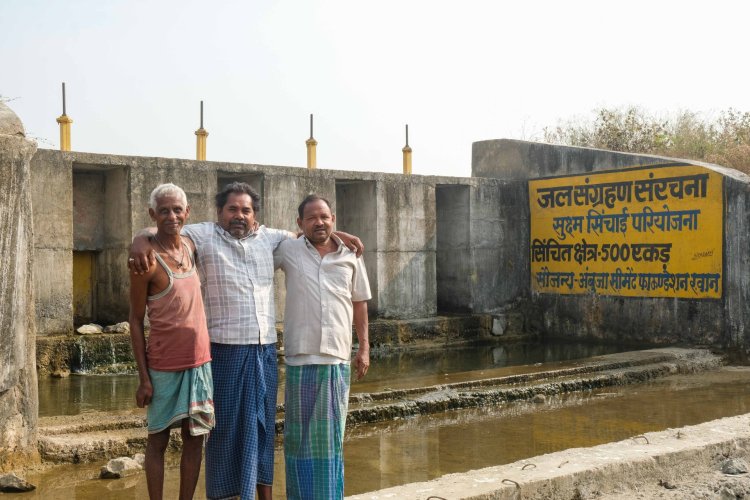
The human stories behind these statistics are compelling. Residents point to fully functional ponds, cleaner borewell water, and reliable irrigation canals as visible symbols of change. “Earlier, water used to run out by afternoon. Now, every house has enough even in summer,” says one village elder, smiling beside a new rainwater structure.
Encouraged by these good results, Ambuja Foundation is now working even more with local people. They are helping villagers from water user groups so that the community itself can take care of the water systems. The foundation is also providing training for maintenance and promoting sustainable cropping patterns that use less water while improving productivity.
Pearl Tiwari, CEO, Ambuja Foundation, said, “Water is the foundation of rural resilience in the face of climate change”. “The findings of this CRISIL study clearly demonstrate how community-led water and infrastructure interventions can transform lives—reducing drudgery, improving farm productivity, strengthening health and education, and enhancing overall quality of life. These results validate our community-driven approach and reaffirm our commitment to building long-term, sustainable solutions for water security and rural development.”
What's Your Reaction?