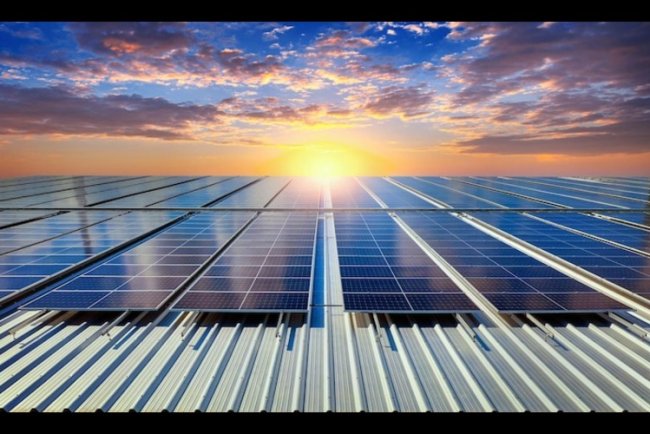
AmpereHour launches a 5 GWh BESS manufacturing facility in Pune to strengthen India’s energy storage ecosystem.
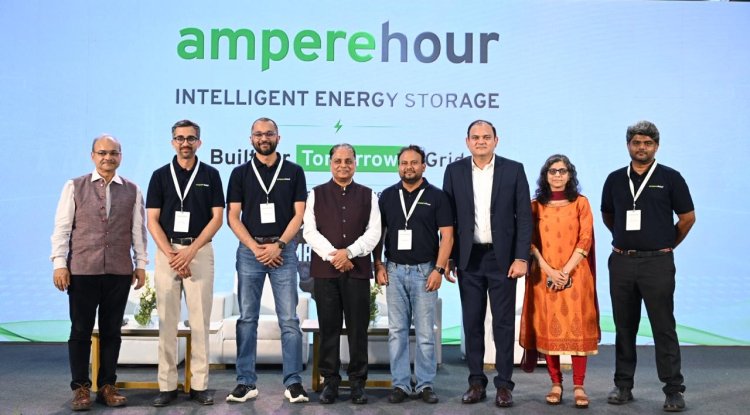
AmpereHour Energy has opened a new Battery Energy Storage System (BESS) manufacturing and integration facility in Chakan, Pune, making it a manufacturer of intelligent energy storage systems, besides being a technology integrator. The new facility will cater to the integration of Make in India cabinet and containerized Battery DC-AC Blocks for utility-scale and commercial and industrial applications, bolstering the expanding energy storage ecosystem in India.
It features AmpereHour Energy's hardware agnostic architecture and proprietary ELINA Energy Management System (EMS), subsystem engineering and digital quality management platform, AH-Suite. The platform provides full traceability, product testing and performance validation prior to deployment, which helps to ensure energy storage project safety, reliability and operational efficiency, the company said.
Facility to Boost Local Manufacture
The new facility will be based in Chakan, Pune, and will be involved in the production and integration of Battery DC-AC Blocks, which will enable utility-scale renewable energy projects and serve commercial and industrial customers. The company said it was a part of Make in India campaign, which is based on the principle of 'local manufacturing' and ‘local engineering capabilities' for the battery energy storage infrastructure.
AmpereHour Energy will build a manufacturing platform that will enable the production of intelligent, digitally verified energy storage devices for both local and export markets. With the company's commitment to investing in India's clean energy infrastructure, the facility is expected to have an annual manufacturing capacity of 5 GWh.
A digital approach to validation at the core.Digital validation at the core.
One of the cornerstones of the manufacturing platform is the company's digital factory quality management and testing platform, AH-Suite. The system allows for digital factory acceptance testing (FAT) and full component traceability and performance testing before the product is shipped out of the factory, according to AmpereHour Energy.
These digital processes, the company said, are designed to shorten the commissioning time, enhance the quality assurance and guarantee that battery energy storage systems are meeting the operational requirements before they are installed. The approach is software-based and adds to the traditional hardware testing approach used in manufacturing.
The manufacturing platform also features the company's own ELINA Energy Management System, which enables batteries to be managed, renewable energy to be integrated and the grid to be interacted with, as well as long-term operating efficiency.
Enhanced with Operational Experience
The company has been moving into manufacturing because they've learned from the experience of implementing battery energy storage projects in various applications, AmpereHour Energy said. Customer feedback and operational learnings identified the system performance, safety, lifecycle management and reliability improvements required, the company said.
These field experiences will be woven into manufacturing to build in engineering design, software intelligence and digital validation at every step. This is to improve the quality and consistency of battery energy storage systems prior to their use in practical applications.
Leadership Highlights India’s Energy Storage Opportunity
In the development, Rahul Shelke, Co-founder and Managing Director of AmpereHour Energy, said that energy storage is likely to be a major enabler for the future of the electricity grid and is an opportunity for India to grow its capacity with technology-driven innovations.
The firm's move into the production of advanced BESS reflects its years as a systems integrator and the experience gained in dealing with operational issues that informed the development of safer, smarter and more reliable storage assets, he said. Shelke said that the locally produced DC Block platforms and digital solutions like AH-Suite are designed to help enhance long-term energy resilience.
The shift into manufacturing was a "logical step" for Ayush Misra, Co-founder & CEO of AmpereHour Energy, who has been in the business as a BESS technology integrator. Battery energy storage is not just about putting battery systems together, he added, and it requires engineering intelligent assets that can perform at the same level over the life of the asset.
Misra noted that AH-Suite introduces operational experience to the manufacturing process by digitally testing all the systems prior to deployment, which helps to enhance quality assurance and lifecycle performance.
Scaling up India's Energy Storage Ecosystem
The launch aligns with the rising significance of battery energy storage systems (BESS) in the context of expanding renewable energy deployments and advancing India's electricity grid. With the increasing availability of renewable energy resources, the demand for battery storage systems to help control electricity flow and ensure grid stability and reliability is anticipated to grow.
AmpereHour Energy is investing in the commissioning of its Chakan manufacturing facility to build its domestic manufacturing capacity and establish its battery energy storage production by incorporating digital engineering, software intelligence and advanced testing. The firm thinks the ability to manufacture locally and validate the asset digitally can complement the integration of safer, more reliable, and future-ready energy storage assets for utility-scale and commercial uses.
What's Your Reaction?