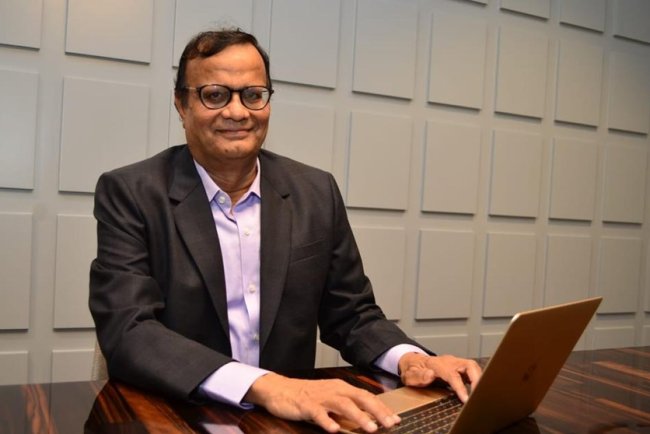
In an interview with Responsible Us, Jayasimha Nuggehalli, Chief Program Officer and Co-Founder of Global Food Partners, discussed the realities behind Asia's cage-free transition, the challenges producers face on the ground, and why animal welfare is increasingly becoming part of the broader conversation around sustainable food systems
Cage-free eggs have become a familiar fixture in corporate sustainability reports. The commitments are there, the timelines are set, and the language is confident. But visit a poultry farm in Vietnam in July, or talk to a producer in Tamil Nadu managing a flock in 40-degree heat, and the distance between a pledge on paper and change on the ground becomes very clear, very quickly.
Jayasimha Nuggehalli has spent over fifteen years working in that gap. As Chief Program Officer and Co-Founder of Global Food Partners, he has been part of conversations that rarely make it into press releases — the ones where a farmer asks not about animal welfare standards, but about whether they can afford to take the risk, who will actually buy their eggs, and what happens if it goes wrong.
ResponsibleUs spoke to him about what Asia's cage-free transition really looks like on the ground, why much of the Western playbook had to be rewritten for Asian conditions, and the harder question of whether corporate commitments in the hospitality and food industry are actually holding when margins are under pressure.
Over 300 food and hospitality companies are committed to going cage-free in Asia by the end of 2025. How many of those companies actually got there — and for the ones that didn't, what was the real reason? Was it supply, conviction, cost, or something nobody talks about publicly?
Due to lack of uniform public reporting, it is hard for us to accurately report on commitment status. That said, many did achieve by their deadlines, and those that haven't are making tangible progress to do so.
Supply and cost are the two challenges most frequently cited. However, in practice, the barriers are often broader and more operational in nature. What we observe most often is a combination of three factors:
Procurement alignment: cage-free commitments are often made at the global sustainability level, but translating those commitments into clear regional procurement targets, timelines, and accountability structures takes time. Increasingly, however, companies are beginning to bridge that gap by integrating animal welfare commitments more directly into sourcing strategies and supplier engagement.
-
Managing transition costs: the price premium for cage-free eggs in Asia can vary significantly by market, ranging from approximately 20-80% above conventional eggs. Companies making the strongest progress are those exploring practical transition mechanisms — such as phased implementation plans, long-term supplier partnerships, and tools like Impact Incentives — to help manage costs while continuing to move forward.
-
Building coordinated markets: transforming supply chains requires both buyer demand and producer investment to move together. In many markets, producers are hesitant to invest without clear demand signals, while companies are waiting for supply to scale before accelerating implementation.
Encouragingly, collaborative initiatives such as GFP’s Impact Incentives program and GCAW’s India working group are helping overcome this challenge by creating stronger coordination between supply and demand.
What gives me real confidence is that the companies making the most meaningful progress are approaching cage-free sourcing not simply as a reporting obligation, but as a long-term supply chain investment. They are working directly with producers, supporting market development, and helping build the infrastructure needed for sustained change. That shift — from commitment to implementation partnership — is where we are seeing the strongest momentum today.
The Vietnam transition involved retrofitting an entire farm, retraining staff, and achieving international welfare certification — for a farmer whose entire livelihood is on the line. What does that first conversation actually look like, and what have you learned over fifteen years about what makes a farmer say yes?
The first conversation is almost never about animal welfare. That might seem surprising coming from an animal welfare consultancy, but it reflects the reality farmers face every day. A farmer whose livelihood, and in many cases whose family’s livelihood, depends on the farm is not primarily asking about hen welfare standards. They are asking: will this work? Can I afford it? Who will buy my eggs? What happens if it goes wrong?
So the first conversation is about economic viability and risk. What does the capital outlay look like? What does the cash flow look like in year one, year two, year three? Are there buyers who will pay a premium, and will they commit to that before I invest? Is there someone who has done this in a similar context, with a similar farm size, a similar climate, who I can talk to or visit?
What I have learned over 15+ years is that farmers are far more open to change than many people assume, provided the right conditions are in place. In our experience, there are four things that consistently help farmers feel confident enough to move forward:
-
A credible demand signal: not a vague commitment somewhere upstream, but a specific buyer, ideally a name they recognise, willing to pay a premium for certified cage-free eggs. The willingness to purchase is more persuasive than any welfare argument.
-
A peer who has done it: a farmer in a comparable situation who has transitioned and is willing to show another farmer their books, their barn, their mortality rates, their income. This is why GFP has invested heavily in model farms and farmer learning networks across Asia, including in India. Practical demonstration is one of the strongest drivers of adoption.
-
Accessible technical support: Managing cage-free systems requires different skills and approaches compared with conventional caged production. The knowledge gap around cage-free flock management is real and often underestimated. Mortality, feather pecking, and feed conversion in barn systems, these are different from caged production. What matters most is knowing that support will still be there after the transition begins, not only during the initial conversion phase.
-
A viable financial bridge: Whether through transition financing, long-term purchasing agreements, price premium support, or mechanisms like Impact Incentives, farmers need confidence that the economics of transition are manageable during the early stages. Closing the gap between upfront investment and longer-term returns is often what makes implementation possible.
The farmers who have successfully transitioned — and remained cage-free years later — are typically those who had all four elements in place. When hesitation exists, it is usually because one of those pieces is still missing. What is encouraging is that across Asia, we are increasingly seeing companies, producers, and industry initiatives working together to build exactly those conditions for long-term success.
You have spoken about how industry training in Asia has often shown farmers models from Europe that simply don’t resonate or work in such a different cultural and physical environment. That’s a candid admission that a lot of global sustainability frameworks quietly ignore. What does genuinely Asia-rooted cage-free transition look like — and how much of the Western playbook had to be thrown out?
A significant portion of it had to be rethought, and I say that not as a criticism of western HQ’ed organisations, but as a practical observation about what actually works when you are standing in a shed in Vietnam in July, or advising a producer in Tamil Nadu on flock management in 40-degree heat.
The European cage-free model was built around temperate climates, specific breeds, mature input supply chains, established retail price premiums, and a regulatory environment that was moving in one direction. None of those conditions apply cleanly in most of Asia. When we showed Asian farmers European aviary systems or management guides written for Dutch or British conditions, the response was polite but clear: this does not reflect my reality.
What genuinely Asia-rooted cage-free transition looks like, in our experience, involves several deliberate departures from the standard Western framework. Rather than attempting to replicate European or North American production models wholesale, successful transitions in Asia are those that adapt to local climates, production systems, market realities, and farming contexts:
-
Breed selection: the high-performing European laying breeds that dominate cage-free guidance globally often struggle in tropical heat and humidity. We have worked with local and adapted breeds that are more heat-tolerant and better suited to barn systems in Asian conditions. While these breeds may sometimes have slightly lower per-hen productivity, they are often more resilient, experience lower stress under local conditions, and can contribute to more stable long-term flock performance. The goal is not to simply maximum output on paper, but to have a system that is practical, sustainable, and commercially viable within the realities of the local environment.
-
Barn design: aviary systems designed for European climates and European input costs are frequently unaffordable and inappropriate for smaller Asian producers. The most successful transitions we have supported have typically relied on simpler, locally adapted barn systems rather than imported European infrastructure. This includes the use of locally fabricated single-tier systems, natural or modified ventilation approaches suited to tropical environments, and designs that balance animal welfare outcomes with operational and financial realities. By working with locally available materials, technical expertise, and construction methods, these systems are often more scalable, maintainable, and economically accessible for producers across the region.
-
Flock management training: our training materials and model farms are built around Asian conditions, Asian input costs, and Asian farmer realities. The training centres GFP has established were specifically designed not to be translations of European materials, but to be developed from the ground up with regional producers and researchers.
-
Welfare standards calibrated to context: the welfare outcomes we aim to achieve — including behavioural freedom, good flock health, and the absence of chronic suffering — are universal. However, the management approaches required to achieve those outcomes in tropical Asian environments are not always identical to those used in Europe or North America. Factors such as climate, housing systems, local infrastructure, and farm scale all influence what effective implementation looks like in practice. As a result, elements such as stocking densities, enrichment strategies, ventilation approaches, and day-to-day flock management often need to be adapted to local conditions while still maintaining strong welfare outcomes. In our experience, successful cage-free systems in Asia are those that combine internationally recognised welfare principles with practical, locally appropriate implementation models.
The broader point is this: global sustainability frameworks are often built around European or North American production models and then applied elsewhere as the default benchmark. But in our experience, successful transitions do not happen through replication alone. They happen through adaptation.
The science underpinning animal welfare is universal — hens everywhere benefit from the ability to express natural behaviours, move freely, perch, dustbathe, and live without chronic confinement. But the pathway to achieving those outcomes must reflect local realities, including climate, infrastructure, farm size, labour systems, input costs, and market conditions.
In Asia, the most effective cage-free transitions are not copies of Western systems. They are locally grounded models that apply universal welfare principles through practical, context-appropriate solutions. That distinction is critical if we want cage-free production to scale sustainably and inclusively across diverse global markets.
Asia accounts for 64% of global egg production, with most of it still in cage systems. The cage-free credit model is an attempt to bridge the gap between companies that want to commit and farms that haven’t yet transitioned. How does that credit system actually work in practice — and is there a risk it becomes a way for companies to claim progress without driving real change on the ground?
It is a legitimate question and one I take seriously, because the integrity of the credit mechanism is exactly what determines whether it is a genuine tool for change or a sophisticated form of deferrism. Let me explain how it works, and then address the risk directly.
GFP’s Impact Incentive model is straightforward in its mechanics: one credit represents 1,000 cage-free eggs produced by a verified, third party-certified producer in Asia. When a company purchases credits, the financial premium, above the conventional egg price, flows directly to that producer. The producer receives a payment that materially improves the economics of their cage-free operation, often during the period when transition costs are highest and market returns are not yet fully established.
The mechanism is not designed to replace direct sourcing; it is designed to accelerate the conditions under which direct sourcing becomes possible. It closes the financial gap during the market development phase; it builds a verified supply base that buyers can then source from directly; and it creates an auditable record of progress that can be disclosed and scrutinised.
Now, the risk. The risk is real if a company treats credits as a substitute for procurement transformation rather than a catalyst for it, if purchasing credits becomes a way of ticking a cage-free box without changing what their kitchens actually buy. We mitigate this risk in few ways, the 2 most important ones are:
-
Time-bounded: Impact Incentives are explicitly positioned as a transitional instrument, not a permanent alternative to direct cage-free sourcing. Companies that use them are expected to use the time and the supply base they help build to move towards direct sourcing.
-
Transparent: the credits are disclosed, attributable, and verifiable. Every credit corresponds to a specific production at a specific certified farm.
The hospitality industry — Marriott, Hilton, Hyatt, Accor — has made cage-free commitments that sound unambiguous. But sourcing responsibly in Asia costs more, sometimes significantly more, than the conventional alternative. When a hotel group is under margin pressure, how do you make the case that this commitment holds — and has she ever seen a company quietly walk it back when nobody was watching?
I’ll take the second part of that question first, because it is an important one. Like many large-scale sustainability commitments, cage-free implementation can face delays when companies are navigating periods of economic or operational pressure. In some cases, timelines are extended or implementation progresses more gradually than originally anticipated. That is a normal part of supply chain transformation, particularly in complex and highly cost-sensitive markets.
What I find encouraging, however, is that an increasing number of hospitality companies are continuing to move forward despite those pressures. Across Asia, the hotel groups making the strongest progress tend to share one common characteristic: cage-free sourcing is embedded into procurement policy and supplier engagement, not treated solely as a sustainability aspiration.
When the commitment is in the contract, the conversation with the regional procurement team is different. It is not ‘should we do this?’, it is ‘how do we do this within the available supply?
The business case I make to a hotel group under margin pressure has three components:
-
The cost differential is manageable if structured correctly: the gap between cage-free and conventional egg costs, while real, is typically a fraction of a percent of total food and beverage costs for a full-service hotel. It is not trivial, but it is not a P&L-defining number. The conversation changes when it is presented accurately rather than extrapolated from the egg commodity price in isolation.
-
Reputational and regulatory risk is increasingly becoming part of the business case. As stakeholder expectations around transparency continue to grow, companies are recognising that publicly stated commitments are being monitored more closely than ever before. Animal welfare organisations, investors, consumers, and industry stakeholders are becoming increasingly sophisticated in tracking the gap between policy commitments and on-the-ground implementation.
As a result, many companies now view cage-free sourcing not only through a sustainability lens, but also through the perspective of long-term brand trust, supply chain credibility, and risk management. In that context, the investment required to support responsible sourcing often compares favourably to the potential reputational and regulatory risks associated with failing to demonstrate meaningful progress. That is an argument that increasingly resonates at both leadership and procurement levels.
-
Supply access favours early movers: in markets where cage-free supply is still limited, the hotels that are actively working with producers now are building the supply relationships that will give them priority access as demand grows. Late movers will be competing for the same supply at a higher cost. This argument resonates strongly with procurement leaders who think beyond the current financial year.
The companies I have the most confidence in are those where sustainability and procurement teams are working in close partnership, with shared ownership of cage-free implementation across functions. In these cases, the commitment is not confined to a single department, but integrated into how sourcing decisions are actually made on a day-to-day basis.
That level of cross-functional alignment is often the most important — and sometimes the most challenging — element to establish. But where it is in place, it creates real momentum: commitments translate more consistently into procurement action, and implementation becomes more structured, coordinated, and resilient over time.
Cage-free is primarily framed as an animal welfare issue, but it sits squarely inside the broader sustainability conversation — land use, feed efficiency, smallholder livelihoods, food system resilience. How do you think about that wider frame, and do you believe the food industry has genuinely connected animal welfare to sustainability strategy — or are they still being treated as separate boxes to tick?
Largely separate boxes, still and that is a genuine missed opportunity, both for the industry’s strategic coherence and for the pace of progress on both fronts.
The honest picture is that most corporate sustainability functions have built their frameworks around the issues that are most measurable and most legible to capital markets: carbon, water, deforestation, supply chain transparency. As a result, animal welfare has sometimes been positioned as a parallel workstream rather than as an embedded component of sustainable food system transformation.
This is changing, and I think the change is driven less by moral argument than by the emerging interconnections becoming impossible to ignore:
-
Feed efficiency and land use: cage-free systems, properly managed, can achieve comparable or better feed conversion than battery cage systems — particularly as flock health improves. The assumption that higher-welfare production automatically implies greater resource intensity does not hold when systems are properly designed and operated. In practice, efficiency outcomes are shaped far more by management quality, breed suitability, and environmental conditions than by housing system alone. As cage-free systems mature and producers gain experience, they can deliver strong productivity alongside improved welfare outcomes, challenging the idea that the two objectives are inherently in tension.
-
Smallholder livelihoods: in the Asian context, cage-free transition is inseparable from agricultural development. The producers making and driving this transition include both small and medium-scale family farms as well as larger commercial operations, reflecting a diverse and evolving production landscape.
-
Connecting them to premium procurement channels, building their technical capacity, and improving their income stability is a rural development outcome with direct implications for food system resilience and the SDGs. This is not a separate story from animal welfare; it is the same story.
-
Food safety and disease resilience: diverse, lower-density production systems with better biosecurity practices are more resilient to disease outbreaks — including avian influenza, which has had severe consequences across Asia in recent years. The risk management argument for higher-welfare production is increasingly relevant to food system security.
-
Consumer and regulatory convergence: in key Asian markets, particularly in the premium and export-facing segments, consumer expectations and regulatory trajectories are beginning to align around higher-welfare standards. Companies that have integrated animal welfare into their sourcing strategy are better positioned for that convergence than those treating it as a standalone compliance issue.
The companies I find most interesting to work with are those that have started to see cage-free not as a welfare chapter in their ESG report, but as an expression of their broader food system thesis, one that connects producer livelihoods, supply chain resilience, environmental footprint, and consumer trust in a single framework. That framing makes the business case considerably easier to sustain across economic cycles, because it is not dependent on any single stakeholder’s priority remaining constant.
We are not fully there yet as an industry, but the direction of integration is clear. GFP’s work — connecting producers, buyers, certification bodies, and development of finance into a coordinated market-building effort — reflects a view that this integration is both necessary and inevitable. A key part of our approach is building for that future now, so that when it fully takes shape, the systems, relationships, and infrastructure are already in place to support it.
What's Your Reaction?