India’s increasingly erratic "yo-yo monsoon" is disrupting agriculture, hydropower generation, and renewable energy planning, highlighting the need for climate-resilient infrastructure and better weather forecasting.
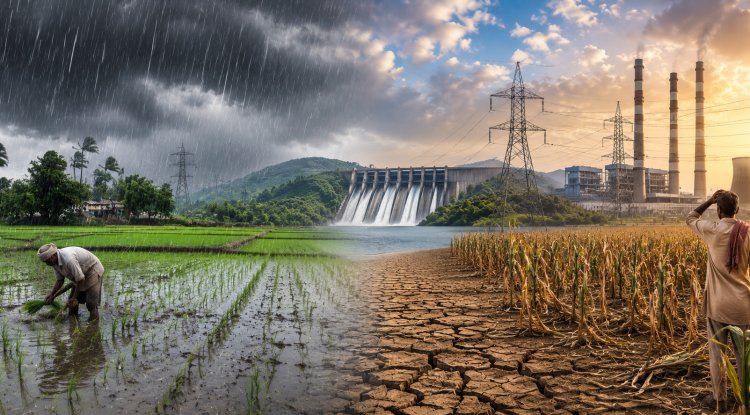
India’s changing monsoon patterns are now creating challenges beyond agriculture, with unpredictable rainfall also affecting the country’s power sector. The “yo-yo monsoon” pattern, where rainfall swings between intense downpours and long dry periods, is creating uncertainty for farming, water availability, and electricity generation.
The monsoon plays an important role in India’s economy as it supports millions of farmers and determines water availability for agriculture and hydropower generation. However, irregular rainfall patterns are making it increasingly difficult to predict water availability and plan effectively for both farming and energy needs.
What is a “yo-yo monsoon”?
A “yo-yo monsoon” refers to a rainfall that fluctuates unpredictably where weather conditions shift frequently between extreme situations. Instead of receiving steady rainfall throughout the season, some regions may experience intense rain over a short period, followed by extended dry spells. This creates difficulties for both the agriculture and the energy sector to plan effectively.
Such erratic pattern makes it difficult for farmers since too much rain may result in flooding, soil erosion, and destruction of crops, while too little rain may delay planting and reduce agricultural production. It also affects the energy sector because changing patterns of rainfall affect water levels and electricity consumption.
Changing rainfall patterns create uncertainty
A normal monsoon is critical to the process of planting crops, mainly the kharif crops of rice, pulses, cotton, and oilseeds. Nevertheless, uneven rainfall may present a challenging scenario whereby some areas experience excessive rainfall resulting in floods and crop destruction while other areas have inadequate rains that will affect their sowing and growth.
There have been climate-induced changes whereby there is an increase in the occurrence of weather extremes, which include late rainfall, heavy rain spells, and prolonged drought periods.
Impact on India’s power sector
The impact of an unpredictable monsoon is also being felt by India’s power sector, especially hydropower generation. Hydroelectric plants depend on water stored in reservoirs, which are largely filled through rainfall. When rainfall is lower than expected, water availability decreases, affecting power generation and increasing dependence on other energy sources.
On the other hand, excessive rainfall can create different challenges for the power sector. Heavy rains and floods can damage electricity infrastructure, affect transmission networks, and disrupt the transportation of fuel needed for power generation in some regions. This makes weather uncertainty a growing challenge for maintaining a reliable power supply.
Agriculture and energy are closely connected
The agriculture and electricity sectors in India are interconnected because of water availability. With the decrease in rainfall, more groundwater would be needed to irrigate land, thus increasing the use of electricity by farmers. The low level of reservoirs may also affect the amount of hydropower generated.
It forms a feedback loop between the weather uncertainties and energy and food security.
Renewable energy faces new planning challenges
The variability in monsoons emphasizes the need to enhance renewable energy forecasts and flexibility. The changing weather patterns are also creating challenges for renewable energy generation. Solar power production can be affected by cloudy conditions and prolonged rainfall, while wind energy output depends on changing wind patterns.
To address such challenges, India will require effective energy storage techniques, enhanced weather forecasts, and power generation and distribution systems. The use of technologies such as Battery Energy Storage System (BESS) and various types of renewable energy will be beneficial in providing a constant electricity supply in spite of weather changes.
Need for climate-resilient planning
The increasing unpredictability of weather patterns calls for climate adaptation in both agriculture and the energy sector. This might mean that farmers will need climate information as well as drought resistant crop species and good irrigation systems, and in the case of the energy sector, strong infrastructure and planning will be necessary.
The future energy and food security of India will depend on its climate preparedness. This will be achieved through proper energy generation and agriculture planning and resource management.
What's Your Reaction?