Switzerland's glaciers are melting at an increasing rate as extreme heat grips Europe, raising concerns over water security, ecosystems and the growing impacts of climate change.
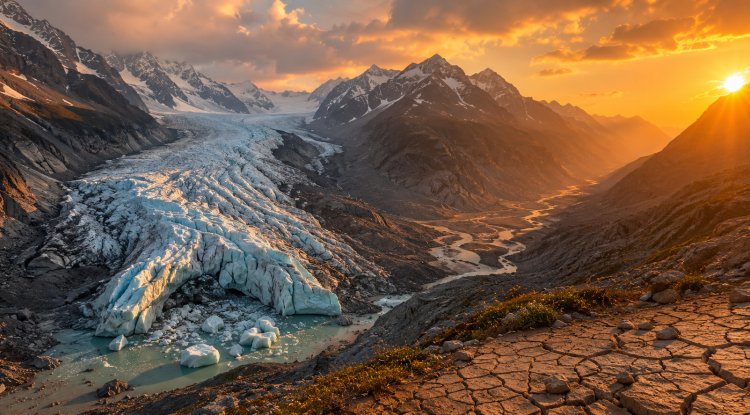
As Europe faces a wave of extreme heat in the wake of the climate crisis, Switzerland's glaciers are receding at an increasing rate, scientists and meteorologists have warned. The data from the satellites and field observations show high ice melt levels reflecting the increasing effects of warming temperatures on mountain ecosystems and water resources.
Glacial mass-balance monitoring in the Swiss Alps is showing that many glaciers have receded considerably this year, and that the melting of the surface has started earlier and with greater intensity than in the past. The data follows an extended period of hot weather in Europe, with temperatures being significantly higher than normal in several countries, raising concerns with the potential impact of the heat on health, water supplies, fuel supplies and the risk of wildfires.
One of the most clearly observable indicators of long-term warming is the shrinking of the glaciers in the Alps, according to scientists. Historical records and evidence from today indicate that glaciers that once reached down to the valleys have shrunk to isolated ice masses at higher elevations. The process could change the scenic landscape and affect the availability of freshwater for downstream communities that rely on meltwater for freshwater supplies, irrigation or hydropower.
Climate specialists have attributed the current heat waves to human-caused climate change, stating that the greenhouse effect by trapping more heat in the atmosphere is raising average heat and the number of heat waves. Recent heat events experienced in Europe, have raised concerns from health agencies and governments on heat stress, especially in vulnerable populations, outdoor workers and older people.
The long-term loss of glaciers has broader environmental issues. Temperature changes are a threat to alpine ecosystems and differences in the timing of snow melt can affect the life cycles of plants and animals. Furthermore, there is a risk of sea level rise in the future due to glacial melting.
The new findings underline the need for strong emissions reductions, increased climate adaptation and global climate mitigation, say climate scientists and climate advocates. They emphasize that, if the carbon emissions are not reduced quickly enough and climate resilience measures are not strengthened, they think the glacier retreat and extreme heat events will likely grow in intensity.
What's Your Reaction?