Roads in Europe and India are designed for different climates, which is why European roads can soften during heatwaves while Indian roads are built to withstand much higher temperatures.
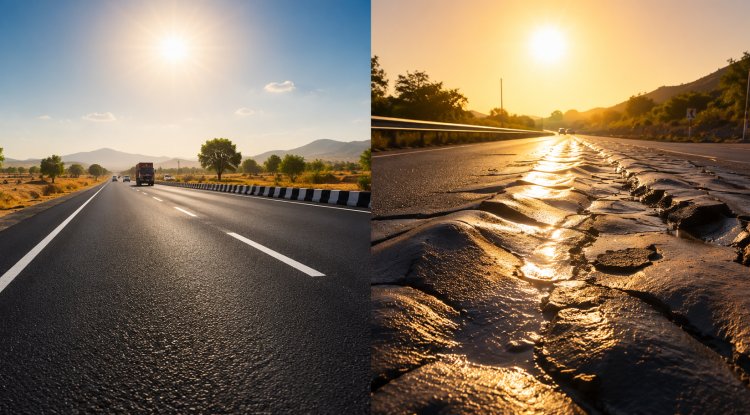
As Europe faces the challenge of extreme heat waves, some European nations have been complaining of road melting, splitting, and being hard to navigate through. On the other hand, Indian roads are still functional even with summer temperatures of over 45 degrees Celsius. However, this may be puzzling, but the reason for this is that of differences in construction designs to meet climate conditions.
Roads Are Designed for the Climate They Face
The construction of roads is diverse around the world as each area has its unique weather pattern. The type of construction material is selected depending on the temperatures, rains, and the load of traffic.
European countries with long winter seasons and low temperatures face the challenge of having to construct roads that will be able to endure the harsh cold and frost conditions. In such cases, the construction material for the road is made up of soft grades of bitumen which are elastic even in very low temperatures.
On the other hand, such elasticity poses problems when there are long stretches of high temperatures. Due to high temperatures, the road may become elastic leading to ruts on the road surface.
Indian Roads Are Built to Withstand High Temperatures
The situation in India is entirely opposite. In the summer season, there are many parts in India that have to bear a temperature exceeding 45°C. In such conditions, it is very important to construct heat-resistant roads.
For this reason, generally, engineers use a tougher grade of bitumen such as VG-30 and VG-40 that maintains its strength even in high temperatures. The roads in India are made up of asphalt concrete that consists of bigger stones having a higher strength.
Moreover, when constructing national highways, the expected volume of traffic and axle load, along with the weather condition of that area, is considered for choosing the pavement material. Roads carrying heavy vehicles are different from urban roads.
Why Europe Cannot Simply Use India's Road Design
A common question is why European countries do not simply adopt the same road construction methods used in India. The answer is that infrastructure must suit local environmental conditions.
The roads created for the summer season in India may tend to become fragile and prone to cracking in winter months in Europe. Similarly, the materials used for good performance in the winter of Europe may melt under the excessive heat of tropical countries.
Due to this, road construction is always a trade-off between durability, climate, and traffic.
Climate Change Is Changing Infrastructure Needs
One reason this issue has gained attention is that extreme heat is becoming more frequent in regions that were traditionally cooler. Many parts of Europe are now recording temperatures that road infrastructure was not originally designed to handle.
With the evolution of climate trends, engineers from all over the world are revisiting their road construction codes in order to make the transport network resistant to these climatic changes. New innovations are being studied, such as polymer modified bitumen, recycled asphalt, reflective road surface, and new pavement systems.
Building Roads for the Future
The comparison of Indian and European roads
Development of climate-resilient infrastructure is no longer a matter of just developing better roads but it is a vital requirement for the future.
What's Your Reaction?