The Supreme Court of India has put its earlier order on defining the Aravalli hills on hold, citing the need for clearer definitions and an independent environmental review.
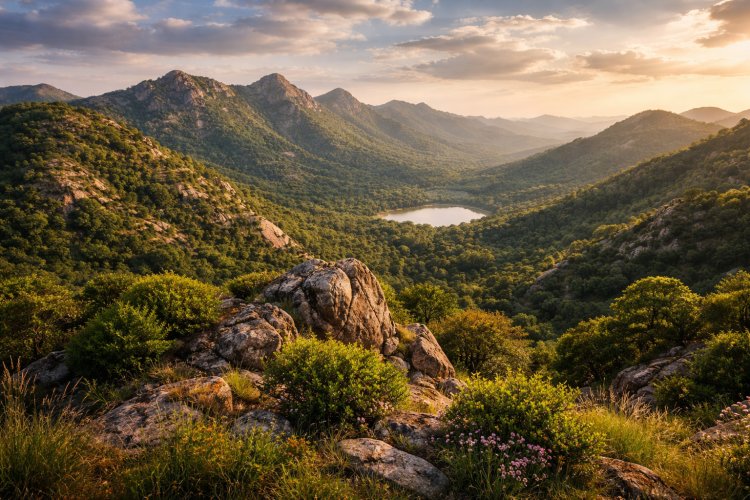
The Supreme Court on Monday paused its earlier decision on the Aravalli Hills, saying some parts of the definition approved last month need further clarification. According to Bar and Bench, the court said this pause was needed to clear confusion about how the Aravalli hills and ranges have been identified.
A bench led by Chief Justice Surya Kant, along with Justices JK Maheshwari and AG Masih, said it will form a new committee of independent experts to review the environmental impact of the earlier recommendations, which were mostly made by government officials.
The court has also put its earlier order on hold, which had used those recommendations to define the Aravalli range, especially for controlling mining activities in the area.
The Supreme Court decided to step in on its own after large-scale protests and fears that its earlier decision might harm the Aravalli Mountain range. The court has temporarily paused both the committee’s recommendations and its own earlier conclusions. It also said that the matter will be heard again on January 21, 2026, before final decision is taken.
The Bench said that both the committee’s recommendations and the Supreme Court’s findings will remain on hold for now and added that the case will be heard again on January 21, 2026.
Defending the earlier process, Solicitor General Tushar Mehta, appearing for the Union government, said that there were a lot of misconceptions regarding orders, the government's role, etc. An expert committee was constituted, and a report was given which the court accepted.
Chief Justice Kant said the court needs an independent expert opinion to remove ambiguities and provide clear guidance on issues related to the Aravalli, especially on how hills and mountain ranges are defined. The court also said it must examine whether the narrower definition approved last month could allow mining over larger areas, according to the report.
He said the court would investigate whether sustainable or regulated mining within the newly identified Aravalli areas, even with oversight, could lead to adverse ecological impacts.
The Supreme Court issued notices to the Union government and the concerned state governments and said that, until further orders, both its earlier directions and the previous committee’s recommendations will remain suspended.
Background Details
The Aravalli Mountain range spreads across Delhi, Haryana, Rajasthan, and Gujarat. The Supreme Court took up the case on its own after protests raised fears that an earlier court decision could harm this environmentally sensitive region.
Last month, the court approved a definition based on elevation to identify Aravalli landforms for regulating mining. However, reports said this definition could leave more than 90% of the Aravalli area outside mining restrictions.
Earlier in May 2024, while hearing a case on illegal mining, the Supreme Court said the Aravalli range needed a clear definition. It noted that different states were using different meanings for “Aravalli Hills” and “Aravalli Ranges”.
A committee was later set up and it submitted its report in October, suggesting measures to protect and conserve the Aravalli region. According to the report, any landform in Aravalli districts that rises 100 metres or more from the surrounding area should be classified as an Aravalli Hill, the report said.
The committee also defined an Aravalli Range as two or more Aravalli Hills located within 500 metres of each other, measured from the outer boundary of the lowest contour line.
In its November 20 judgment, a Bench headed by former Chief Justice BR Gavai, along with Justices K Vinod Chandran and NV Anjaria, accepted these definitions and imposed a ban on mining in core or protected areas.
However, the court did not support a complete ban on mining in the Aravallis. It said that a total ban could encourage illegal mining, strengthen mining mafias, and lead to more criminal activity.
What's Your Reaction?