Australia Launches First Sustainable Finance Rulebook to Include Mining Sector
Australia has launched the world’s first sustainable finance taxonomy that includes mining, with clear rules to classify green and transition investments. The framework excludes coal-powered sites and is being piloted by major banks and funds.
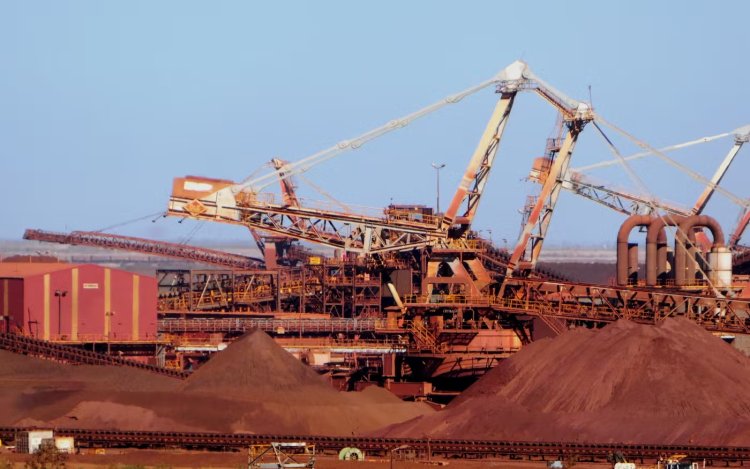
Australia has published the world's first sustainable finance taxonomy with explicit coverage of mining activities and is the sole country to have well-defined requirements for sustainable investment in the minerals industry. Two years of consultation have borne fruit in the form of the rulebook, which was driven by the Australian Sustainable Finance Institute (ASFI) and informed by government, banks, investors, and industry participants.
The taxonomy has rigorous criteria under which economic activities can be classified as "transition" or "green," enabling banks, super funds, and financial institutions to better judge the environmental qualifications of investment proposals. It seeks to assist in providing finance for activities consistent with the nation's climate aspiration and global net-zero goals.
Australia becomes part of over 45 countries in embracing such a green finance system, among others such as the European Union, Singapore, and China. It distinguishes itself, however, through a specific category for mining, especially for clean energy transition minerals—copper, lithium, nickel, and iron ore. They are required for producing batteries, electric vehicles, wind turbines, and solar panels.
The taxonomy can apply to six priority sectors for phase one. They include agriculture and land use, mining and metals, manufacturing and industry, electricity generation and supply, construction and buildings, and transport. For mining, firms qualify for a "green" label only if they comply with stringent emissions intensity requirements that are consistent with international net-zero levels.
Active reductions in emissions like switching to renewable power or electricifying diesel fleets might fall in the "transition" category. Captive coal-powered generators to supply electricity for mining operations, however, fall outside of any sustainable categorization. This is a more stringent requirement than others adopt, like Indonesia, which has some coal-fired activities in their taxonomy.
The project is already being taken notice of by prominent mining countries such as Chile, Canada, Indonesia, and South Africa, who are said to be closely observing Australia's experience. Some countries are even building or restructuring their own sustainable finance systems.
The decision follows a projected spike in transition mineral demand in 2050. The International Energy Agency estimates that over three times the amount of critical minerals currently exists to help meet climate goals. But while Australia has been optimistic about a mining boom, others have been wary of environmental, forest, and aboriginal communities' rights. Australia's policy will preclude such risk by including emission intensity levels and open reporting.
Aside from helping investors, the taxonomy will also be used to spur development of Australia's sustainable finance industry. Big institutions like ANZ, Commonwealth Bank, NAB, Westpac, HESTA, Rest Super, and Rabobank are already part of a national pilot program testing if and how the taxonomy will be used in real investment decisions.
Taxonomy is also likely to provide more accurate guidance for green bonds, transition bonds, and other environmentally focused debt products. More clarity on what constitutes a trustworthy sustainable activity will enable investment products to be structured and retailed more effectively by financial institutions.
International financial institutions, such as the Climate Bonds Initiative, have signaled that their certification requirements would be harmonized with Australia's taxonomy. This would facilitate global standardization and demystify investors.
The rulebook is also the centerpiece of the wider Australian government Sustainable Finance Roadmap of 2023, which is meant to guide private capital towards low-emissions sectors. It is a response to increasing acknowledgment that financial regulation needs to be at the forefront of the fight against climate change and achieving national targets for carbon reduction.
The taxonomy will be further developed, subsequent phases possibly to include more sectors and build on social and nature-based criteria. In the meantime, the first phase is charged with making sure the mining and heavy industry sectors are able to develop in a transparent, credible, and accountable way.
Source and Credits:
Reporting by Eco-Business and based on data from the Australian Sustainable Finance Institute (ASFI), 2025.
What's Your Reaction?