A new study shows that PET-derived nanoplastics can harm human health, raising concerns about their growing presence in food and water.

A new study has reported evidence that nano plastics generated from single-use PET bottles can directly interfere with important biological systems linked to human health.
Nano plastics have become major concern because they are now being detected inside the human body, but we still do not fully know what they do. Earlier studies largely examined how plastics harm the environment or damage human tissue. However, very little information available on how these particles affect the helpful gut bacteria that support immunity, digestion and overall health.
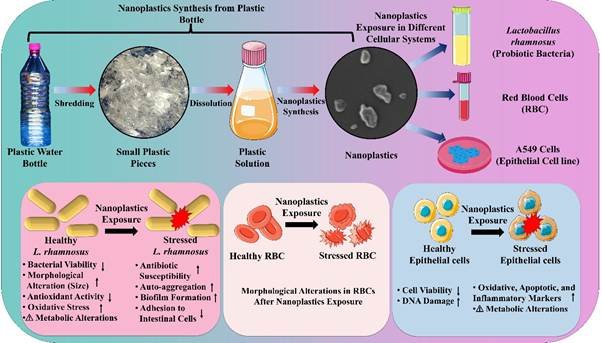
Researchers at the Institute of Nano Science and Technology (INST), Mohali, studied how nanoplastics from PET bottles interact with different parts of the body. The study effects their impact on gut bacteria, red blood cells, and human cells to understand how plastic pollution might affect human health.
In laboratory tests, researchers created nano plastics from PET bottles and tested their effects on a helpful gut bacterium Lactobacillus rhamnosus. They found that long-term exposure reduces bacterial growth, reduced its ability to protect the gut, and made it more stressed and sensitivity to antibiotics.
Impact on Blood and Human Cells
Red blood cells were tested to assess blood compatibility. When the concentration was high, nano plastics damaged the cell membranes and caused haemolytic changes. They then tested human epithelial cells, representing general cellular responses, showed DNA damage, oxidative stress, apoptosis and inflammatory signalling during long exposure. The study also observed changes in energy and nutrient metabolism, indicating broader cellular disruption. It means that nano plastics can disrupt normal cell functions in many ways.
Broader Implications for Health and Environment
The study shows that nano plastics from everyday materials can affect gut health, blood stability and cellular function. Their ability to cause DNA damage, oxidative stress and inflammation, indicates previously under-recognized risks to human health.
Published in Nanoscale Advances, the researchers raise concerns because nano plastics increasingly found in food, water and even inside people. The findings may also be important for agriculture, nutrition and ecosystem studies where plastic pollution can affect microbes and ecosystems as well.
What's Your Reaction?