HeidelbergCement India reported lower emissions, improved energy efficiency, and strengthened waste management in its FY2024–25 Business Responsibility and Sustainability Report.
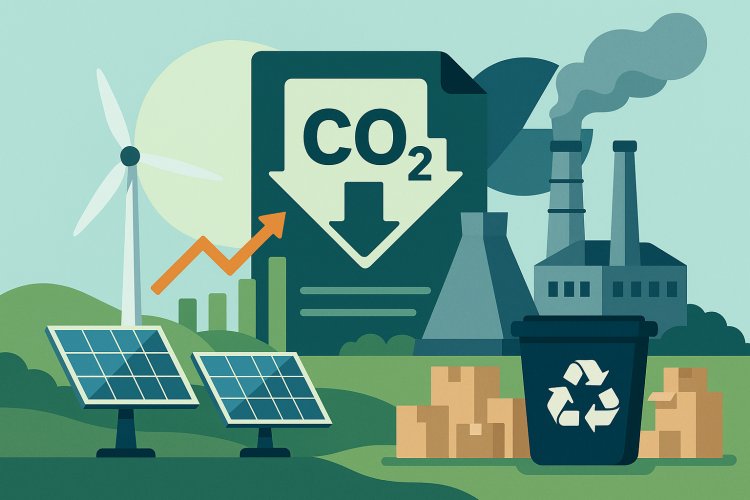
HeidelbergCement India reported a reduction in Scope 1 emissions to 22,10,214 tCO2e from 24,77,822 tCO2e, while Scope 2 emissions also dropped to 1,44,783 tCO2e, from 1,68,229 tCO2e in its FY2024–25 Business Responsibility and Sustainability Report.
The report said that for every tonne of cement the company produced, it emitted 0.53 tonnes of CO2 equivalent greenhouse gases. Last year the figure was 0.58, and the emissions related to producing clinker also went down to 0.53, from 0.88 in FY2023-24.
The company also reported an improvement in overall sustainability performance, with gains in energy efficiency and waste management. The total energy consumption went down to 95,82,640 GJ from 1,07,60,519 GJ last year, which indicates better management of energy usage. Out of this, 10,98,704 GJ has been sourced from renewable energy and 84,83,936 GJ from non-renewable energy, both being less than a year ago. The consumption of energy remained constant at 0.00045 per rupee of turnover, whereas energy intensity per tonne of cement got better at 2.17 GJ, as against 2.35 in FY2023-24.
The company has produced 13,985.39 metric tonnes of waste more than 8,694.19 metric tonnes compared to last year. Among this, there were 6,817.52 metric tonnes of plastic waste and 7,095.60 metric tonnes of non-hazardous waste that include scrap, wood, and cardboard. E-waste, biomedical waste, and hazardous waste such as used oil were shown in minimal quantities. Waste intensity per tonne of cement increased marginally, but recovery and disposal activities were properly handled. More than 6,800 metric tonnes of waste were handled through recovery activities, and 7,167 metric tonnes were disposed of in a safe manner, compared with 1,667 metric tonnes last year.
What's Your Reaction?