Los Angeles Retains Title as Nation's Smoggiest City Despite Cleaner Air Efforts
Los Angeles remains the smoggiest city in the U.S. for the 25th time in 26 years, despite improved ozone and particle pollution levels. The 2025 “State of the Air” report highlights California’s ongoing air quality challenges driven by transportation, wildfires, and legislative setbacks
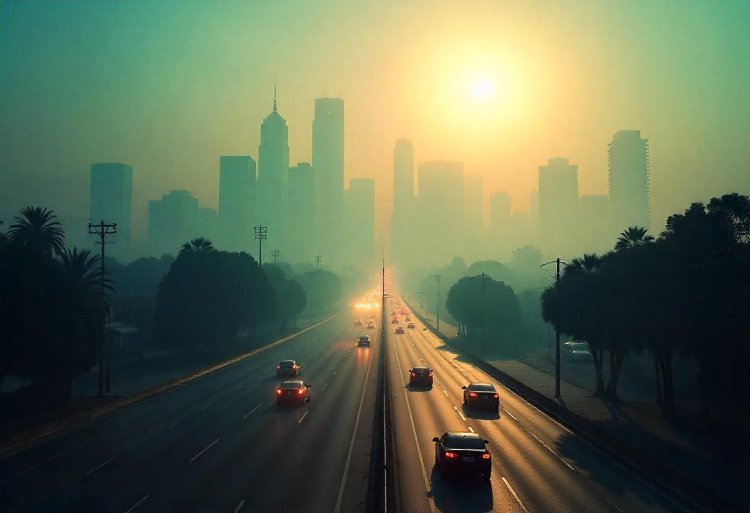
Los Angeles continues to be America's smoggiest city, earning the 25th title in 26 years, according to the American Lung Association's 2025 "State of the Air" report. While there is some improvement toward reducing pollution, the city continues to have some distance to cover when it comes to cleaning the air. Since 2000, unhealthy ozone days in Los Angeles have dropped by almost 40%, and particle pollution levels have improved. Still, the city ranked seventh-worst in the country for particle pollution, reflecting the ongoing battle against air pollutants.
California led the report's top 10 worst air pollution rankings, with five cities — Los Angeles, Visalia, Bakersfield, Fresno, and San Diego — ranking highest in ozone pollution. Similarly, Bakersfield, Visalia, Fresno, Los Angeles, and Sacramento were among the top 10 smoggiest cities in terms of particle density. The perpetual pollution issue largely originates from traffic emissions, fires, and land features. High traffic, industry, and Southern California's weather pattern are some of the main causes of perpetual smog. Mountain ranges in the surrounding area trap polluted air, preventing it from dispersing and making bad air worse.
The research tracks two primary pollutants: ozone, caused by vehicle exhaust and heat, and particle pollution, which is primarily influenced by drought and wildfire smoke. More than 34.3 million Californians reside in the communities with at least one failing air grade, and 22.9 million are living in communities failing all three types of pollution. Even with stronger emissions regulations and bills like Senate Bill 32 and Assembly Bill 398, emissions from large trucks, ocean ships, and trains remain of concern. A few positive marks have been hit in recent history.
Several California cities, such as Los Angeles and Fresno, saw their worst air quality in a year since monitoring began in 2000. Fresno had its lowest levels of particle and ozone pollution ever and also its lowest level of annual particle pollution. Nevertheless, Bakersfield had the country's worst short-term and annual particle pollution. The American Lung Association claimed that ongoing investment in emission reductions, heavy-duty vehicle technology improvements, and wildfire prevention is imperative in a bid to usher in further progress. While the apparent gains are sizeable, legislation like California Senate Bill 712, exempting older collector vehicles from smog inspections, has raised alarm that environmental benefits may be reversed.
Activists also call for maintaining air clean standards and financing zero-emission technology. The report highlights the fact that since the past two decades, air in California has become considerably cleaner, yet climate change, as well as shifting policy decisions, continue to pose threats to the air health of the state.
Source/Credits:Written by Terry Castleman, ©2025 Los Angeles Times. Distributed by Tribune Content Agency, LLC. Additional data from the American Lung Association's "State of the Air" 2025 report.
What's Your Reaction?