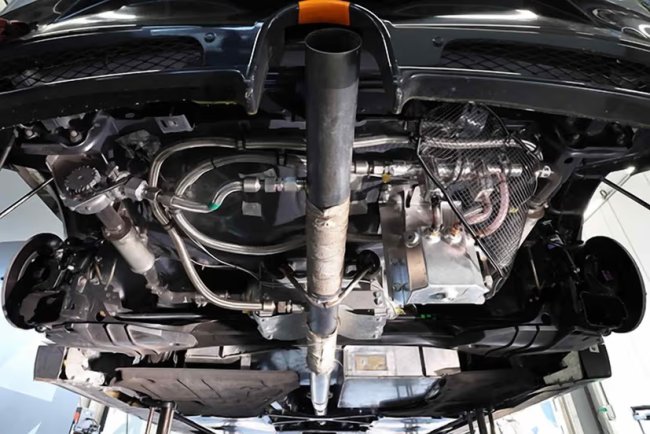
The Technology Development Board has backed NTF Energy Solutions to commercialise indigenous Type-IV composite CNG cylinders aimed at supporting India’s clean mobility and domestic manufacturing goals.
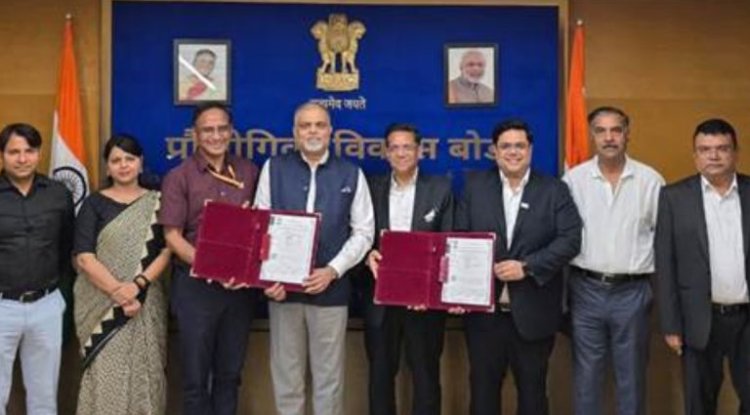
The Department of Science and Technology's Technology Development Board (TDB) has joined forces with Delhi-based NTF Energy Solutions Private Limited to work on getting indigenous Type IV composite CNG cylinders out into the transport sector.
The project will involve developing a manufacturing plant to make composite CNG cylinders. This involves filament winding, blow moulding and high-pressure testing of CNG components. The capacity of domestic manufacturing plants to manufacture high-pressure gas storage systems for use in vehicles and in industries will increase as a result of the new plant.
Type IV composite CNG cylinders differ from conventional steel CNG cylinders because they are made from a polymer liner that has been reinforced with carbon fibre. According to the company, composite CNG cylinders are lighter than their steel counterparts and could reduce the weight of vehicles by up to 75 per cent.
The reduction in the weight of a vehicle contributes to improved fuel efficiency, reduced emissions in commercial vehicles and passenger vehicles that run on CNG.
NTF Energy Solutions has designed carbon fibre reinforced polymer structure-filled CNG cylinders that incorporate mechanical locking systems to enhance the durability and resist the internal pressure of the cylinder. The cylinders have burst pressure ratings higher than 600 bar.
Authorities say this is an ongoing project to enhance the manufacturing capabilities of clean transport technologies in order to reduce dependencies on imported products like those used for gas storage. The new manufacturing facility will utilise raw materials obtained from Indian companies and will employ technologies created by Indian manufacturing companies.
Secretary of TDB Rajesh Kumar Pathak stated that this is part of the expansion of clean mobility infrastructure and domestic manufacturing capabilities within India.
India has been transitioning to compressed gas as a fuel source since 2019 in both public (city) and commercial (charter/vehicle-hire) transportation, as a way of mitigating emission levels from vehicles while diversifying fuel supply options. With the rapid growth of CNG (compressed natural gas) vehicles, there has also been a corresponding growth in demand for lightweight natural gas storage systems.
This announcement comes with the continued investment of various government organisations into developing and expanding alternative fuel technologies, including but not limited to CNG, biofuels, hydrogen, and electric mobility.
What's Your Reaction?