A global study finds beef production accounts for 40% of agriculture-linked deforestation, with Brazil contributing the largest share of forest loss between 2001 and 2022.
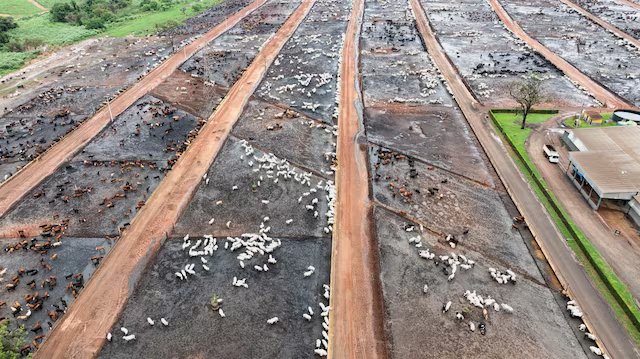
Beef farming is the largest contributor to agriculture-related forest loss worldwide, making up 40% of forest loss related to food production between 2001 and 2022, according to a new study by scientists at Chalmers University of Technology.
Brazil is the largest contributor to forest loss among all the countries studied in the research, making up almost one-third (32%) of global forest loss between 2001 and 2022.
Researchers have studied 184 food products across 179 countries using satellite imagery and agricultural data, claiming this is one of the most comprehensive global assessments of agriculture-related forest loss to date.
While beef farming is the largest contributor to forest loss, other products also play a smaller part in forest loss around the world. These products include palm oil, making up 9% of global forest loss; soybeans making up 5%; maize making up 4%, with rice also making up 4%.
Overall, the study found that 121 million hectares of forest were lost worldwide between 2001 and 2022, resulting in 41.2 gigatonnes of carbon dioxide emissions.
The findings also underscore the fact that the main crops, which include maize, rice, and cassava, account for a total of 11% for agriculture-related deforestation, which is more than the contribution of a number of export-oriented crops.
Indonesia ranks second for contributing to deforestation attributed to agriculture, followed by China and the Democratic Republic of Congo, while the United States and the Ivory Coast also appear on the list for contributing to deforestation attributed to agriculture.
According to the research, even as deforestation attributed to agriculture is a major cause for environmental degradation, it only accounts for 5% of the total carbon dioxide emissions produced globally.
According to the research, in order to control deforestation, a policy framework that focuses on international supply chains alone might not be sufficient, as agriculture in the countries where these commodities are produced also plays a significant role in contributing to deforestation.
The research team also intends to extend its model for studying other sectors, which include mining and energy, in order to understand the contribution of these sectors as well towards deforestation.
What's Your Reaction?