Burning Plastic Waste Poses Growing Global Health Crisis, Warn Experts
Open burning of plastic waste is a rising health and environmental concern, especially in developing countries lacking waste infrastructure. Experts call for limits on plastic production and global action at the upcoming UN plastics treaty summit.
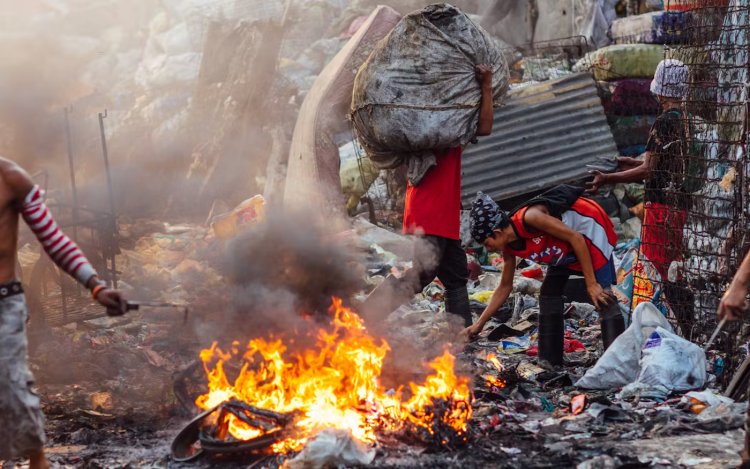
Open incineration of plastic waste is becoming a serious public health and environmental problem, especially in developing nations lacking proper facilities for waste disposal. While plastic usage is increasing, specialists are sounding alarm bells regarding the harmful fumes released as a result of burning plastics without pollution control, especially in open spaces adjacent to residential zones.
Plastic items such as disposable nappies, bottles, and bags are nowadays applied on a large scale even in developing nations. In the absence of proper waste management systems, most African, Asian, and Latin American communities burn the waste either as a method of disposal or as a source of energy. The activity results in extreme air pollution and constitutes serious health risks, particularly to people.
The authors are pointing out that the smoke emanating when plastic is on fire contains toxic chemicals like fine particles, dioxins, and other harmful chemicals. They have been associated with respiratory complications, cardiovascular conditions, birth defects, and cancers. Chemical additives employed during the production of plastics also affect nervous, endocrine, and reproductive systems.
Approximately 400 million metric tonnes of plastic are produced annually in the world, but hardly more than 10% is recycled. The majority of it ends up in landfill or is abandoned in the open, enormous volumes being incinerated. The UN Environment Programme has estimated that approximately 17% of plastic waste is incinerated globally. But naturally, informal and unrecorded burning, especially in developing nations, is likely to be underreported.
Most developing nations also import plastic rubbish from wealthier countries. While the rubbish was labeled as recycled when it was shipped out of their individual nations, it is largely dumped or incinerated when it arrives. Indonesia, Malaysia and Vietnam, who have all all suffered significant dumpings of rubbish since China imposed its 2018 ban on plastic rubbish imports, have all experienced this. Malaysia prohibited US imports in July 2025 in an effort to stem this.
Open burning and illicit dumping are prevalent among the importing nations of plastic waste. In Minh Khai, Vietnam, imported plastic is stored in huge mounds, recycled into pellets only from high-grade plastic. It is recycled in unauthorized workshops that release unpleasant smoke, poisoning residents and the environment too.
The second process, known as refuse-derived fuel (RDF), incinerates mixed waste such as plastic in industrial plants and cement plants. The process has no adequate emissions controls and is rapidly being adopted as a means of circumventing global regulation of plastic trade. RDF has been documented to be used in some countries and is growing at an exponential rate.
Plastic is also commonly utilized as fuel in the manufacture of tofu and by such manufacturing industries as limestone. Plastic is utilized over wood due to its affordability. However, these industries usually lack the proper machinery to manage the pollutants they produce upon burning, which results in environmental degradation.
Plastic combustion is widespread at the domestic level as well. In areas where clean energy is not available, plastic is used to light cooking fire or as a substitute fuel. Research in Guatemala and Ghana has revealed extensive use of plastic waste for cooking stoves and fire initiation. Plastic is combusted in some areas to chase away mosquitoes, substituting less accessible though safer alternatives.
The air pollution effect of burning plastic is not the only environmental consequence. Poisonous residue in the ash can taint land and water. In Indonesia, the ash is occasionally being utilized as a fertilizer, potentially bringing poisonous chemicals into food sources.
Health studies have identified highly concentrated levels of dioxins in eggs from near plastic burning sites in Indonesia, Kenya, and Nigeria. The chemicals are regulated under the Stockholm Convention on Persistent Organic Pollutants because of their persistence and toxicity. The children residing near such locations have high probabilities of developing respiratory diseases as well as long-term illnesses resulting from continuous exposure to toxic fumes.
Burning of plastics also contributes to climate change. Plastics are made from fossil fuels and release greenhouse gases such as carbon dioxide and black carbon when they are burnt. Data in Guatemala has revealed that open burning generates nearly a quarter of Guatemala's black carbon and fine particulate emissions.
Despite growing evidence of damage, the problem still does not get adequate attention at international levels. Professionals are demanding action on a global scale since the United Nations is about to organize a plastics treaty conference in Geneva between 5 and 14 August 2025. In their opinion, curbing the production of plastic—particularly varieties such as polyvinyl chloride (PVC) and polystyrene that emit even more toxic chemicals—is an imperative.
Current recycling and waste disposal systems in the developing world are not sufficient to cope with the amount of plastic waste that is being produced and exported. Community clean-up campaigns, as per some researchers, have the potential of inadvertently raising burning if nothing else is provided as a substitute.
Extended producer responsibility is also what environmentalists are calling for. It's a policy that would make producers responsible for how they manage their plastic products at the end of their lives. This is not yet included in the draft UN plastics treaty.
Successful change will need to be brought about by concerted action from governments, industries and international organizations. Although public awareness campaigns will help deter bad practice, substantial investment in policy change and infrastructure is necessary in order to develop safe, sustainable waste management solutions.
The global and increasing practice of plastic waste burning imperils human health and environmental integrity. With global negotiations on the horizon, the urgency increases for increased global cooperation and legally binding global agreements to mitigate plastic pollution and the negative effect it has.
Source & Credit-First published on Mongabay.com. Written by Sean Mowbray. Used with permission.
What's Your Reaction?