Can Timber Help Reduce Construction Industry Emissions?
Mass timber is increasingly viewed as a promising solution to curb the construction industry’s carbon emissions, although concerns about sustainability and forestry practices remain.
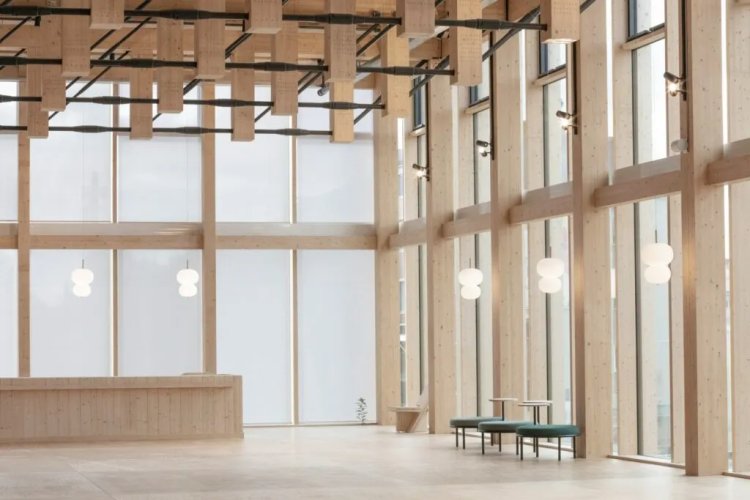
The structures in which humans live and work are a huge contributor to the climate crisis. Industry studies show that the construction industry contributes almost 16% of global carbon dioxide emissions, primarily because of what they are made of, such as steel and concrete. As more become aware of this environmental cost, the developers have begun looking at mass timber—a new type of engineered wood—as a cleaner, greener option. Although the method is expansive in its possibility, experts warn that general industry problems and limitations need to be taken into account.
Mass timber, or "massive timber," isn't remotely similar to ordinary wood planks. It's created by gluing, pressing, or pegging pieces of lumber together to create large structure components like beams and panels. This production process allows the material to be on par with steel and concrete in strength so it can be utilized to build tall and complex buildings. Some of the common mass timber products include nail-laminated timber, dowel-laminated timber, cross-laminated timber, and laminated veneer lumber, which vary based on assembly process. Fire-resistant protective finishes are mostly used in an attempt to increase security, and as such, mass timber can be utilized in any climate.
Mass timber construction possesses a number of environmental benefits. Because wood is lighter than steel or concrete, work can be done sooner and more frequently at less expense. Most importantly, the wood sequesters carbon in the building's structure for a few decades, as long as the wood isn't burned or decays earlier. Trees capture carbon dioxide when they grow, and wood construction removes some of that carbon from the atmosphere for the building's lifetime. In comparison to steel and concrete, which involve energy-sucking processes—such as high-temperature furnaces and fossil fuel-consuming kilns—mass timber is built with less energy input and emissions of greenhouse gases. Industry journals and ecological research projects estimate that the avoidance of steel and concrete with mass timber would decrease material emissions in construction by 13–25%. That decrease would be a landmark transition toward global climate goals.
Yet mass timber is not environmentally friendly. Wood harvesting for timber liberates some of the carbon contained in forests because only a proportion of each tree is used for lumber and the remainder is by-product or waste wood. Also, once harvested, the tree no longer absorbs carbon or releases oxygen, a distinction that signifies when considering the long-term effect versus keeping trees whole for centuries. The impacts of wood logging, transport, and processing can also be considerable, taking into account specifically road emissions and production energy consumption. Estimated estimates suggest that woodland cover might fall short in keeping up with increased demand for wood, specifically in the case of existing agricultural pressure, forest fires, and urbanization.
In terms of meeting sustainability issues, tree plantations—single-species forest plantations with fast-growing trees for wood products—are one of the suggestions by certain developers. While plantations reduce pressure on forests, they will most likely generate other environmental issues, such as habitat loss and reduced biodiversity, and may disturb local communities. According to analysis and scientific modeling, if wood consumption increases at a high rate, the world may lose as much forest cover as the contiguous United States by 2050, putting additional stress on the sustainability of global ecosystems.
Even with these constraints, mass timber remains a critical part of curbing emissions from construction. It is versatile in design and can replace emissions-causing materials in most developments. Industry players note that its carbon sequestration capabilities—locking up carbon in buildings—set it apart from popular options. Nevertheless, the success of mass timber relies on sustainable forest management, stringent forestry control, and building technology improvement. Organizations increasingly suggest coupling timber adoption with other innovations, including cleaner steel and concrete alternatives, reused materials, and novel forms of low-carbon cement.
In addition to environmental benefits, the use of mass timber affects building practice. Because components may be manufactured off-site, construction schedules can be reduced, and site safety enhanced. Reduced exposure to risk conditions or time on scaffolding equates to fewer accident risks overall. New employment opportunities for specialist skills are being generated, bringing with them the potential for increased pay and training packages for staff, though retraining will be necessary as mass timber usage spreads.
At a societal level, construction material impacts urban climate and air quality. Reducing emissions ensures cleaner cities and slows the progress of global warming. Although an individual may have little control over what material is used in his or her home or workspace, everyone can make an effort by seeking environmentally friendly policies in housing and development.
In short, experts universally believe that mass timber is not a panacea or a perfect solution but should be one aspect of a comprehensive, multi-faceted approach to decarbonising the building sector. Durable climate gains will depend upon sustained innovation, more stringent control over forestry, greater research into substitute materials, and industry-wide acceptance of sustainability. As new materials and techniques develop, the construction future will most probably be characterized by a varied combination of old methods and new technologies, all working towards creating a cleaner, greener world—with wood continuing to be a key but not sole player.
What's Your Reaction?

















