China’s Solar-Powered Fishing Farm Transforms Industry
China’s 250 MW hybrid solar fishing farm in Zhejiang merges floating solar panels with aquaculture, producing 300 GWh of clean energy and 10,000 tonnes of fish annually. This $500 million project reduces CO₂ emissions and boosts fish yields, offering a model for sustainable food and energy production. Despite environmental concerns and higher costs, China plans to scale to 1 GW by 2030. For countries like India, with a strong fisheries sector, similar projects could support climate and food goals—if ecological, financial, and regulatory challenges are addressed effectively.
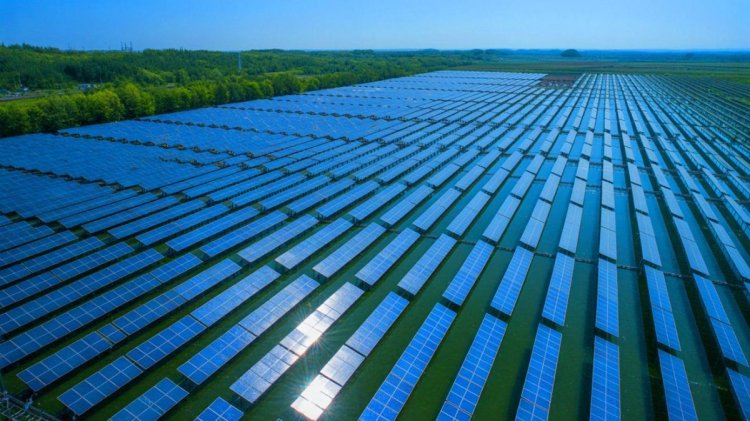
A 250 MW hybrid solar farm with 370,000 panels is revolutionising Chinese fishing, integrating renewable energy with aquaculture. This innovative project highlights sustainable practices but faces environmental and scalability challenges.
Located in Zhejiang, the farm combines floating solar panels with fish farming, generating 300 GWh annually while producing 10,000 tonnes of fish. The $500 million project, operational since 2024, reduces coal reliance by 15%, cutting emissions equivalent to 200,000 tonnes of CO2 yearly. The panels shade water, lowering temperatures by 2°C, boosting fish yields by 10%. China, with 70% of global aquaculture production, aims to expand such hybrid farms to 1 GW by 2030, supported by $2 billion in green investments.
The model aligns with global sustainability goals, as aquaculture accounts for 3% of emissions. In India, where fisheries contribute $12 billion to GDP, similar systems could benefit coastal states like Andhra Pradesh. However, high setup costs and maintenance in corrosive water environments pose barriers. Environmental concerns include potential water contamination from panel degradation, with 5% of panels needing replacement annually. Posts on X praise the innovation but highlight ecological risks if scaled without regulation.
China’s grid integration challenges, with 10% renewable energy curtailment, mirror India’s, where 15% of solar power is wasted. Critics argue that land-based solar may be more cost-effective, as floating systems cost 20% more. The project’s success depends on subsidies and technological advancements to lower costs.
This hybrid farm sets a new standard for sustainable aquaculture. For India, adopting similar models could enhance food security and green energy, provided environmental and economic hurdles are addressed.
Source: Sustainability Times
What's Your Reaction?