A new report says investing just 2% of renewable energy project costs in climate resilience could help India avoid nearly $28 billion in climate-related losses by 2030.
India's clean energy transition could become significantly more resilient with relatively modest upfront investments, according to a new report that highlights the financial benefits of integrating climate adaptation into renewable energy projects. The study estimates that allocating just 2% of project capital expenditure (CapEx) towards climate resilience measures could prevent nearly $28 billion in climate-related losses across the country's expanding renewable energy pipeline by 2030.
Prepared by Zurich Kotak General Insurance & Zurich Resilience Solutions, the study finds that India’s proposed renewable energy infrastructure stands the risk of loss due to climate change impacts of up to US$ 55 billion, which can be cut down to about US$ 27 billion with early investments towards resilience measures. The estimated payback is 6 times the investment made.
The Indian renewables industry has witnessed rapid growth in recent times to become the world’s third largest renewable capacity holder. India has installed renewable non-fossil fuel capacity of 283.5 GW till March 2026, with renewable electricity generation growing steadily towards the goal of installing 500 GW of non-fossil fuel capacity by 2030. As investments continue to increase, there is an opinion that climate resilience needs to be a fundamental aspect of infrastructure planning.
The study involved 871 planned renewable energy projects in ten states/Union Territories, accounting for roughly 90% of India’s planned renewable energy capacity. The findings showed that nearly 90% of this planned capacity may be highly or critically exposed to climate risks by 2030 with a 15-30% chance of a significant climate-related event. Flooding, hailstorm, wildfire, and severe storms are some of the major climate risks that threaten the country’s energy infrastructure and power generation.
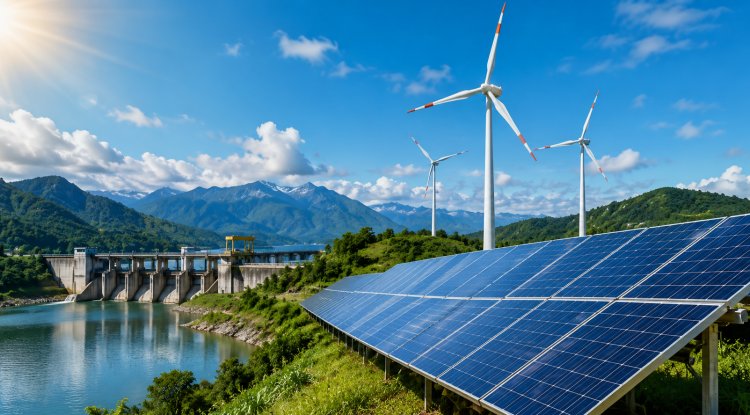
Solar projects make up the largest proportion of India’s upcoming capacity for renewable energy, and therefore, they are at the highest risk due to the effects of climate change like flooding, severe weather conditions, and high temperatures. While there are relatively fewer hydropower projects, they require enormous capital investment in terms of construction of dams, reservoirs, and other related structures, and thus damage to these assets would be very costly. It has been argued that better engineering practices and resilience to climate change in their design can save these assets.
The report suggests that climate risk assessments must be embedded at all stages of project planning and development. Some of the recommendations provided by the report include conducting climate screens prior to project approvals, conducting stress tests on high-risk assets, incorporating specific engineering standards for hazards, enhancing transmission and support infrastructure, and using resilience metrics for financing and insurance decisions. The financing and insurance of these energy projects will become easier in such a case. In light of the increasing frequency of weather-related disasters due to climate change, it is anticipated that climate-resilient infrastructure will be necessary for India's shift to renewable energy. These climate-resilient energy projects will not only safeguard the investments but will also increase energy security and help to sustain economic growth.
What's Your Reaction?