Delhi launches pilot online water quality monitoring system in Gulmohar Park to enhance real-time contamination detection and sustainable water management.
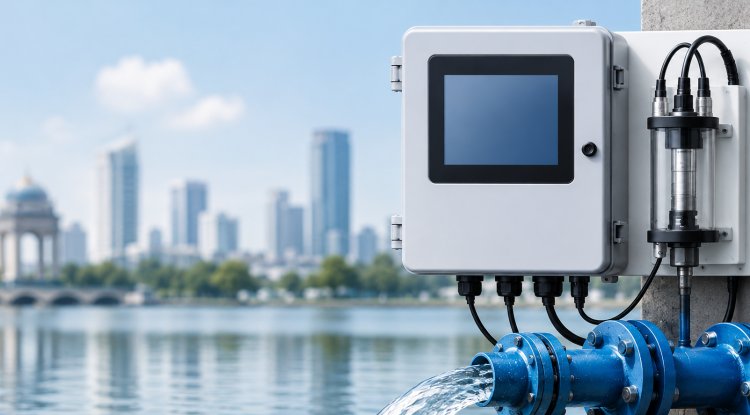
The Delhi government has launched a pilot project in Gulmohar Park to introduce online water analysers aimed at improving drinking water quality monitoring and preventing contamination in the city's supply network. The initiative marks an important step towards building a smarter, safer and more sustainable urban water management system.
This project aims to provide continuous monitoring of various important water quality parameters that would help identify any risk of pollution early and take timely action for addressing it. This project is part of the ongoing attempt to upgrade the water infrastructure of Delhi and make it safer for consumption by its residents.
Under the pilot scheme, digital analysers have been installed that can monitor water quality parameters such as pH, turbidity and chlorine. The difference between this online and the offline method is that the former will ensure a steady flow of information so that any irregularity in the water quality can be identified without delay so that remedial measures can be taken promptly.
The new technology is expected to reduce the the risks of water quality and increase efficiency and transparency within water management processes. Also, this system facilitates centralised monitoring, allowing authorities to monitor the water quality of different areas.
Speaking to a news agency, Delhi BJP MLA from Malviya Nagar, Satish Upadhyay, said:
"Ten days ago, there were complaints of water contamination in the Gulmohar Park area, which were addressed by the Delhi Jal Board. Because the water pipelines run underground, using such water analysers, we can check pH, TDS and Chlorine levels in water. This technology will help check for any contamination and its source. Delhi Jal Board will use this technology throughout the city if this pilot is successful."
Upadhyay further stated: "This has been installed via the PPP model, and its complete set-up will be done in a week's time."
President of the Gulmohar Park Residents Welfare Association (RWA), Atul Bal, acknowledged the efforts made by the authorities in resolving the recent contamination issue. Speaking to a news agency, he said: "This problem started three weeks ago. Immediately, we approached the MLA office. Both the MLA office and DJB worked with us for two weeks to resolve this problem. They identified different contamination points and other problems. Today, the issue of water contamination has been completely resolved."
Beyond public health benefits, the initiative supports Delhi's broader sustainability objectives. Real-time monitoring can help reduce water wastage, improve resource efficiency and minimise the environmental impact of water treatment and distribution systems. By ensuring that water quality issues are identified quickly, utilities can reduce losses associated with contamination events and improve the overall sustainability of urban water services.
Gulmohar Park has been chosen as the starting point for testing the technology, after which its use will be extended to other areas of the capital. During this pilot phase, the effectiveness and feasibility of such an approach in dealing with the problem will be measured.
With increasing urbanisation along with issues emerging due to the climate change crisis, digital surveillance systems are becoming an important part of sustainable city infrastructure. Along with safeguarding public health, constant water quality surveillance will make cities more adaptive to the threats posed by climate change.
If the project prove to be a success, then Delhi would certainly provide us with a prime example of how advanced technology may enhance the management of water resources as well as its accessibility to millions of citizens.
What's Your Reaction?