A renewed drought in northern Kenya is intensifying hunger, compounded by reduced international aid. New data illustrate rising food insecurity, livestock losses, and strained resources across the region.
In northern Kenya, drought conditions are increasing food insecurity and placing additional pressure on limited humanitarian assistance. Humanitarian agencies and local officials report that failed rains have disrupted food production and grazing, while funding shortages have reduced the scale of aid distribution.
More than four years after a previous severe drought affected the region, rainfall has again been below average. In counties including Turkana, water sources are under strain, pasture availability has declined, and food supplies are limited. Kenya’s National Drought Management Authority has reported that more than nine counties are experiencing drought conditions affecting water access, crops and livestock, which are central to pastoralist livelihoods.
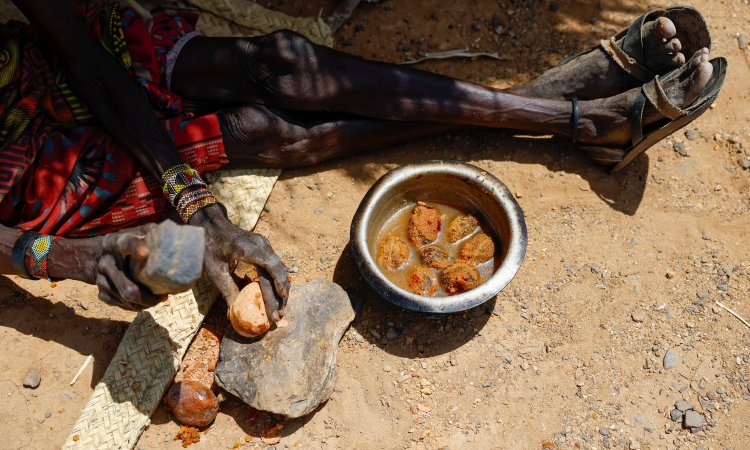
In Loperot village in Turkana County, 76-year-old Echakan Amaja relies on monthly food rations from the United Nations World Food Programme (WFP) and locally gathered wild fruits. Reduced rainfall has limited the availability of these food sources. Livestock losses linked to drought and insecurity have increased dependence on food assistance as rations decline.
How the Drought and Aid Reductions Intersect
The current drought follows consecutive below-average rainy seasons. Limited rainfall has reduced pasture regeneration and crop production. Households have reported selling livestock at reduced prices or moving in search of grazing land. Lower livestock productivity has reduced access to milk and income.
Humanitarian agencies report that funding constraints are limiting response capacity. The WFP has indicated that available resources may not be sufficient to maintain current food distributions in the coming months. Local officials state that a significant portion of Turkana’s population requires assistance, but current funding levels restrict coverage.
Reduced international donor contributions have affected the availability of specialised nutritional products for severely malnourished children. Aid organisations report similar funding constraints in other parts of East Africa, including Somalia, where drought conditions have also increased food insecurity.
Broader Regional Impacts
Northern Kenya’s drought forms part of wider dry conditions affecting the Horn of Africa. Several neighbouring countries have experienced failed rains, contributing to food shortages and, in some areas, emergency declarations. Previous drought cycles in the region have reduced household assets and increased reliance on humanitarian support.
Reduced access to water and grazing land has also increased competition over resources in some areas, according to government authorities.
What This Means for Households
Households in drought-affected counties face reduced water availability, lower livestock productivity and limited income. Some families have reported migrating in search of pasture or relying more heavily on food assistance and wild food sources.
Health workers and aid organisations report concerns about rising malnutrition rates, particularly among children, as access to specialised nutritional support declines.
Moving Forward
Humanitarian agencies state that response efforts require additional funding to address expanding needs. Without increased support, food insecurity and malnutrition levels may rise in affected countries.
Climate researchers note that rainfall variability in the Horn of Africa has increased in recent years, contributing to more frequent drought episodes. Government agencies and aid organisations have identified investments in water infrastructure, livestock support and social protection programmes as measures that could reduce vulnerability.
Households in northern Kenya continue to face food shortages linked to drought conditions and reduced aid availability.
Source: Reuters
What's Your Reaction?