EMO Energy unveils NEXO to cut energy costs by 40% at dark stores using solar, batteries, and smart software.
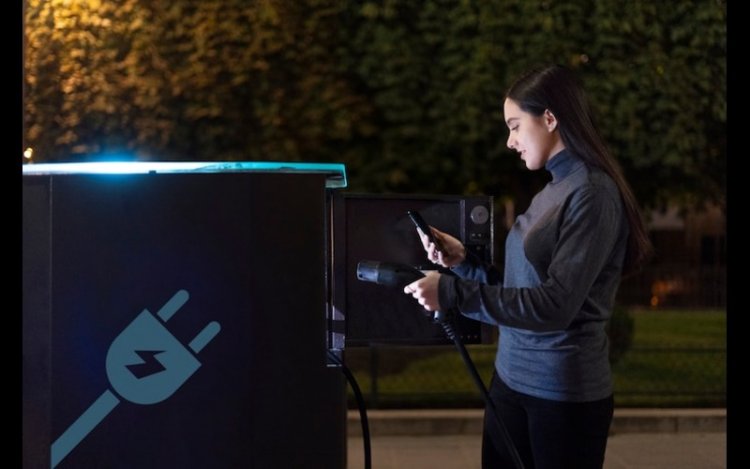
In a significant development for India's logistics ecosystem of fast-commerce, deep energy-tech firm EMO Energy, supported by marquee investors Transition VC, Subhkam, and Gruhas, today announced the introduction of NEXO, a vertically integrated energy ecosystem engineered to reinvent the cost and efficiency of last-mile delivery operations.
Specifically created to address India's urgent energy requirements of growing numbers of electric delivery vans, NEXO combines the whole energy value chain from solar panel energy generation to sophisticated battery storage solutions, fast-charging infrastructure, and intelligent energy management software. With end-to-end solution, EMO Energy feels that it can save energy costs at dark stores up to 40% and enhance operating efficiency as well as propel the nation towards renewable-powered logistics.
The NEXO system will first be introduced in India's two biggest quick-commerce centers—Bangalore and the National Capital Region (NCR). EMO will introduce the system to 100 dark stores in these markets using its existing network, including more than 6,400 battery-electric delivery vehicles, more than 900 fast chargers, and more than 200 dark store operations in 10 Indian cities. These shadow stores—hyperlocal, tiny warehouses that are the backbone of quick-commerce—will now boast a sustainable, standalone power solution designed to shatter the operational pain of fleet operators.
The arrival of NEXO occurs when India's EV ecosystem remains highly fragmented. Most last-mile delivery companies now rely on unconnected vendors for a string of different energy components—charging points from one, batteries from another, and independent health and performance monitoring software. This dislocated condition results in low compatibility, inefficiency, and high operational expenses, especially in the quick-commerce segment, where delivery fleets are perpetually under constant strain to be operated high-speed and high-volume.
EMO Energy Co-founder and CEO Sheetanshu Tyagi noted that although the quick-commerce space is growing quickly, cost factors like rent, labor, and inventory are getting increasingly difficult to manage. But energy is one lever which may still be tweaked—a challenge NEXO is ready to face head-on.
"As quick-commerce keeps on growing, operating costs for operators—be it rent, labor, or inventory—are going to keep increasing.". Among these, energy is the sole manageable handle that can be tuned and can stabilize the operating cost for fast commerce players," Tyagi explained. "But so far, all EV fleets have made do with fractured energy stacks: third-party charging equipment, discrete battery suppliers, and stand-alone health monitoring software—each of which operates in silos, constraining compatibility and performance.". NEXO fills this void with an entirely integrated system whose each and every element of the energy supply chain—charger station, battery pack, software, and green energy inputs—is designed to play perfectly together.
At its core is SENS, EMO's artificial intelligence-based health and energy management software. It controls solar power production and grid input powers dynamically in real-time to provide maximum uptime and optimal energy use. It doesn't just monitor energy consumption trends but also maximizes energy flow according to demand to provide continuity of operations even during low-grid conditions.
Backed by SENS behind it is ZenBase, the company's own liquid-cooled energy storage technology, and SWFT dual-gun fast chargers, which are capable of serving 20 riders per charger per day. A dark store with four such chargers is capable of handling up to 80 riders a day efficiently, which facilitates high-volume delivery operations without a moment's downtime.
NEXO features EMO's new battery technology, the ZenPac—a 2 kWh liquid-cooled battery pack with an 80% charge in 20 minutes. The battery was designed explicitly for thermal resilience, fast charging, and dependability, and EMO holds 16 patents worldwide on its design. These batteries are already deployed in fleets for blue-chip customers like Blinkit, Zepto, Swiggy Instamart, Bigbasket, and Domino's, and this speaks volumes about their scalability and well-proven performance.
The combined design of NEXO has significant economic as well as environmental benefits. With solar integrated in every location, EMO is expecting every NEXO-fitted dark store by FY 2026 to handle as many as 20,000 monthly delivery rides, with a minimum of 25% of the total energy need being met by solar. Where grid infrastructure is limited in an area, complete off-grid capability will also be feasible, and reliance on fossil fuel will decrease significantly, with logistics becoming more robust.
Via NEXO, EMO Energy is not selling a product but a seemingly paradigmatic change in energy thinking, transmission, and optimisation for the last-mile logistics industry. With an technologically advanced, vertically integrated, and renewable energy-driven model, the company is taking on India's fast-expanding fast-commerce industry's biggest needs—cost reduction, scalability, and sustainability.
As India consolidates its speedy urbanization and adopts electric mobility, such solutions as NEXO can be the gold standard for eco-friendly delivery infrastructure. EMO Energy is set to take a front seat in changing the energy infrastructure of India's rapid-commerce revolution with an eye on scaling up from the pilot 100 dark stores.
What's Your Reaction?