From Delhi Slums To National Impact: Devendra Kumar’s Battle for Girls
He fights entrenched gender barriers, taking his work for girls’ rights from Delhi’s slums to the national stage
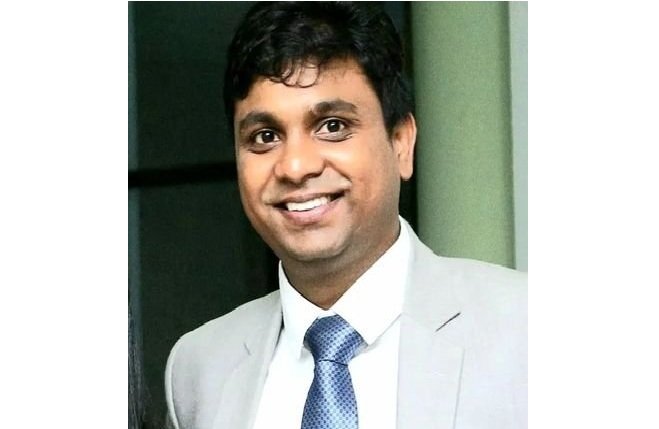
Devendra Kumar, 39, Founder of Ladli Foundation Trust, was left abandoned when he was only two years old with his newborn sister. The most shocking part is that it was their own parents who left both children in the Dakshin Puri slum in South Delhi. He does not remember faces, but he remembers fear; fear of hunger, of abuse, and the constant fear that his younger sister would be married off long before she understood what marriage meant.
Growing up in an environment which is dominated by drug trafficking, violence, and organised crime. There were no safe corners here. The gangs hunted for boys to recruit into illegal networks, and girls were often forced into early marriage or exploitation. Survival wasn’t a phase; it was a job he began at the age of eight. While other children were learning multiplication tables, Devendra was working as a caregiver, cleaning floors and carrying loads, just to keep himself and his sister alive.
School was not a guarantee, safety wasn’t either. Growing up, every day was a negotiation between studying, earning enough to eat, and protecting his younger sister from the threat of child marriage. “I was not just a witness to discrimination. I lived it,” Devendra said.
He grew up seeing how quickly a girl could disappear from school and be married off, or worse, sold. Protection became his purpose before he even understood what activism was. When he resisted joining local gangs, they beat him mercilessly. To escape further violence, he started volunteering with the police during community sports events in the evening. Not out of passion, but necessity. If he stood beside the officers, he wouldn’t be beaten. He cleaned the sports ground, marked lines, organised little matches or anything to align himself with safety.
“My volunteering wasn’t noble. It was self-protection,” he says. But that necessity planted a seed. He learned how structure and community could change behaviour. He learned how small efforts could shield vulnerable children. Slowly, he began protecting not just himself, but other minors around him, especially girls.
The biggest battle he fought was against child marriage, not for strangers, but for his sister. He did job whatever work came in his way like selling balloons at traffic lights, cleaning small shops, helping doctors in clinic, arranging items in pharmacies. He was not working to earn fancy life, but just to earn money and protect his sister from being forced marriage.
Years passed, and finally, in 2010, she married dignity and consent, as an adult and not as a child. The victory gave him peace, but not silence. He looked around Dakshin Puri again. Hundreds of girls were stuck in the same situation. Girls barely 13 or 14 were being pushed into marriage or exploited by trafficking rings. He realised that saving only his sister wasn’t enough. The fight he won once needed to continue now for others.
That became the beginning of Ladli in spirit, even before it existed as an organisation.
Ladli Before Registration: A Stranger Who Stopped Weddings
Devendra began knocking on random doors, interrupting child marriages and asking families to verify grooms. He had no authority, no NGO card, no funding. He only had credibility as “the boy who saved his own sister.” Families questioned his intentions. “Why do you interfere?” they asked. His reply remained firm: “We don’t want anything from you. We just want your daughters to live.”
Instead of donations, he convinced communities to contribute directly to safe weddings: one family arranged food, another provided sarees, and someone else helped with transport. These were not charity weddings; they were collective protection.
The first result came in 2012 when 44 underprivileged girls married safely, without being trapped in trafficking networks, without spending a rupee on middlemen, without being indebted to exploiters who pretend to help the poor. After 3 years, the number reached 400. Devendra knew then that stopping marriages wasn’t enough. Marriage is not liberation if the girl enters an abusive home without skills, money, or a voice.
From Marriage to Empowerment: Safety as a Skill
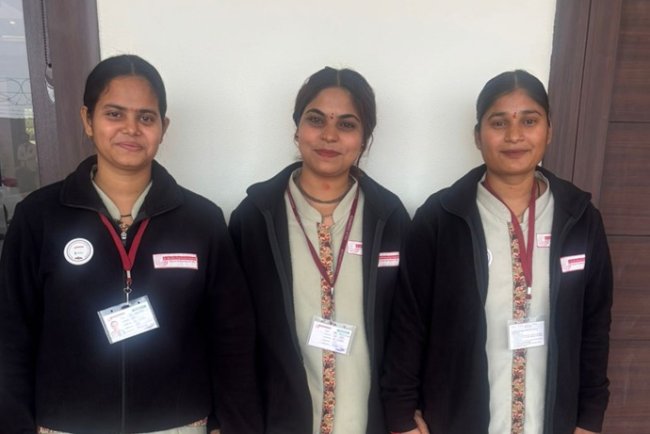
Cases emerged of violence, desertion, and manipulation. Women who were married safely still returned with financial and emotional suffering. Devendra realised the real answer wasn’t marriage, but it was independence. So, he opened a skill-training centre. Computers were donated, space was borrowed, and teachers volunteered. He introduced a rule: only girls who complete skill training will receive marriage support. It wasn’t conditional; it was transformational. The idea spread. Girls started queuing for training. More than 16,000 young women learned life skills, financial literacy, menstrual health, legal awareness, digital skills, and basic education.
Mothers brought daughters not to escape shame, but to build futures. Some even began working, becoming earning members of families that once saw them as burdens.
A New Lens: Changing Boys to Protect Girls
Safety doesn’t work if you only focus on girls. In 2017, Ladli found that many girls were not leaving school because they were poor, but due to harassment outside schools. Devendra realised the problem was the boys. Ladli launched one of India’s rarest grassroots gender sensitisation drives where 25,000 boys were trained on consent, respect, and equality. They were taught that safety is not a favour; it is a responsibility. This led to a groundbreaking event—Run for Ladli where police officials, judges, ministers, athletes, and thousands of citizens ran to declare that women's safety must be a shared mission. For the first time, teenage boys who once loitered outside school gates stood on stage as allies.
Impact Without Asking for Money
From 2012 to 2018, Ladli never applied for CSR funding. Devendra didn’t even know how. Their work spoke so loudly that ONGC approached them voluntarily. Today, Ladli is a national-level change-maker, but it still refuses to operate like a donation-dependent NGO. “No donation without involvement,” Devendra insists. “Volunteering must be skill, not leftovers.”
Ladli has since installed 108 digital learning labs in Delhi government schools, engaged more than 3,500 girls in direct empowerment programs, enabled jobs for 250 widows and single mothers post-COVID, delivered educational resources worth ₹600 crore through partnerships, and built AI-integrated washrooms that track hygiene and support abuse-reporting. And still, the foundation prioritises dignity over fundraising.
What Comes Next?
Ladli is now designing AI-based safe school washrooms with menstrual hygiene access, abuse-report triggers, smell detectors, and ozone disinfection, ensuring girls are safe inside schools, not just at entrances. The aim is not popularity. It is honesty. “Impact must be truthful. It is not about numbers. It is about dignity,” Devendra says.
A Story of Survival That Became Protection
Devendra’s path did not begin at a boardroom table, at a corporate CSR meeting, or even inside a classroom. It began in a slum where two children were abandoned. It grew in a slum where survival was a skill. It turned into action when one brother refused to let his sister become statistics.
Today, he is rewriting what safety and dignity mean for thousands of girls. His story shows that social change doesn’t always start with privilege. Sometimes, it begins with someone who barely had a childhood but chose to protect others so they could have one.
What's Your Reaction?