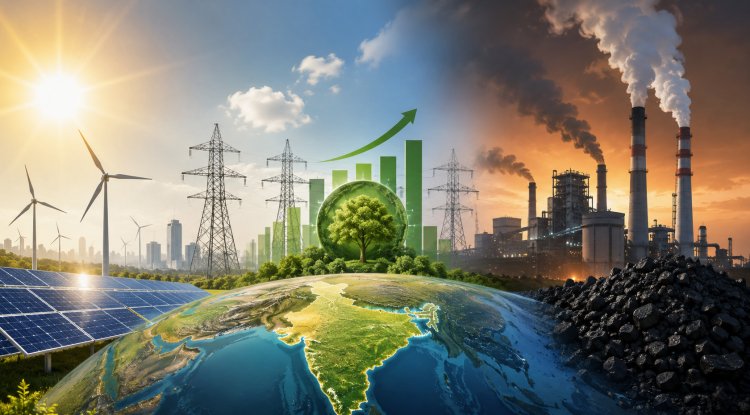
Global carbon pricing revenues hit a record $107 billion in 2025 as emissions trading systems expanded across major economies, according to the World Bank.
Revenues raised by carbon pricing instruments hit a high of $107 billion in 2025 as more countries implemented more emissions trading and carbon taxes, revealed the latest edition of the World Bank report on State and Trends of Carbon Pricing.
It is noted that carbon pricing measures now cover close to 29 per cent of global emissions through 87 operational carbon pricing mechanisms. More governments are employing emissions trading and carbon taxation measures to facilitate industrial decarbonization.
It was also reported that carbon pricing revenue has been at an annual level higher than $100 billion since 2021. In addition, average global carbon prices have also risen during the last ten years, climbing to about $21 per metric ton of CO2e from almost $10 in 2016.
Asia accounted for a significant portion of development within the emissions trading system sector during the last year. National ETS were launched in India, Japan, and Vietnam.
India’s Carbon Credits Trading Scheme covers sectors such as cement, aluminium, pulp and paper and incorporates almost 490 industrial establishments. Japan’s GX-ETS scheme has started its mandatory phase since April and covers over 700 companies that produce more than half of the nation’s greenhouse gas emissions.
According to the report, emissions trading systems now cover more than 24 per cent of global emissions, which was 8 per cent in 2016. Carbon taxes cover another 4-5 per cent.
Brazil, Thailand, and Türkiye are also working on implementing carbon pricing systems. At the same time, the European Union is developing its system with a new ETS covering road transport and building emissions.
According to the report, the carbon credits issuance was up by 8 per cent from 2024 to 2025 but lower than in 2022.
The definitive stage for the European Union's Carbon Border Adjustment Mechanism came into effect in 2026, requiring carbon pricing for imports such as steel, aluminium, cement, and fertiliser. This will be a motivating factor for many other nations to put in place carbon pricing mechanisms that comply with international trade policies.
According to the World Bank, if these proposed schemes are put in place, almost one-third of the world's greenhouse gas emissions would fall within carbon taxes or trading schemes by 2030.
What's Your Reaction?