Himachal Pradesh’s pioneering biochar project transforms forest waste into a climate solution, creating jobs, and positioning India on the global sustainability map.
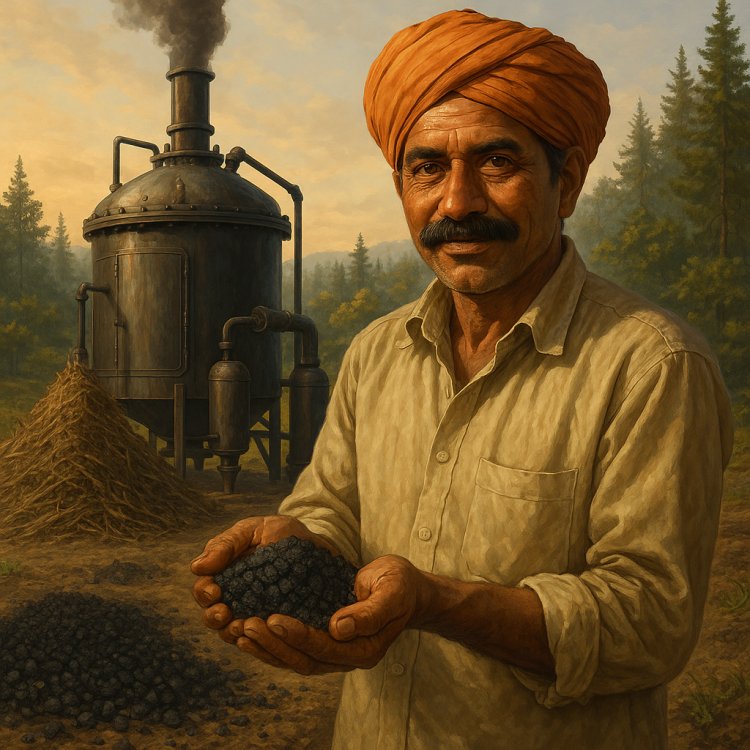
Himachal Pradesh has initiated India's first state-funded biochar project, with a plant to be installed in Neri, Hamirpur district that will be operational within six months. The initiative is being undertaken by the Himachal Pradesh government, Dr. Y.S. Parmar University of Horticulture and Forestry (Nauni) and ProClime, an environmental services company based in Chennai.
How It Works and What's in It for the Community
Local forest and farm waste like pine needles, lantana, bamboo, and other forest tree residues are utilized in this programme to produce biochar, a type of charcoal with numerous ecological and agricultural advantages. The programme will engage actively with communities in districts such as Kangra, Mandi, Hamirpur, Chamba, Bilaspur, and Solan. Biomass will be gathered by locals, who will be paid ₹2.50 per kilogram, with extra performance-based incentives. This exercise is likely to create approximately 50,000 person-days of employment per annum, in addition to creating direct employment at the plant. The university will spearhead the skill development training by imparting safe collection, use of biochar in agriculture, and its application in mitigating climate change.
Benefits to Environment and Economic
The Himachal biochar is designed to fight against climate change. The programme is expected to create about 28,800 carbon credits. Biochar itself has many benefits like it helps improve soil health, assists with carbon storage, and can reduce the risk of forest fires by removing biomass that would otherwise remain flammable.
Why It Matters
This is a pioneering endeavour in India as it encourages sustainable eco-management by converting invasive and plentiful biomass into a productive resource rather than allowing it to do damage. At the same time, it simultaneously empowers rural livelihoods by providing secure and meaningful employment opportunities while making direct involvement of local people a part of the process. This initiative also enhances the states reputation as a climate friendly state through carbon credit production and land rejuvenation, bringing the state in line with international climate targets. Above all, the programme provides a replicable model for other states, providing a template that brings together climate action, sustainable agriculture, and rural development in a single integrated platform.
Biochar in India and the World
Around the world, biochar is proving to be a nature-based climate solution. Europe, China, and the United States are all experimenting with biochar to improve degraded soils and net-zero ambitions. Himachal Pradesh's initiative puts India in this international league by demonstrating that biochar can be community-driven and affordable.
India, which must deal with millions of tonnes of farm waste annually, can modify this model to address stubble burning in Punjab and Haryana or invasive species in other states that have high forest cover. Widely replicated, biochar can become a pillar of India's soil health rejuvenation and carbon neutrality missions.
The success of the Himachal Pradesh’s biochar is dependent on how well it is carried out, tracked and expanded. Apart from just planting itself, for the real impact, there needs to be a complete value chain like villagers collecting biomass, farmers using biochar for soil health and carbon credit trading. When all these elements will work together smoothly, Himachal’s biochar scheme will set an example for the rest of India.
What makes this initiative unique is not just the technology of making biochar, but the way it combines environmental protection, economic opportunity, and community participation. It converts pine needles and lantana, which normally cause forest fires, into something valuable. It also creates jobs for rural people and helps capture carbon from the atmosphere, which supports climate goals.
What's Your Reaction?