How Agroforestry is Cultivating a Greener Future for Indian Farmers
Agroforestry empowers Indian farmers with sustainable income, climate resilience, and restored degraded lands.
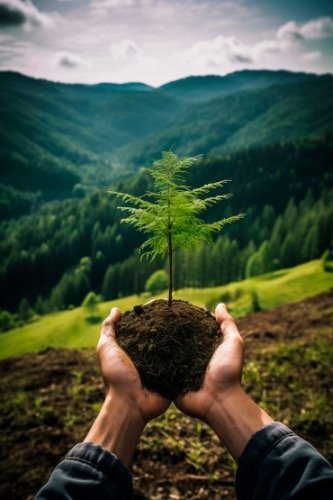
How Agroforestry is Cultivating a Greener Future for Indian Farmers
Agroforestry is a twofold integration of trees and shrubs into multiple land use systems designated crops or livestock on the same piece of land. These systems working together are performance and productive spaces with resilience, that emulate natural ecosystems by creating diversity and productivity in our landscapes. Conventional agricultural systems often create monocultures and bare soils and thus focus on a singular crop or productivity, while Agroforestry builds the productivity and fertility of soil, maintains soil depth and diversity, enhances biodiversity, creates blended production into the land, continuously generating income whether crop or animal is in production.
This is truly not new to India with long-standing traditional practices such as home gardens in Kerala, silviopastoral systems in Rajasthan, alley cropping in the Northeast as examples of these age-old practices of agroforestry. However, scientific rigour and the support of certain policies will help to modify existing practices and scale systems to meet our current and future challenges.
Agroforestry can prove to be a source of income diversification and climate resilience for small and marginal farmers, who are over 85% of India's farming community. Timber, fruit, medicinal, and fodder trees (mango, guava, neem, bamboo, subabul, etc.) can all produce several products and reduce reliance on a single crop cycle.
Trees naturally protect against wind and crops against adverse weather events, increase soil water retention in region, and usually keep soil wet longer than annual crops. The trees' root system also holds soil together, prevents soil erosion, and build soil building nutrients while also not requiring chemical fertilizers. In drought-prone areas, trees will slow moisture evaporation in the soil keeping land productive during dry periods.
Agroforestry serves as an important contributor to carbon sequestration which can help India achieve its international commitments to mitigate climate change. In addition to reducing atmospheric carbon dioxide, trees sequester carbon in their biomass and in the soil which helps arctic warming. Some ecosystem services that agroforestry will provide include; pollination, pest control, better microclimates and increased productivity.
Agroforestry will help restore degraded lands that have been denuded or overused. These degraded lands have often been left as non-productive lands as a result of mismanaging the opportunities for productive use leaves degraded or denuded lands. Agroforestry by restoring soil fertility and increasing greening of degraded land contributes of India's Land Degradation Neutrality (LDN) goals under the United Nations Convention to Combat Desertification (UNCCD) .
The Government of India recognized the vast potential of agroforestry and established the National Agroforestry Policy in 2014, the world's first. The policy aims to promote tree-based farming by relaxing the laws governing tree felling, by enhancing research and extension services and promoting agroforestry in rural development programs.
Programs such as the Sub-Mission on Agroforestry (SMAF) as part of the National Mission for Sustainable Agriculture (NMSA) have provided financial support and outreach platforms to increase adoption amongst farmers, as well as the support for tree planting through programs such as the Green India Mission and the Mahatma Gandhi National Rural Employment Guarantee Act (MGNREGA) provides modicum of land restoration activities.
Although agroforestry has many advantages, the adoption of agroforestry practices is hampered by issues of awareness, capitalization, and market access for tree-based products. Government agencies, deficient in their capacities, either lack knowledge about tree-based products or maintain forest and land-use laws that prohibit adoption, are also responsible for the slow rate of adoption of agroforestry practices in some jurisdictions.
To eliminate these barriers, there is a need for better institutional support, public-private partnerships, and value chains developed for agroforestry products. Investment could also be supported with training programs, loan/credit facilities, or by adopting a farming cooperative mechanism for farmers' access to tree-integrated farming systems.
Conclusion
Agroforestry increases carbon sequestration, supports pollinators, and provides a natural buffer against extreme weather events. It is an essential part of restoring degraded lands in dry and arid environments, ensuring that agriculture remains viable in the future.As India aims to be more green and climate-resilient, agroforestry offers a transformation. By planting trees to shade, but also for existence and prosperity, Indian farmers are planting the seeds of a more secure and sustainable future.It has the potential to increase farmer income, protect the environment, and provide food and ecological security. In India's case, as farmers plant trees, they are taking roots with their land, but also planting hope for themselves, their communities, and for future generations.
What's Your Reaction?